JEDDAH, 22 June 2005 — Dec. 6, 1992, was one of the darkest days in the history of independent India. It was on this day that a frenzied crowd demolished the 400-year-old Babri Masjid in the sleepy north Indian town of Ayodhya. This malicious act was in contravention of the orders of the highest court in the land. The mob was incited into committing this grave crime by the Bharatiya Janata Party (BJP) and its other hard-line affiliates. The demolition caused international outrage and put a question mark on the secular credentials of the Indian nation. Despite promises from the government of the day, which was then led by P.V. Narasimha Rao’s Congress Party, the mosque destruction proceeded with little official intervention. The riots that subsequently took place throughout the country further alienated the terrified Muslim community and other minorities from India’s mainstream politics.
It took nearly a decade for the hold of the communal parties to diminish. Only now that the Congress under Sonia Gandhi has realized the follies committed in the name of religion has the government renewed its commitment to a secular state. However, the Babri Masjid still remains a divisive factor in Indian politics. Though Muslims continue to demand that it be rebuilt, the political will for such an action is absent.
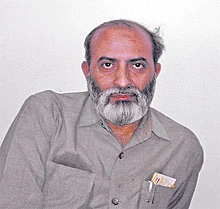
Fifty-seven-year-old Zafaryab Jilani is a lawyer by profession. His Babri Masjid Action Committee (BMAC) is in the forefront of fighting the case of the sacked masjid’s legal ownership in courts. In an interview with Arab News he stated that the crux of the matter is the enforcement of the law of the land over mob violence. While he welcomes the intervention of the courts in issuing an order to restore the site, he says “rebuilding is not our aim at the moment.”
Jilani, who is in the Kingdom at the invitation of the Al-Ittihad Foundation, doesn’t strike the casual observer as the typical hard-liner. Soft-spoken, affable and energetic, he is all smiles until the conversation turns to the masjid issue. Then he strikes with precision. A quintessential Aligarian, his training in law helps him to explain the situation in minute detail. While he has resisted the temptation to run for office himself, he clearly is active on the political sidelines. Jilani is a man with a purpose and he will not rest until he sees that law has overcome propaganda in Ayodhya. He expects the high court to rule on the issue in two years. Excerpts from the interview:
Q: Can the Babri Masjid be rebuilt?
A: It is not impossible. At the moment, however, our aim is not to rebuild. We aim at establishing our title (legal ownership) to the site. When the political climate of the country is suitable, we can rebuild; we do not require a mosque at Ayodhya. We want the establishment of our right at every mosque. This right must be accepted: I mean the right that no mosque can be forcibly taken away. This is our purpose; we are not in favor of rebuilding the mosque at the moment. Let that remain a future possibility. At the moment, we want the assurance that a temple will never be built on the site. We want Hindus to accept that the site is not the birthplace of Ram and that no temple was there which was demolished in order to build the Babri Masjid.
Q: But if it is the Hindu belief that Ram was indeed born there, how can you expect them to change their belief?
A: They have not produced any credible evidence to support the claim. There have been 47 witnesses testifying in court for the Hindu side. The witnesses included two “ramanandacharyas” who are the heads of the Vaishnav community; the followers of Ram are called Vaishnavas. The leaders are not sure where and when Ram was born. The entire Hindu community is unsure about when Ram was born. Through the court verdict we want this propaganda to stop — that Ram was born there and that a temple was demolished to construct a mosque. We want a court ruling on the issue.
Q: At present, there is a secular government in Delhi and in Lucknow. Yet still you say the political climate is not conducive to rebuilding the mosque at present. Do you think it will be possible in future?
A: As we know, the Bharatiya Janata Party has been voted out of power but so far, its mentality has not been voted out among its supporters. The party still has the support of 20 percent of the population but once the court has given its verdict, once the court has established that no temple was demolished in order to build the Babri Masjid, that support will gradually melt away. This tale is propaganda that is believed even by many secular citizens — that the Mogul Emperor Babar demolished a temple dedicated to Ram in order to build the mosque. When average Hindus realize that they have been misled by their leaders, the political climate will change dramatically and shift in our favor.
Q: You are very confident of the court ruling in your favor. What makes you so confident?
A: In the Indian legal system, judgments, especially in lawsuits, are based on the evidence that is presented. It is impossible for the court to ignore our evidence. There is every likelihood that the court will rule that there was no temple, which was demolished in order to build a mosque on its site. Let me also make this very clear: This case will eventually end up in the Supreme Court, the highest court in our country. Whichever side loses in the high court will take its case to the Supreme Court and when the Supreme Court rules in our favor, only then will we approach the government about rebuilding our mosque. This process will naturally take some time. That is why I said earlier that the political climate will gradually turn in our favor. The Hindu community has complete faith in the judiciary and once the judiciary rules that there was no temple at the site, a new temple will be built at another site.
Q: L.K. Advani recently said that Dec. 6, 1992, was the saddest day of his life. What do you make of that statement?
A: This is not the first time he has said so. He said it earlier — but saying that it was the saddest day is not enough. There is a criminal case against him. In the case, he says that he has done nothing wrong. He admits that he was there in Ayodhya when the mosque was being demolished but says he is not to blame. Let him apologize to the Muslim community. Because of him and his party, we saw the worst communal riots in the history of India. Whatever roadblocks there are to the rebuilding of the mosque, let him remove them. It is sheer hypocrisy; in one breath he says the temple will be built there and in the next, he says that Dec. 6 was the saddest day in his life. We don’t believe him. Just to become a hero in Pakistan, he said these things. Don’t people in Pakistan know what he has done? He is trying to deceive us but we cannot be deceived.
Q: A large section of Indian Muslims believes that the issue of the Babri Masjid was overly politicized by parochial and narrow-minded leaders. And that the community had to pay a heavy price for the folly of those leaders. What is your reaction to these statements?
A: Some things are beyond leaders; in fact, they are beyond everybody. There were only two options open to Muslims: Surrender or contest. If there was any other option, please tell me what it was. The policy of surrender is dangerous today and it was dangerous then as well. If you surrender one mosque, then there is every possibility that other mosques will go the same way. Arun Shourie has in fact gone public with a list of 3,000 mosques, which he thinks should be taken over by Hindus.
Q: If Muslims had given up on Babri Masjid, don’t you think Hindus would have taken it as a good will gesture?
A: Absolutely not. The people we are talking about do not believe in any good will gestures. You are mistaken about these communal elements. We are in the field. We know who we are dealing with.
Q: You are talking about the communal leadership. We are talking about the average Hindu. Would the average Hindu not have seen it as a good will gesture?
A: No. The average Hindu was not with these communal elements. The average Hindu has been swayed and influenced by these communal forces. And the BJP and VHP have never accepted Muslims; they have never been honest when it came to Muslims. Their entire history is full of anti-Muslim accusations and rhetoric. Tell me when and where they have ever done anything good for Muslims. We cannot surrender. We cannot trust the BJP and the VHP. We cannot. We are sure the communal Hindu leadership would not, and will not, stop at Babri Masjid. They will be unstoppable.
Q: There is another allegation against Muslims — that they converted the secular versus fascist forces movement into a Hindu versus Muslim one. What do you say about that?
A: Those who make such allegations are those who have never been part of any movement. Nor have they led one. We have been leading this movement and we have first-hand knowledge of it. The Communists supported us all the while but none of them came forward to take up our case. When we organized a conference in Delhi, only Chandra Shekhar and I.K. Gujaral came forward. And yes there was also Kuldip Nayar. No Communist came forward at that time. They would only advise us. When Chaturanan Mishra of CPI who later became a minister in the Deve Gowda Cabinet visited Lucknow after the demolition, he said: “Babri Masjid is gone. Forget about it. Think about other mosques.” And I said: “It may be over for you. But not for me. We will fight back through the law courts.” If Muslims had not come forward, nobody would have fought the case.
Q: Don’t you think there is a kind of a fatigue among Indian Muslims about the Babri Masjid? They no longer seem to be as interested as they were in the 1990s.
A: After the 1994 Supreme Court decision that the issue would be decided by the courts, Muslim organizations realized there was no need for them to come out on the streets. As far as their involvement is concerned, however, there been no waning of that. Whether in the north or south, everybody is involved and is waiting for a just solution. “Jazbe main kaheen kami nahi aaye hai.”
Q: What is the current status of the case?
A: We can expect a judgment in two years — and then the case will go to the Supreme Court.
(Zafaryab Jilani will address the expat community tomorrow at Firdous Hotel in Jeddah’s Bawadi district. For program details, please contact Talha Hashmi on 0502795771.)