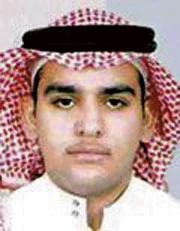
JEDDAH, 18 September 2005 — Ahmad ibn Abdullah Al-Shayie, a 21-year-old Saudi who escaped a bomb explosion in Baghdad on Dec. 25, 2004, has returned to the Kingdom to tell the story of how Al-Qaeda militants helped him enter Iraq and later used him to carry out a terrorist operation.
Ahmad expressed regret for killing 12 innocent Iraqis, including seven members of the same family in the operation, adding that Al-Qaeda arranged the bombing in Baghdad’s Al-Mansour neighborhood without his knowledge. The young man was luckily ejected from the tanker by the force of the blast, Al-Watan Arabic daily said.
Ahmad who sustained severe burns all over his body was arrested by Iraqi police who later handed him over to Saudi authorities. He told how Al-Qaeda was recruiting young Arabs to fight alongside insurgents in Iraq, adding that he had entered Iraq through Syria with the help of smugglers.
Ahmad said he had gone to Iraq out of a conviction that he should do something to help his Iraqi brothers though he had not consulted scholars about his plans and in fact ignored the advice of his parents and family. He said he was taken to an Al-Qaeda cell in Doura district in the south of Iraq where he was trained to drive an oil tanker.
On the day of explosion, he was told to take the tanker to the Al-Mansour neighborhood. “They asked me to stop the tanker near a concrete barrier, saying someone would come to receive the tanker from me. But no sooner had I stopped the tanker than it exploded,” he said.
Ahmad, who was born in Buraidah in 1984, is now undergoing treatment at a hospital in Riyadh. Saudi authorities have allowed his family to visit him. In a TV program which will focus on Ahmad, a number of security, social and Islamic experts will also take part.
In a related development, the National Society for Human Rights has urged the Saudi Embassy in Damascus and the Syrian Embassy in Riyadh for assistance in locating a number of Saudis who are missing in Syria.
Dr. Mufleh Al-Qahtani, chairman of the monitoring and follow-up committee, said the society had urged both embassies to ascertain whether the media reports concerning the disappearance and arrest of Saudis in Syria were true.
There have been unconfirmed reports that some gangs involved in human trafficking are handing Saudis over to American forces in Iraq after smuggling them out of Syria for $10,000 per person.
Dr. Saleh Al-Kathlan, deputy chairman of the committee, said he had not ruled out the possibility that the Saudis who had disappeared might have been kidnapped by gangs who were selling them to American forces.
“Another possibility is that they might have been kidnapped by the gangs who kept them as hostages in order to make money,” he pointed out.