ISLAMABAD, 20 September 2005 — A military court has imprisoned three military officers and ordered the dismissal of three others for having links with Al Qaeda, sources said yesterday.
Two colonels and a major were handed down jails terms of between 10 years and six months, spokesman Brig. Shahjahan said, while two other majors and a captain were dismissed from service for violating military discipline.
A military court tried Col. Khalid Abbasi, Col. Abdul Ghaffar, Maj. Adil Qudoos, Maj. Attaullah, Capt. Usman Zafar and Maj. Rohail Faraz in August after they were arrested and then interrogated at Attock Fort, the source said.
The military court, comprising Maj.-Gen. Ahmad Nawaz and Brig. Mumtaz Iqbal, sentenced Maj. Qudoos to 10 years in prison, Col. Khalid Abbasi six months and Col. Abdul Ghaffar three years in jail sentence. Maj. Attaullah, Maj. Faraz and Capt. Zafar were dismissed from the service.
However it was not revealed when the sentences were handed down. The officers were arrested after Pakistani security forces captured Khaled Sheikh Mohammed, the key planner of Al-Qaeda’s Sept. 11 terrorist attacks on the US, in March 2003.
Meanwhile, two rockets have been fired at a Pakistan Army camp near the Afghanistan border in the same area where troops last week raided a suspected Al-Qaeda compound, an official said yesterday.
The rockets, fired from over the border Sunday, caused no casualties because they landed in a plant nursery near the camp in North Waziristan province, the administration official said. “Two rockets landed and exploded in a nursery close to the army camp Sunday night but caused no casualties,” the official, in the border town of Miranshah, said.
Troops returned fire toward the border, he said. It was not immediately clear who fired the missiles. Similar attacks have been blamed on militants suspected of links with Taleban and Al-Qaeda remnants who sneaked into the area in late 2001 after the US-led invasion on Afghanistan.
Pakistan strengthened its deployment of troops in the border region by thousands of soldiers before elections in Afghanistan on Sunday, to prevent militants crossing over to disrupt the vote.
Border Fencing
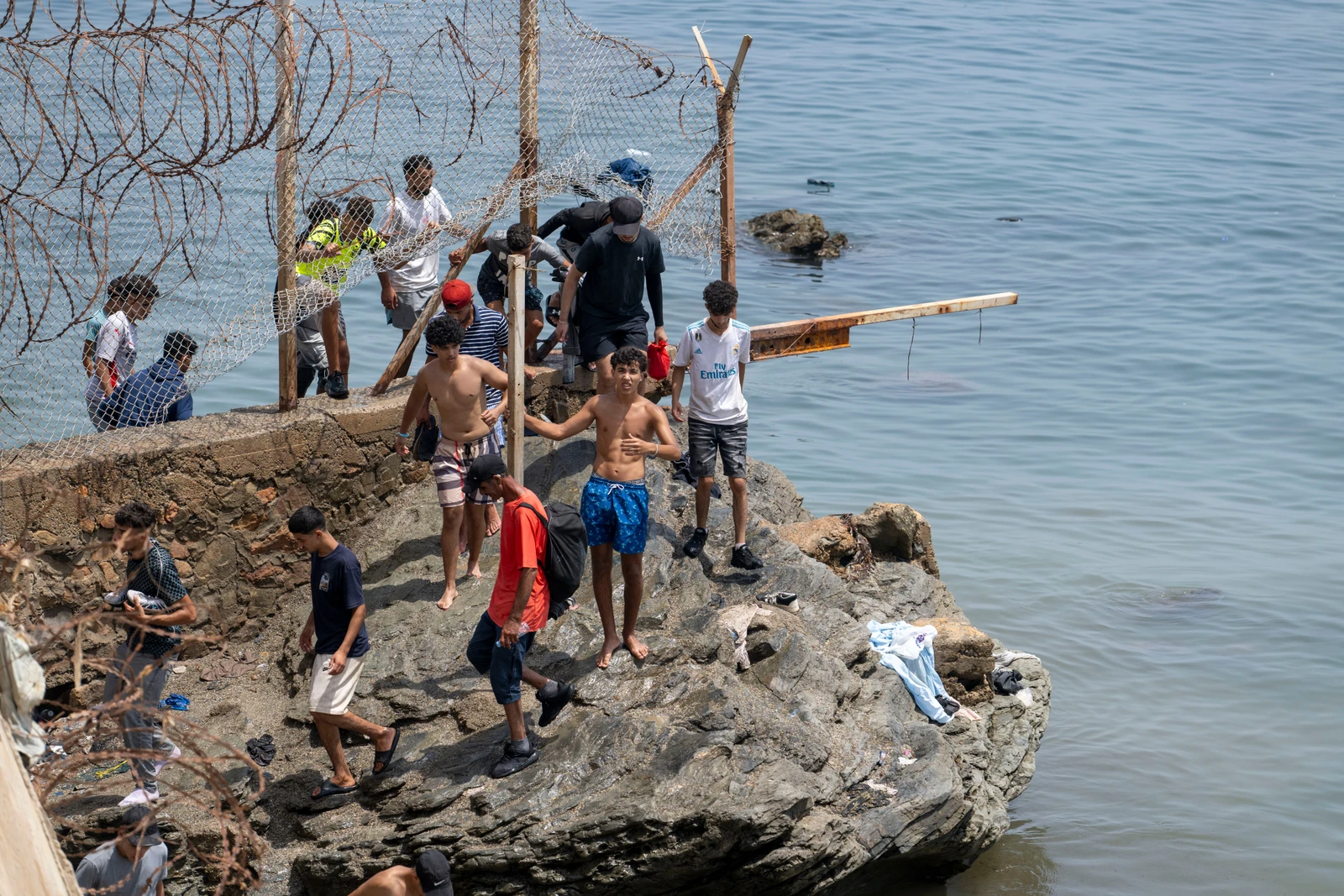
Pakistan yesterday said it was awaiting a response from the Afghan government on its proposal to fence their common border to prevent illegal crossings.
President Pervez Musharraf, who was in New York to attend the United Nations General Assembly, had made the proposal after repeated complaints by some of the Afghan officials that Pakistan was not doing enough to stop “infiltration” of suspected terrorists in their country. “We have formally conveyed the proposal to the Afghan government and they are yet to respond to it,” Foreign Office spokesman Naeem Khan told a weekly briefing.
Khan said the idea of erecting fencing along the border on routes prone to illegal crossings was made in a “spirit of cooperation” and to address the issue once and for all.
Khan also welcomed the Afghan elections held on Sunday and said it marked a reaffirmation of the Afghan people’s commitment to democracy that they had displayed during the presidential election held in October 2004.