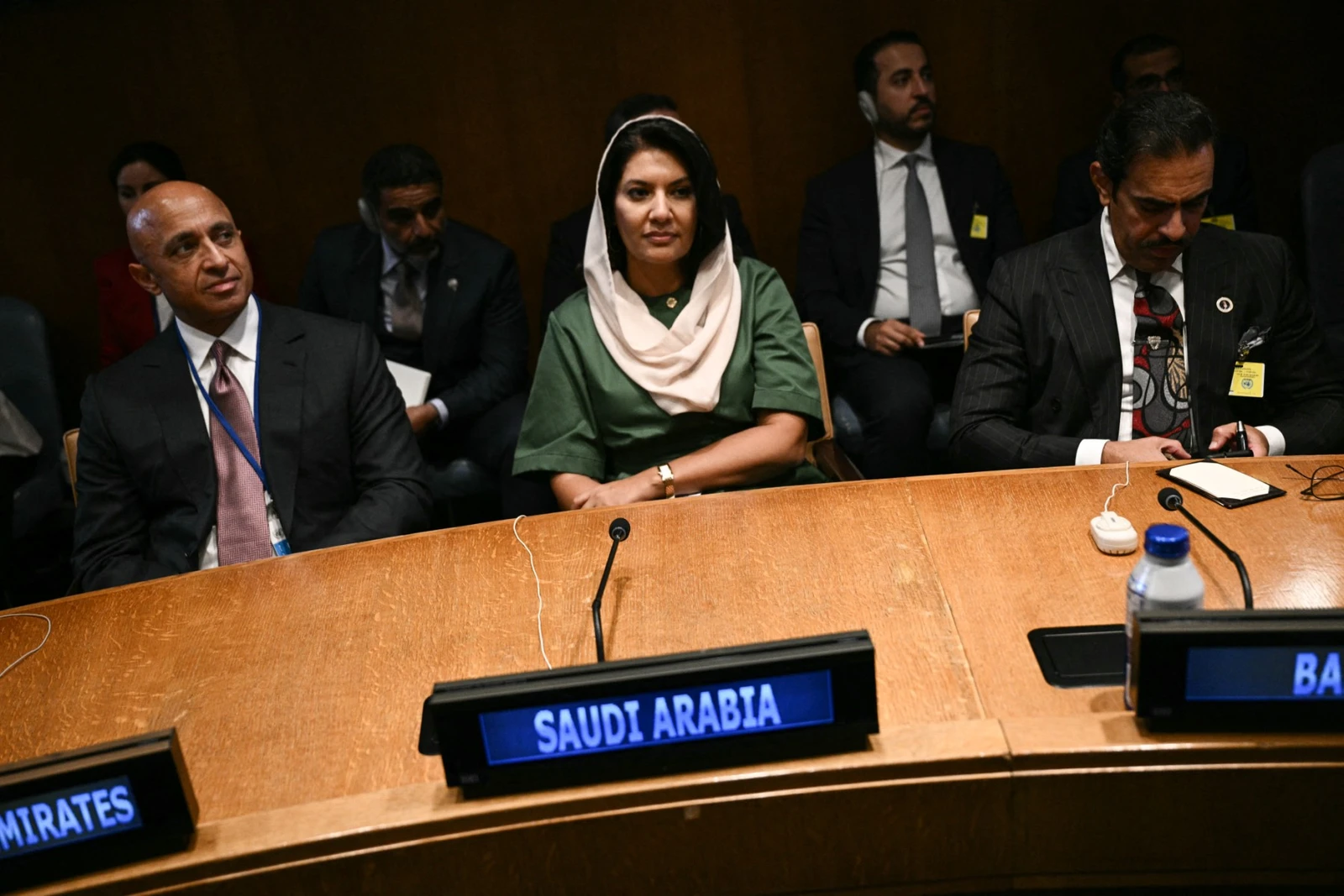
“CHANGES must come from within not from outside influences and Saudi women should prepare themselves first to adopt the changes, which will definitely come as part of a reform process initiated by the Kingdom,” remarked Dr. Selwa A. F. Al-Hazzaa, an ardent advocate of women causes.
She is also the executive chairwoman of the Friends of Saudi Arabia (FSA), a non-profit organization seeking to promote friendship and cultural relations between the Kingdom and other nations.
In a wide-ranging interview on the occasion of the Kingdom’s National Day, Dr. Hazzaa, the first female adviser to the Shoura Council, spoke about women issues with special reference to their participation in the political process. She welcomed the historic decision of the Custodian of the Two Holy Mosques King Abdullah, which now allowed women to contest seats in the forthcoming elections of Jeddah Chamber of Commerce and Industry (JCCI).
“This decision further strengthens our conviction that the Saudi government is going in the right direction so far as women issues are concerned,” said Dr. Hazzaa, who also heads the most prestigious ophthalmology clinic at the local King Faisal Specialist Hospital.
Credited with the publication of over 50 scientific papers and handling 13 research projects, she has been recently reappointed associate professor at the Johns Hopkins School of Medicine in Baltimore. She says: “I am one of the exceptions among women. Those who are not exceptions make up a much larger proportion of the population.
“Only a few percent of the workforce are women. This is still a society dominated by men, but we cannot deny the progress and the process of reforms, which are empowering women.”
Despite this progress, she admits that much needs to be done to improve the rights of women, such as allowing them to drive.
“We cannot drive yet,” said Dr. Hazzaa, who owns a car herself. Many women own cars in their names. In fact, there are about 100,000 car registration certificates (Istimarah) of cars that are owned by Saudi women.
Asked about the possibility of lifting the ban on driving, she said that Saudi women were hopeful that the reform process and the new employment possibilities for them would force change in the society’s attitude to women behind wheel. More and more government agencies and private sector organizations are opening avenues for women graduates. They are also empowering and employing women in big numbers.
The 120-member Shoura Council that studies laws and makes recommendations to the king, did not ask Dr. Hazzaa to advise it on the issue of women driving when this matter was raised at the council early this year. She said: “The Shoura did not seek my opinion whether or not to allow women to drive. I was driving my car in the US, I still own a car in Riyadh, but I don’t drive here.”
But women being allowed to drive is not the only issue for her. Dowries which are too expensive, breastfeeding, women’s education, and the need for institutions to provide marriage counseling are some of the other issues on which Dr. Hazzaa is asking women to cooperate. She says that more women are graduating from universities today than men, which indicates the intensity of changes.
“A need for change from within is urgently required, the changes must come from them, rather than through imposition by the West, or other outside influences,” she observed.
Asked about the pace of reforms so far as women are concerned, she said: “Look to any nation and any society, it took ages for them to change. Ours is a young nation and it will take some time to see visible changes in the Kingdom.”
She rolls her sleeves up and explains just how far this society has traveled in one generation. “My own mother,” she says, “was only 13-years-old when I was born - a child bride in an arranged marriage. She was also illiterate.”
When Dr. Hazzaa’s mother was a child, there weren’t any schools for girls; those didn’t open until 1960, when the late King Faisal declared education should be granted to girls as well as boys (who received public education only in 1952). Her mother bore five daughters in all by the time she was 19-years-old. At the age of 22, she moved with her husband and young daughters to the United States, where she began attending school to learn how to read and write. All five daughters are now college educated, and working to advance women’s rights.