ZAMBOANGA CITY, 26 September 2005 — The leader of the Al-Qaeda-linked Abu Sayyaf group had escaped a massive military operation in the southern Philippines despite assistance from the separatist Moro Islamic Liberation Front (MILF), officials and rebels said yesterday.
After more than two months of an apparently fruitless offensive, the government has agreed to halt offensives in two southern towns to allow displaced villagers and guerrillas to return home.
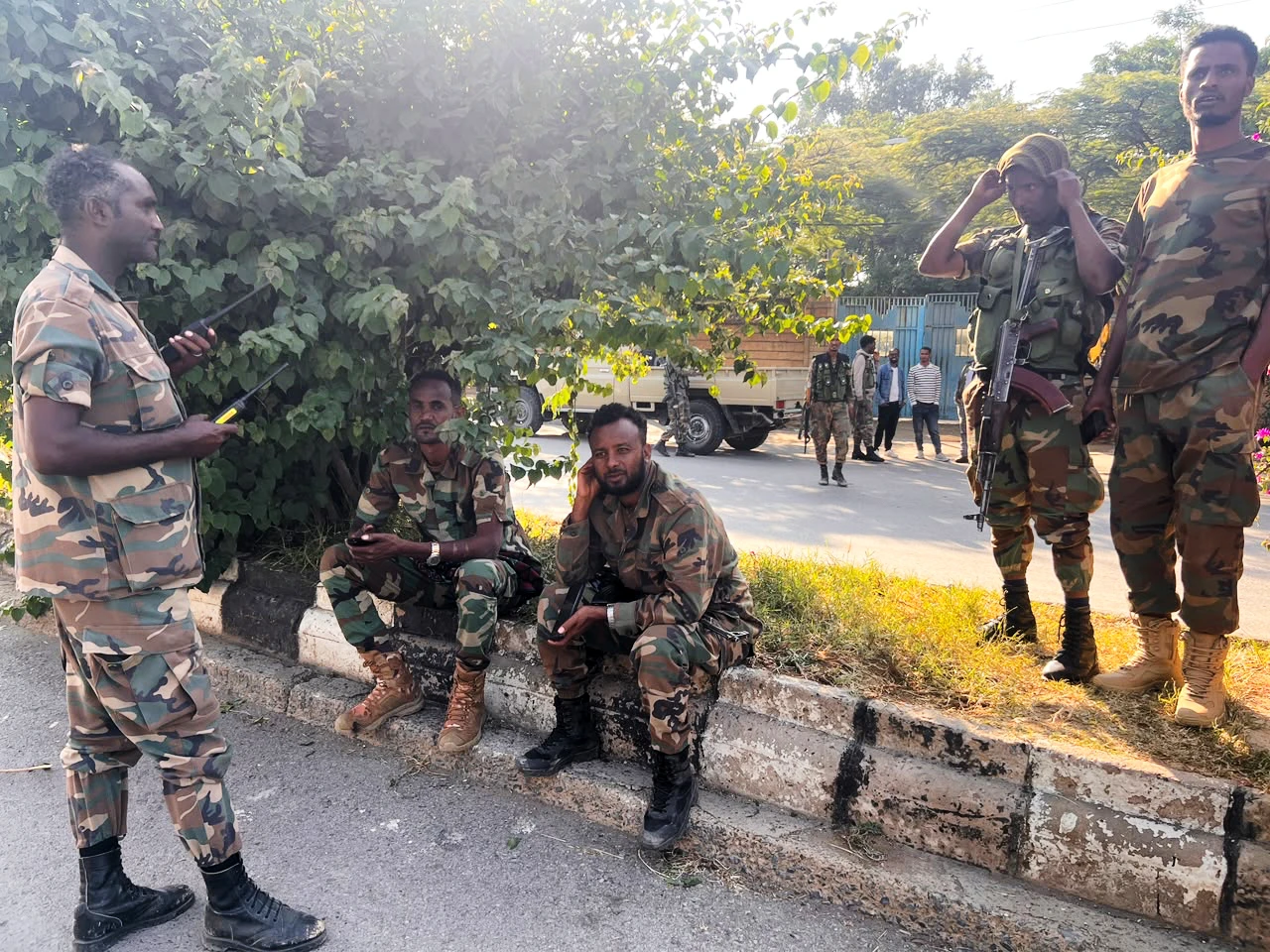
Hundreds of soldiers, including US-trained commandos, have scoured the mountainous hinterlands of Talayan and Guindolongan towns in southern Maguindanao province since July but have failed to capture Khadaffy Janjalani, who is wanted by both Manila and Washington for alleged involvement in deadly terror attacks.
Chief government peace negotiator Silves-tre Afable said the troop withdrawal from the two towns would allow villagers and MILF rebels to observe the Muslim holy month of Ramadan. He added that the military’s “high-value targets are no longer there,” suggesting Janjalani was no longer in the area.
MILF spokesman Eid Kabalu, whose group has agreed to withdraw its forces temporarily before the offensive, offered an explanation for Janjalani’s recent escape.
“The Abu Sayyaf has splintered into smaller groups, making it more difficult for security and rebel (MILF) forces to track down the militants. But we believed that Janjalani is still in Maguindanao,” Kabalu told Arab News.
Maguindanao province is a known stronghold of the MILF, which has forged a truce with the government to pave the way for negotiations for a peaceful settlement of the conflict that has killed more than 150,000 people since the 70s.
A report posted yesterday on the MILF website luwaran.com said some of the Abu Sayyaf militants escaped by disguising as Muslim women, dressed in the traditional burqa, and had mingled with civilians.
Kabalu said Janjalani, along with two other Abu Sayyaf leaders — Abu Sulaiman and Isnilon Hapilon — never stayed in the same spot longer than a week.
The three are wanted by Washington for the kidnapping of a number of Americans, one of whom was beheaded by the militants. The Abu Sayyaf has also been blamed for recent deadly bombings, including an explosion that set a ferry on fire last year, killing 116 people in the country’s worst terrorist attack.
The MILF twice extended a deadline for the troops to end the assaults, according to both sides.
“It’s important to put an end, a timeframe to these operations because many villagers have been suffering and wanted to go back to their homes and farms,” Kabalu said.
An agreement in principle was forged by the government and the MILF during Malaysian-brokered peace talks in Kuala Lumpur two weeks ago. Both sides also agreed to provide relief and livelihood to displaced villagers. Both Afable and Kabalu said the military could continue offensives elsewhere in the province, about 900 kilometers south of Manila.
Southern Philippines military chief Lt. Gen. Edilberto Adan said the operation against the Abu Sayyaf will not stop.
“Troops are doing everything to get Janjalani dead or alive,” he said.
President Gloria Macapagal Arroyo set aside P100 million as reward for the capture dead or alive of known Abu Sayyaf leaders. The United States also offered as much as $5 million bounty for Janjalani’s capture. With input from AP