
JEDDAH, 3 October 2005 — The National Commercial Bank’s (NCB) investment services division (ISD) yesterday announced the launch of its AlAhli GCC Trading Equity Fund (GCCTEF), an open-end Saudi riyal-denominated fund, with a minimum subscription of SR5,000 and especially designed for investors seeking a Shariah-compliant long-term investment.
The fund aims to generate long-term capital growth by investing in Shariah-compliant GCC equities, Murabahas and Murabaha funds, which are approved by the NCB’s Shariah board and managed according to the mutual fund regulations issued by the Saudi Arabian Monetary Agency (SAMA).
The GCCTEF targets people keen on investing in Shariah-compliant equities and having an optimistic long-term view of the markets in the GCC, according to Ahmed Farid, head of the asset management division at the NCB. It is also designed for those who do not have the time or the experience to venture into the stock markets in the region.
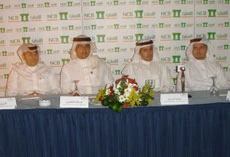
On the other hand, Haithem Al-Mubarak, head of portfolio management at the NCB, recommended that investors assess the performance of the GCCTEF within a testing period that is no less than five years. “The GCCTEF will leverage the strong economic growth in the region for a longer term based on NCB’s positive and pragmatic overview of the macroeconomic performance of the GCC markets,” Mubarak told a press conference at the Jeddah InterContinental Hotel yesterday. “However, investors should be aware of the high risks of investing in stocks in general and stocks in the ‘emerging markets’ in particular. Therefore, we note the importance of diversification in the selection of the assets in this fund across the six GCC countries,” said Mubarak, who was accompanied by NCB’s Farouq Fouad A. Ghulam, head of product development structuring and operational risk, ISD, Abdullah Hassan Al-Khatib, head of business development, ISD, and Amr Banaja, head of marketing, asset management.
Recent research has shown that the Kingdom leads across the Arab countries in terms of attracting Arab and foreign investments.
The NCB was the first Saudi bank to introduce mutual funds in the Kingdom in 1979 and remains the leader of the industry because of its extensive experience and expertise in the field. The bank is acknowledged internationally as the pioneer and the innovator in Shariah-compliant mutual funds. This achievement was recognized when NCB was awarded the Euromoney International Award for the “Best Islamic asset management house” for two consecutive years from 2003.
Mubarak said that the NCB remained optimistic about the future of the GCC markets and therefore it had now launched the GCC fund. “However, we would like to caution potential investors to the importance of investing wisely in the equity funds in general and particularly those in emerging markets.”
There are currently four funds investing in the Gulf stocks in the Kingdom. However three of them are dollar-denominated, traditional (non-Shariah compliant), and the minimum subscription is for average $10,000. Moreover, one of these funds invests in industrial companies only.
The GCCTEF, an index fund, will be actively managed to diversify the selection of stocks across the various sectors and countries in accordance with the Shariah and ensure that the fund outperforms the index when needed.
About the expected rate of returns on the new fund, Mubarak said over the last few years the GCC economies that were directly linked to oil prices had performed well between three percent to over 100 percent. “However, the past returns do not indicate future market returns on investment nor do they guarantee similar or proximate returns in the future since various political and other factors affect market movement in any country. So it is not possible to make return forecast to any fund accurately.”
The fund will invest in a selection of stocks that include the Shariah-compliant GCC companies as determined by country and investment guidelines of the fund. The basket of companies will be revised periodically. “Therefore, we’ll not be able to name any particular company. Moreover, the fund manager will deal with highly reliable financial institutions in various countries.”
The subscription fee was put basically to reduce market timing by clients who may use this fund as a trading tool instead of a long-term investment, also to cover the cost of managing the fund in the various GCC markets, Mubarak said when asked why the bank had set a subscription fee of two percent.
Explaining the factors that the NCB considered to launch the GCC fund now, Mubarak said investors were pleasantly surprised by the sharp rise in the share prices in the past year across the six GCC markets where the benchmark stock indices had grown on average up to over 145 percent. “At the NCB, we observed the need among our customers for a Shariah-compliant fund investing in the stocks of the companies performing well in the neighboring Gulf countries,” he said.