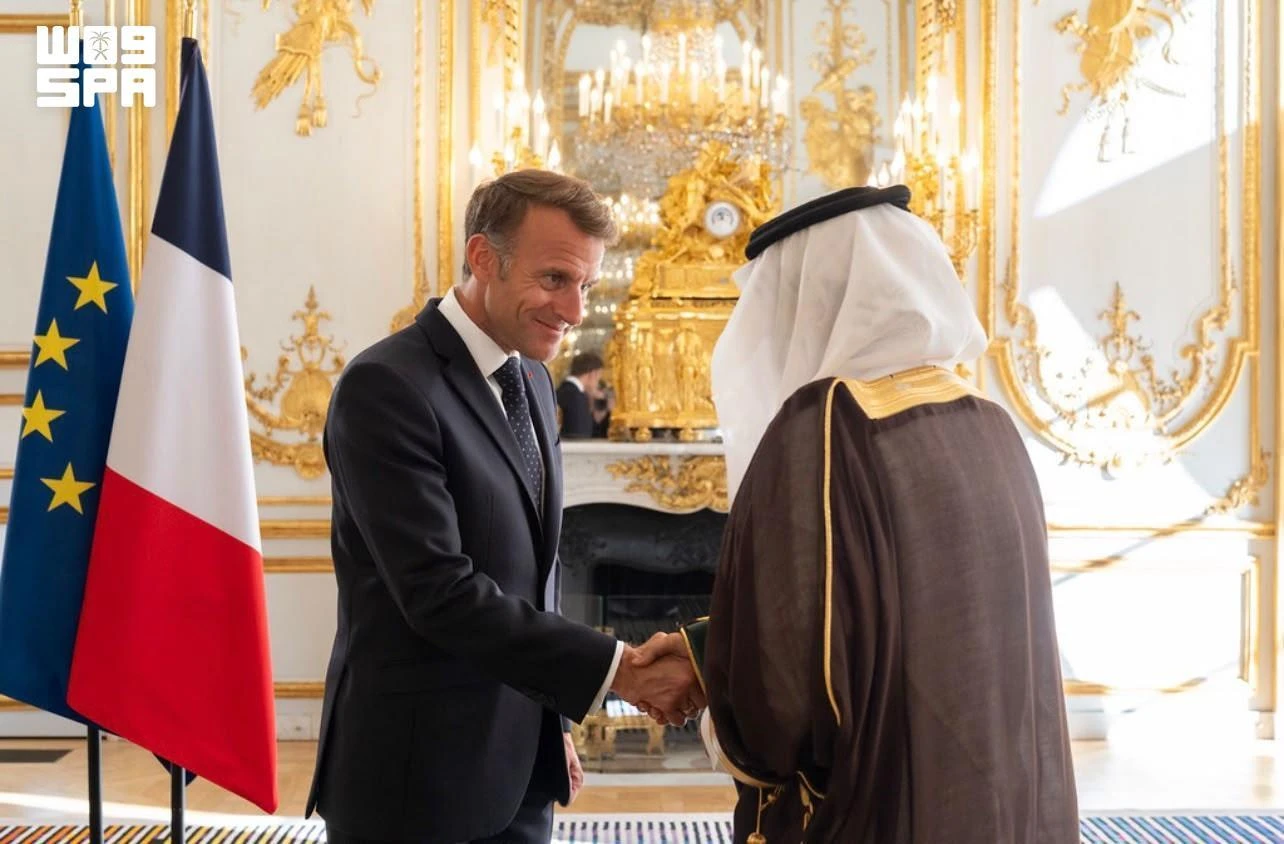
JEDDAH, 5 October 2005 — Custodian of the Two Holy Mosques King Abdullah and Crown Prince Sultan yesterday held talks with US coordinator for Iraq James Jeffrey, who is a senior adviser to US Secretary of State Condoleezza Rice.
The talks between King Abdullah and Jeffrey focused on the developments in Iraq, the Saudi Press Agency said, adding that Foreign Minister Prince Saud Al-Faisal and other senior officials attended the meeting.
SPA said Prince Sultan and Jeffrey examined “ways of helping the Iraqi people overcome their current (difficult) circumstances,” with the Saudi crown prince stressing the need to safeguard Iraq’s unity, independence and Arab identity.
Jeffrey’s meeting with Saudi leaders comes after an eight-member Arab ministerial committee decided Sunday to send Arab League Secretary-General Amr Moussa to Iraq to prepare for a reconciliation conference.
The United States welcomed the ministerial committee’s decision, which comes in the run-up to an Oct. 15 referendum on a new Iraqi constitution opposed by many Sunni Arab political and religious leaders in Iraq.
“We would certainly encourage the Arab League as well as its member states to think about other steps that they might take to support the Iraqi people, but this is a good first step,” State Department spokesman Sean McCormack said Monday.
Moussa, meanwhile, voiced concern over the deteriorating situation in Iraq ahead of his first visit to the country since the US-led invasion of March 2003. The Arab League has declined to give a date for Moussa’s visit for security reasons, saying only that it would take place soon. Moussa said he was sending a high-level delegation to Iraq headed by the assistant secretary-general for political affairs, Ahmed bin Hili, to prepare the ground for his visit. Its mission will be “to engage all Iraqi forces without exception” and to prepare for the reconciliation conference aimed at averting the threat of a civil war in Iraq between Shiites, Sunnis and Kurds.
Jeffrey is the third US official to visit Saudi Arabia in less than two weeks after Prince Saud last month said Washington’s policies were to blame for much of Iraq’s ills.
While the prince did not refer to the Bush administration directly, he was referring to an order issued by US proconsul Paul Bremer soon after the 2003 fall of Saddam Hussein. Bremer banned all members of Saddam’s largely Sunni Arab Baath party from holding government jobs. The eight-member committee met here to draw up a joint strategy on violence-ravaged Iraq, including the possibility of sending observers to monitor the referendum and national elections in December.
The ministerial committee on Iraq was created in September by the Arab League and groups Bahrain, Algeria, Egypt, Iraq, Jordan, Kuwait, Saudi Arabia and Syria.
Addressing the ministerial committee meeting in Jeddah on Sunday, Prince Saud reiterated concerns about the potential partition of Iraq along sectarian lines.
Calling for preserving Iraq’s unity and Arab identity, the prince said the “particularity” of the Kurdish population had “long been recognized” in Iraq.
Last week, the Saudi foreign minister had voiced concern at purported meddling by Shiite-dominated Iran in Iraq and warned that the country’s partition into Kurdish, Sunni and Shiite states would “bring other countries in the region into the conflict.”