
ISLAMIC art is perhaps the most accessible manifestation of a complex civilization that often seems enigmatic to outsiders. Through its gleaming use of color and its outstanding balance between design and form, Islamic art creates an instantaneous visual impact. Its strong aesthetic appeal transcends distances in time and space, as well as differences in language, culture, and creed. Islamic art not only invites a closer look but also beckons the viewer to learn more. For a foreign audience, a visit to the Islamic galleries can represent the first step towards appreciating the history of a religion and a culture that are often in the news but are little understood.
The term Islamic art may be perplexing to some. It not only describes the art created specifically in the service of Islam, but it also characterizes secular art produced in lands under Islamic rule or influence, whatever the artist’s or the patron’s religious affiliation. The term evokes an art unified in style and purpose, and indeed there are certain common features that distinguish the arts of all Islamic lands. Although this is a highly vivacious art, which is often marked by strong regional characteristics as well as by significant influences from other cultures, it retains an overall coherence that is remarkable given its vast geographic and temporal boundaries. Of paramount concern to the development of this singular art is Islam itself, which fostered the creation of a distinctive visual culture with its own unique artistic language.
Calligraphy is probably the most important and pervasive element in Islamic art. It has always been considered the noblest form of art because of its association with the Quran, the Muslim holy book, which is written in Arabic. This preoccupation with beautiful writing extended to all arts including secular manuscripts and inscriptions on palaces, notwithstanding those applied to metalwork, pottery, stone, glass, wood, and textiles — and to non-Arabic-speaking peoples within the Islamic commonwealth whose languages — such as Persian, Turkish, and Urdu — were written in the Arabic script.
Another characteristic of Islamic art is a preference for covering surfaces with patterns composed of geometric or vegetal elements. Complex geometric designs, as well as intricate patterns of vegetal ornament (such as the arabesque), create the impression of unending repetition, which is believed by some to be an inducement to contemplate the infinite nature of God. This type of nonrepresentational decoration may have been developed to such a high degree in Islamic art because of the absence of figural imagery, at least within a religious context.
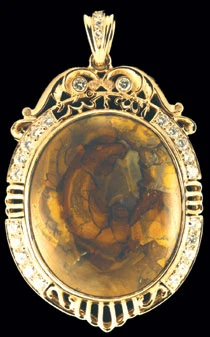
Contrary to a popular misconception, however, figural imagery is an important aspect of Islamic art. Such images occur primarily in secular and especially courtly arts and appear in a wide variety of media and in most periods and places in which Islam flourished. It is important to note, nevertheless, that representational imagery is almost invariably restricted to a private context. Figurative art is excluded from the decoration of religious monuments. The famous Islamic gemstone is one such example. Although the gemstone is exceptional in comparison to other forms of Islamic art, especially in the sense that there aren’t any artist and that its ‘design’ is seen by many to be miraculous, it is considered an art given the coherence of the depictions on the gemstone.
In Islamic cultures the so-called decorative arts provide the primary means of artistic expression, in contrast to Western art, in which painting and sculpture are preeminent. Illuminated manuscripts, woven textiles and carpets, inlaid metalwork, blown glass, glazed ceramics, and carved wood and stone all absorbed the creative energies of artists, becoming highly developed art forms. These works include small-scale objects of daily use, such as delicate glass beakers, as well as more monumental architectural decoration, for example, glazed tile panels from building façades. Such objects were meticulously fabricated and carefully embellished, often with rare and costly materials, suggesting that the people for whom they were made sought to surround themselves with beauty.
As this may suggest, Islamic art forms a large and complex subject. There are several different means of classifying Islamic art.