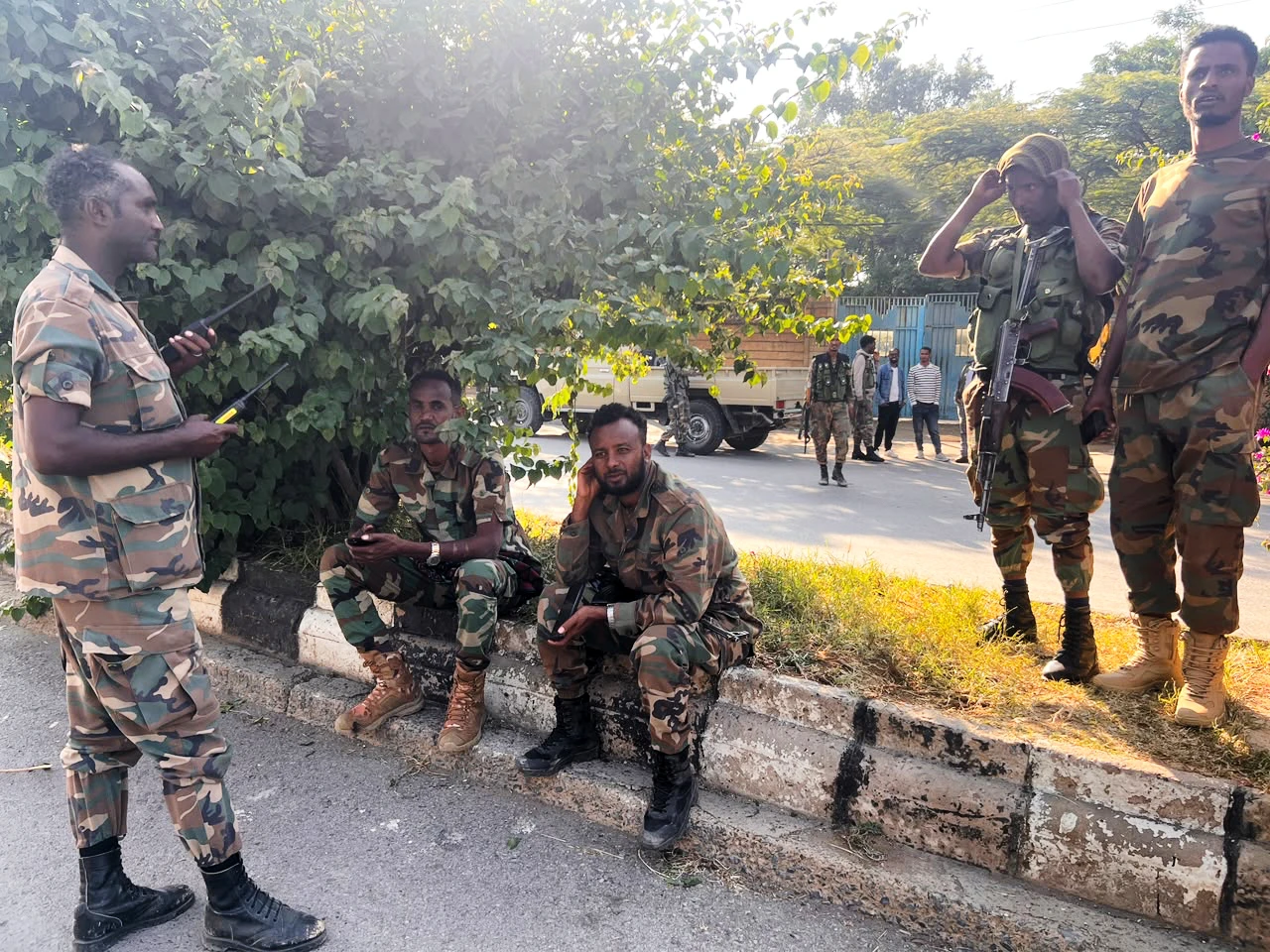
KHARTOUM, 13 October 2005 — The United Nations mission in Sudan has declared much of the war-torn western region of Darfur unsafe for humanitarian operations, a UN spokesperson in Khartoum said yesterday. The mission cited the recent upsurge in violence in the region that left three African Union soldiers dead and the brief abduction of nearly 40 other AU personnel by rebel forces as major causes for concern.
“Almost two-thirds of the area of operation of the humanitarian community in South Darfur is considered hazardous for the safety of humanitarian personnel and has been declared no-go areas,” Radhia Achouri said. She added that tensions in and around Geneina, the capital of West Darfur state, had led to a deterioration in security conditions in the region, prompting the United Nations to issue a travel warning for aid workers.
The United Nations mission “has declared all roads leading out of the town to be restricted in view of armed clashes north, west and south of the town in addition to increased banditry along all roads,” Achouri said. She added that only North Darfur state appeared to be relatively safe. Humanitarian access to North Darfur, she said, “has been less affected and most areas of operation are accessible.” The United Nations said it also continued to receive reports from around the Darfur region on incidents of banditry, looting and robbery which sometimes involve firearms and result in casualties.
The UN mission said there have also been reports of attacks by Arab tribesmen on villages in Darfur that the AU was investigating. “Thousands of civilians are fleeing to IDP (internally displaced persons) camps throughout the region” due to the violence, Achouri noted. An estimated 180,000 to 300,000 people have died in Darfur since a civil conflict between rebels and government-backed Arab militias erupted in February 2003, with some 2.6 million civilians left homeless.
Meanwhile, a sit-in by hundreds of Sudanese refugees outside the offices of the UNHCR in the Egyptian capital entered its 14th day yesterday, even as the agency insisted it could not meet their asylum demands. “We will remain here until the UNHCR meets our demands,” Amir Khalid, one of the leaders of the protest, told AFP.
The protesters have presented the UN refugee agency with a list of over a dozen demands, including that it continue resettling refugees in third countries and reopen the cases of asylum seekers whose files have been closed. But the UNHCR insists it is unable to meet most of the protesters’ demands.
The protesters must understand that resettlement to a third country “is not the right of any refugee,” UNHCR senior regional external relations officer Leila Jane Nassif told AFP. She added that this depended entirely on countries offering to accept the refugees. Nassif also ruled out the possibility of reopening closed files in the near future. “I don’t see that happening,” she said.
The protesters, including women and children, have been camping in a park a few hundred meters from the UNCHR offices and have vowed to remain there until their demands are met. Some have not returned to their Egyptian homes for several days, opting to sit under the blazing sun with little or no protection. They claim harsh living conditions in Egypt have prompted them to ask to be resettled in third countries, fearing improving ties between Egypt and Sudan could result in forced deportation or repatriation.
There are 14,400 Sudanese refugees registered in Egypt, many of them from southern Sudan where a peace deal earlier this year ended decades of war, but also from western and eastern regions where fighting continues.
The north-south peace deal created a new political reality in the country and has paved the way for the return of hundreds of thousands of Sudanese refugees from neighboring countries. “The situation is potentially changing,” Nassif pointed out. She noted that this has had an impact on decisions of countries to continue to resettle Sudanese refugees. “Many persons are starting to go back.”