
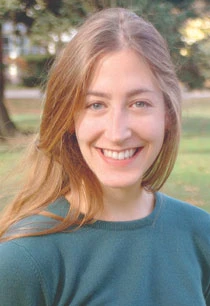
I rolled my eyes when I learned that Jennifer Miller — daughter of Aaron David Miller, the well-known former US State Department peace negotiator — had written a book, at the tender age of 24, about Arabs and Palestinians after taking a six-month “journalism vacation” in the Middle East.
Admittedly, all the right elements were in place for her. She’s smart, she had a good education (Brown University), and she can write. And because of her father, doors opened and she had access to all the right people (the type that cause veteran reporters to drool with envy — the dust cover, for example, lists kudos from Madeleine Albright, Mahmoud Abbas, Shimon Peres, Queen Noor and Elie Wiesel). With all this going for her — who couldn’t succeed?
What makes the book credible are the admissions of her own stereotypes: “I didn’t have any context to understand what I saw in — the movie — “Not Without My Daughter,” and it became a central image in my definition of Islam… fortunately, my misconceptions about the Middle East did not translate into actions. I did not feel afraid when I met an Arab or Muslim person for the first time….”
That observation made me uncomfortable, and it was hard to push on, especially when I read that she still wrestles with her own bias:
“Still, even today, I am aware of retaining many stereotypes about Islamic and Middle Eastern culture. These aren’t issues I think about when I’m with my Arab and Muslim friends, but I can never completely forget them while traveling in Palestine and other Arab cities.”
What kept me going was when she also admitted equal difficulties with many people she met, including the Israeli settlers on Gaza and the West Bank. Miller said she applied lessons learned — on the importance of pushing beyond revulsion.
“My father spent twenty-five years as a negotiator workig at the Department of State on Arab-Israeli issues and attended all the Oslo interim negotitations, including Camp David. During that time, he watched Palestinian and Israeli security and intelligence officials — hard men with blood on their hands — laugh, joke, and feel for one another. I myself have listened to Israelis talk admirably about the same Palestinians they once deported. These societies are not primordially wired to hate each other. Hate, mistrust, and bias are learned. They can be unlearned, but it’s a risky endavor.”
And her personal stories do make the book interesting. Miller’s own grandfather was furious when he learned that she’d sat at the same table as Yaser Arafat. “He called Arafat a murderer and wanted me to call my book, ‘Arafat Exposed.’”
And it is a pity that Arab News is the first Arab newspaper to interview her, despite plenty of interviews with Jewish, Israeli and American journalists. Young Arabs could do well to read about her experience and perspectives and compare it with their own.
Despite the fact Miller grew up in a family obsessing over the Israeli-Palestinian conflict, she sees herself “more as a writer than a Middle East scholar,” and says the issues raised in her book are of identity — national identity, personal identity and coming of age.
“Basically what I did with ‘Inheriting the Holy Land,’ is to take my readers on a journey with me into foreign territory — to cross national lines, religious lines, and also politically partisan and ideological lines.”
And she rebels against political polarization: “There are plenty of people in the world who are pushing their agendas on either side, but there are very few voices that — even just for the sake of educating people — will show different perspectives.”
“To win an argument, you have to reach the person you’re arguing with. So if you take an extreme view, or even if you’re just not listening, there’s no way you’re going to have any practical, political movement. I wanted to educate myself about as many perspectives as possible, and not let my political opinion stand as an obstacle.”
When asked what she specifically wanted to convey to our readers, Miller said:
“When I was growing up and I saw movies such as “Not Without my Daughter,” I had misconceptions about the Arab world and about Islam from the movies I’ve seen, and various stories I had heard. I was aware these things were not true, but when you hear about terrorism you get an image in your head, you don’t even think about where that image comes from. It just appears. That has a lot to do with how you’ve been socialized and the influence that you associate with it.
“When you get to know people on a personal level, new images replace old ones.”
In traveling to the Middle East, she said she initially felt more comfortable with the Israeli lifestyle, as she “was more familiar with it and because of a shared religion.”
That changed as she began to befriend Arabs. “So many of us prefer to stay within our own comfort zones, and it takes risk to be able to leave that zone of familiarity.”
In her book, she writes of visiting an Egyptian family in Cairo during Eid. When they invite her to go to the mosque with them she finds herself in a dilemma.
“I had a small battle in myself about whether or not I would go to this mosque. I was really nervous; it was a huge step for an American Jew in Cairo.” But she pushed herself to go “because I’d never experienced a Muslim service before.” There, she had the opportunity “to see what it was life for young Muslims, my own age, to pray.”
“Even though you can learn about Islam, you understand it on a different level. But to actually be with Muslims when they pray and feel their devotion around you, that really gives you a sense of the religion that you can’t get anywhere else,” said Miller.
“It was these experiences that helped me dispel any of the stereotypes that I had.”
When asked about the American attitudes she’s confronted regarding the Middle East, she admitted it is not on everyone’s “radar screen,” and said the US media plays a huge role in influencing opinions.
“I really don’t think most Americans are conscious about holding these stereotypes close to their hearts. So much infiltrates from the media, be it the entertainment media or news media. And, after a while, it’s not a conscious thing, it’s just what exists. It’s important for people to try to find alternative sources, to seek out knowledge and try to gain a little more understanding.”
But Miller said she didn’t write her book to educate Americans.
“We are the vital brokers in the Israeli-Palestinian conflict, and Americans must be perceived as balanced. This is so important to millions of Arabs and Muslims around the world. In the book I argue about the importance of cross-cultural understanding.
“What I’m hoping that this book has done, in a way that’s accessible to Americans is to introduce them to Palestinian culture and society, and to Israeli culture and society, in a way that is not threatening,” said Miller.
She said she tried to achieve this by giving using others’ voices, and hers — “as a young woman who is always grappling with her own identity.
“I’m not telling the American audience what to think. But just give these perspectives from the book a chance… give these Palestinian perspectives a chance.”
She said she’s “made a point of giving equal room to multiple perspectives. The Palestinians have the same amount of speaking space as Israelis. And I sought a diversity of perspectives from within both communities.
“My whole philosophy is that I’m not trying to prove one side over the side; I’m trying to show that the reader can have a broader perspective,” said Miller.
Miller soon plans to leave on a book tour across the US, and will focus on addressing university and high school students about the issues discussed in her book
Upon hearing this, everything clicked. This is not a book for those who have been covering or following the Middle East for decades. We, the older generation had our chance at Mideast peace; now it’s Miller’s turn, and her peers.