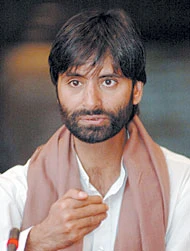
ISLAMABAD, 4 November 2005 — The chairman of the Jammu and Kashmir Liberation Front has called for a concerted effort by both India and Pakistan to wipe out the handful of extremists who he says want to sabotage the peace process between the two countries.
In an exclusive interview with Arab News, given in the Pakistani capital last Wednesday, Yasin Malik said that while only a few terrorists had actually disturbed the peace of people in India they were still “determined to sabotage the peace process between India and Pakistan”.
In a conciliatory mood, the chairman of the JKLF who claims to have been tortured by Indian security forces last year, said that a “handful of terrorists” could not be allowed to undermine the process when both India and Pakistan had joined hands to serve humanity. Both countries, he said, were “genuinely engaged” in dealing with the aftermath of the Oct. 8 earthquake which had left tens of thousands dead, many hundreds of thousands injured and missing and several million homeless.
Malik said the governments of Pakistan and India had to act with absolute determination against the terrorists. The killing of 60 people by a small group of them in New Delhi last week had created an atmosphere of mistrust, he said. Just when the region needs the two governments to work together for humanity’s sake, just when the two are making every effort to defuse the situation, opening up border crossings and initiating confidence-building measures, people might be led into thinking that there is more than a few elements out to sabotage the process.
“Suddenly we find a few individuals bombing the Indian capital. Obviously this attempt will sow doubts in the minds of many millions in India and Pakistan. People will ask what is going on when Pakistan and India are improving their bilateral relations and helping each other in the aftermath of earthquake.” Now was the time for Pakistan and India to track down these militants. Both Gen. Pervez Musharraf and Prime Minister Manmohan Singh had to eradicate them. “We have seen so much bloodshed; now is the time to serve humanity. The killing of innocent people must stop.”
Malik, in his mid-30s but frail, said the people from Indian side of Kashmir had welcomed the decision to open five crossing points on the Line of Control dividing the territory. He had arrived in Pakistan with an aid consignment and was helping in relief operations in Azad Kashmir. He said that Kashmiris on both side of the divide would work for mutual rehabilitation and peace, but they were confronted by “one of the biggest tragedies of our times”.
Expressing dissatisfaction with the amount of aid and assistance donated by international community, he said that much greater help was required. “The world community must realize the misery of Kashmiri people,” he said. “We have to provide shelter to hundreds of thousands of people on a permanent basis. We need more cash and relief equipment.
Yasin Malik expressed satisfaction over his meetings with Pakistan’s leaders and politicians of Azad Kashmir.”
He was confident that the Kashmiri people would overcome the tragedy and rebuild, because they were, he said, a “great people”. “But we do not want to see more suffering because of politics.”
He was at pains to point out that his own visit to Azad Kashmir was not “to gain extra political mileage”. “My visit is totally for the service of the affected people,” he said.
Malik was arrested and imprisoned several times by the Indian government or the administration of the Indian Kashmir but has remained determined to champion the cause of the Kashmiri people.
Responding to a question on an expected violent reaction from some Kashmiris to the conviction of seven militants and death sentence to one Pakistani citizen by an Indian court on Oct. 31, he agrees there was a possibility — “but reactions should be for the service, not disservice, of humanity.”
It would only create a divide between the people of the region. “We have to stand united against such catastrophes. He did not criticize the timing of the court’s decision which came as both India and Pakistan were preparing for negotiations to open points on the LOC. “A handful of people can no longer keep the leadership of India and Pakistan hostage to their brutal behavior.”