AMMAN, 11 November 2005 — Jordan’s King Abdallah said yesterday his country would not be “blackmailed” into changing its policies after Al-Qaeda claimed responsibility for a wave of bomb attacks in the capital Amman on Wednesday night that left 59 people dead and scores injured.
“Jordan is not afraid and will not accept to be blackmailed and these acts will not make us change our positions and convictions and to retreat from our role in fighting terror in all its forms,” he said.
He also pledged to bring to justice those behind the attacks.
The strikes triggered worldwide condemnation. The UN Security Council called for those behind the triple bombings to be swiftly brought to justice and urged all governments to help the Jordanian authorities track them down.
“The Security Council reaffirms that terrorism in all its forms and manifestations constitutes one of the most serious threats to international peace and security,” the 15-nation body said in a statement.
“Any acts of terrorism are criminal and unjustifiable, regardless of their motivation, wherever, whenever and by whomsoever committed,” said the statement, read by Russian Ambassador Andrei Denisov, the council president for November.
The United Nations announced Secretary-General Kofi Annan would travel to Amman today. Annan had been scheduled to visit Jordan yesterday but put off those plans after the bombings.
Custodian of the Two Holy Mosques King Abdullah and Crown Prince Sultan sent letters to King Abdallah, offering their condolences to the Jordanian government and the people and condemning the cowardly terrorist act. In identical letters, the king and the crown prince said the government of Saudi Arabia and its people “stand in solidarity with their brothers in Jordan against terrorism.”
In an Internet statement, Al-Qaeda linked the blasts to the war in Iraq and called Amman the “backyard garden” for US operations. “Our bravest and most generous lions launched... a new raid... in Amman,” Abu Musab Al-Zarqawi’s Al-Qaeda Organization in the Land of the Two Rivers said in a statement.
“After having studied and monitored the objectives, the sites of the hotels were chosen,” said the statement signed by group spokesman Abu Maissara Al-Iraqi.
The group, which has claimed some of the deadliest attacks in neighboring Iraq and grisly beheadings of hostages, said the targets were chosen because they provided “safe havens” for US-led forces in Iraq.
The Jordanian authorities interrogated an unspecified number of detainees in connection with the bombings, as tens of thousands of people took to the streets in the country’s major cities to condemn the attacks and express support for the king.
Police continued a broad security lockdown and authorities sent DNA samples to identify the attackers. Land borders — closed for nearly 12 hours — were reopened.
A senior security officer linked the bombings to Iraq, saying the bomber of Grand Hyatt, one of the three hotels targeted, spoke with an Iraqi accent, while several Iraqis have been detained.
Security staff patrolling the Hyatt stopped the middle-aged terrorist as he was wandering the lobby. He spoke briefly in an Iraqi accent with the guards before detonating the explosives strapped underneath his Western-style suit, the official said.
“Among those arrested are people with different nationalities,” the official added.
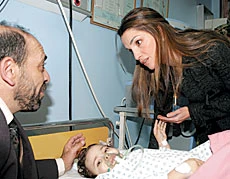
The figure of 59 dead included the three suicide bombers. There were 33 Jordanians, 6 Iraqis, 2 Bahrainis, 2 Chinese, 1 American, 1 Indonesian and 1 Saudi. Thirteen of the dead were unidentified. At least 96 people were injured.
— Additional input from agencies