
When it comes to shopping, people have different ways and means of doing it. Some like to shop till they drop while others like to window shop. Some prefer air-conditioned malls, away from the sun and heat. Some, however, opt for open-air markets that are inexpensive and congested.
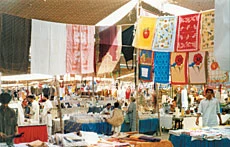
Hot, crowded but colorful; these are just a few words to describe the popular “Itwaar Bazaar” (Sunday Market) in Karachi. Put up every Sunday in a posh location, the vast open-air flea market is one of the biggest in the city.
The concept of a Sunday bazaar dates back more than two decades. It began with the influx of Afghan refugees into Pakistan in the late seventies. Permission to set up stalls was granted to Afghan vendors, who sold antiques, carpets and fresh produce cheaply. Later on a completely new kind of flea markets developed with the size increasing along with the number of items sold.
Divided into many sections the market has everything from antiques, furniture, movie DVDs, new and used bags, shoes, clothes, and books to fresh fruits and vegetables. It is a place no one leaves empty-handed.
According to a woman advertising executive, ”It has become an outdoor activity here in Karachi, especially for women. I know many who plan to go to the Sunday Market as a pleasant Sunday afternoon pastime.”
A large crowd of well-dressed women, college girls, and senior citizens of both sexes are shopping and bargaining with the vendors. Afghan boys run around, offering to carry heavy loads and bulky packages. Sellers call out prices and invite the public to browse their wares. But what is it that attracts people of every class and background to these markets?
“Perhaps it’s the availability of virtually everything,” said a textile designer. “Think of something and it is there — a towel, a needle, buttons or silk fabric. And you can get them all at the lowest prices imaginable.”
Parking and security are well taken care of. A free parking ticket is provided at the entrance and lost-and-found booths have also been set up. Among the different stalls, there is also charity ones that are set up by different NGOs. These sell beautiful traditional handicrafts made by needy village women; most of the handicrafts are both beautiful and useful and are perfect for a keepsake or a gift.
After doing a lot of shopping and bargaining you can always treat yourself to some delicious local snacks and drinks such as chaat, dahi bara, ganney ka ras and falooda. Though they may not be served in the most hygienic way, they are nonetheless a delight for the taste buds.
To Buy or Not to Buy
A section that attracts people to most flea markets is the second hand zone. Bags, clothes and shoes by labels such as Nine West, Marks & Spencer and even high-end brands such as Versace, Chanel, Louis Vuitton and Prada are displayed there for a discounted price.
“People in the West donate these things and companies buy them. Then everything is sent to Dubai where it is sorted out and distributed to different places and we get our share here too,” said a vendor beside his stall, which featured CK jeans and Dior shirts. “These are all export quality items. We also get rejects and extra sale pieces that people buy gladly,” the vendor explained.
Whether early in the morning or late in the evening, the market is crowded with shoppers. The best time to go is during the daytime as stalls are full and bargains are plentiful. One woman said, “A lot of stuff is worth buying but at times, due to excitement, you end up buying things which you regret later on and there is a no return policy. Plus if you go in the morning or afternoon you get better stuff!”
A Filipino factory employee in Karachi said, “I come here every Sunday. The salespeople have learned a lot. They know the brands now so they push the prices up. You really have to bargain but it’s worth it and it’s fun.”
Hide & Seek
Although crowded with Pakistanis as well as foreigners, the market is not a place everyone wants to be seen. The place is not as prestigious as the shopping malls but it is still full of shoppers of all classes.
One man who owns a second-hand bag stall, said, “We get a lot of people and they feel free to buy whatever they want. They don’t hide because the items are good and cost much less than they would pay in the malls.”
The advertising executive said, “Now no one hides. I often come across people I know. People want to dress well, and not everyone can afford to go abroad and shop so the market has become a place to go. I know a number of celebrities and I find them shopping here for their shoots.”
According to one fashionable woman, “I think it’s only status conscious people who hide; they can’t shop for the whole year in just one trip abroad. Therefore, to maintain their standards, they buy from the flea market and hope people won’t notice. On the other hand, I also have friends who wear and tell.”
If there are people who love going to the Sunday Market, there are also those who do not. When asked, they all said the same thing — it’s hot and dusty. No matter what, on Sunday the people of Karachi spend at least part of their day shopping, negotiating or brunching in the Sunday Market. It’s an experience not to be missed.