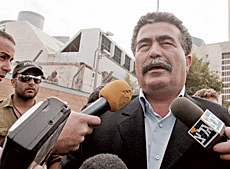
GAZA CITY, 18 November 2005 — Israeli leaders yesterday decided to hold early national elections. After a meeting with Prime Arial Sharon in the morning in Tel Aviv, new Labour party leader Amir Peretz told reporters that elections would take place between the end of February and the end of march 2006.
Peretz described the meeting with Sharon as “to the point,” adding that he would agree with any date that the prime minister chose. “I will let him decide the date within the period of the end of February and the end of March,” Peretz said.
According to Haaretz daily, Sharon’s chief rival in the Likud party, Benjamin Netanyahu urged the prime minister on Wednesday to defer the elections until May “to give people time to get tired of Amir Peretz” but Sharon decided to ignore that suggestion.
The decision to hold elections early next year is likely to freeze any plans to capitalize on Israel’s Gaza withdrawal to restart peace talks with Palestinians. A series of urgent election-related meetings yesterday overshadowed a fresh, hard-won agreement on reopening the vital Gaza-Egypt crossing, illustrating that until a new government is in place, Israeli leaders will be concentrating on domestic politics instead of peacemaking.
Palestinians, too, are heading into an election season, with parliamentary balloting set for Jan. 25, featuring candidates from the Hamas for the first time, mounting a serious challenge to Palestinian President Mahmoud Abbas.
There were hopes that the Gaza pullout, completed in September, would jump-start efforts toward a full peace accord between Israel and the Palestinians, but the intervening weeks were dominated by haggling over the border crossing — an issue finally resolved Tuesday with the direct intervention of US Secretary of State Condoleezza Rice.
Sharon resisted moving up the election scheduled for next November, but changed his mind after the Labour party threatened to bolt the coalition, putting the survival of his government in doubt.
The surprise selection last week of fiery union leader Peretz as Labour party leader and candidate for prime minister threw the Israeli political world into turmoil. Peretz campaigned on a promise to force new elections.
Joseph Lapid, head of the opposition Shinui party, met with Sharon later yesterday and said they agreed on a March ballot.
“On the one hand, we want to shorten the process, but on the other, we have to give time to prepare for elections, and so we agreed they would be in March,” Lapid said.
Sharon’s spokesman, Asaf Shariv, said only that the prime minister wanted to hold elections as soon as possible.
Sharon plans to consult with other political parties on possible election dates before a scheduled Parliament vote on Monday on dissolving the government, Shariv said.
Soon after the agreement to hold early elections was reached, Israeli forces killed two Palestinians outside the West Bank town of Jenin. The dead men were identified as Ahmed Abahra, 22, and Mohammed Zayed, 17, from the Al-Aqsa Martyrs Brigades, loosely affiliated to the ruling Fatah party.
They were shot in their car by members of an elite Israeli special unit as they were driving toward the village of Yamun, to the west of Jenin, Palestinian sources said.
An Israeli army spokesman said a special border police unit, intending to arrest two wanted Palestinians in Jenin, opened fire at their car after it failed to stop at a makeshift checkpoint.
Palestinian officials feared the violence would intensify in the run-up to Israeli elections. “I hope that the Israeli election campaign will not be marked by more Palestinian blood,” Palestinian negotiator Saeb Erekat said.
— Additional input from agencies