
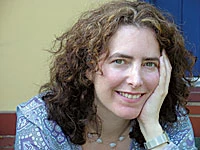
Before there were authors churning out books with titles such as “The Arab Quagmire,” “A Portrait of American Muslims,” and “Diversity and Arabs,” there was Diana Abu Jaber. She was writing stories with characters so real, you could feel the love or resentment between them. The horrifying events of Sept. 11 stirred a nation cocooned in ignorance to the existence of disenfranchised rogue elements in the Middle East.
Americans are normally fed a steady diet of entertainment and local “cat-stuck-in-a-drain-pipe-four-officers-deployed-to-help” that numbs rather than stimulates their senses. But the war in Iraq saw American boys being deployed to fight in a region whose names the administration could not even pronounce, let alone understand its complex politics.
The American people began to ask questions, “Why is this happening to us?” and while the administration remained tight-lipped, scholars, journalists and novelists began to clatter frantically at their keyboards to fill in the gaps.
Abu Jaber is not one of the swarms of authors attempting to explain the political dynamics that drive Arabs to do what Americans assume they do. “The problem that Americans grapple with is that the media tends to transmit this idea that certain cultures or religions just innately give rise to violence or rage. Sometimes my Arabic name brings my writing under a weird sort of scrutiny — I feel like the fact that some Americans will question me more about politics than art is a kind of box — the notion that Arabs are only political beings, not artistic, emotional ones.”
Before books explaining Arabs and Muslims showed up across American books shelves, Abu Jaber was using characters from her own experience of being born into a family steeped in Middle Eastern culture. “Arabian Jazz” — the sometimes surreal, sometimes gritty-real story of a Palestinian-Jordanian father raising two daughters in America — came out to critical acclaim all over the US “Crescent” followed and out of the research for it came “The Language of Baklava.”
If you read all three at a stretch, you will feel a definite sense of continuity. But “Crescent” came out ten years after “Arabian Jazz.” In between, Abu Jaber had been working on a project that American publishing houses are perhaps not yet fully prepared to put their name and financing behind — a book that speaks of Palestinian suffering after the creation of the state of Israel.
Publishing houses wanted passages to be re-written, wanted to see proof of Israeli war crimes, wanted to dilute the raw experience of expulsion and exile.
To avoid having to mutilate her idea, Abu Jaber put aside “Memories of Birth” and began a third novel, “Crescent.” Here she explored the dynamics of belonging embedded in the immigrant experience through a tale of love between a distinguished Iraqi professor and an Iraqi-American chef. Food plays a prominent role in the telling of the tale, and so it is no surprise that her next book, “The Language of Baklava” tells the story of a Middle Eastern family entirely through food.
“I do believe that food is one of the most immediate and most convincing ways of explaining cultural experience to another person,” Abu Jaber told National Public Radio. “I could speak for whole paragraphs about the Middle East, but I’d rather give somebody a shish-kabab; you can’t help having a kind of insight that comes, not only intellectually, but also emotionally and physically, from the experience of breaking bread together.”
It is a lush novel, with details bound by buoyant prose that brings to life characters traversing the political and cultural minefield of Arab existence in a fluid, ever-changing world.
“The Language of Baklava” is an unapologetic, pithy, incisive look at family dynamics that has you smiling as you connect with one character after another, and sputtering outright as you appreciate the comic antics of ridiculously self-conscious uncles and aunts.
Especially good was the benign view the novel took of what goes on inside an Arab head and Abu Jaber was asked to present a more human Arab to American audiences, as opposed to the demonized one CNN paints every hour. “I do think that was a part of my goal, but my first ambition, as a writer is to try and tell stories that are as emotionally honest and meaningful as I possibly can,” said Abu Jaber. “The fact that I come from an Arab-American family is part of my identity, but I try never to write public service announcements. I want the people in my books to be true and vivid to my readers, and if it helps with cross-cultural understanding, all the better.”
When Arabs outside the Arab world read “Arabian Jazz,” “Crescent” and “The Language of Baklava,” they see themselves reflected through the myriad prisms Abu Jaber’s characters provide. It doesn’t take a rocket scientist to figure out how hard it is to be an Arab in America now.
The news screams “terrorist” at you and the vast majority of Americans, especially from the Bible Belt in middle America, tend to believe what they hear. According to Abu Jaber: “I’d say the pendulum on Arabs in America is swinging back to relative normalcy again: (back to) misconceptions, weird biases, and general invisibility. After 9/11, there was a surge of interest in the Arab world, fueled in large part by shock and anxiety.”
Abu Jaber was asked to speak at rallies and to church groups and she felt “a sense of openness and curiosity. But I feel like a lot of that has settled back down again. While the terrorism paranoia lingers, I think Americans tend to be more transfixed by the cult of celebrity and the spell of consumerism.”
Journalists and producers find it difficult to refrain from using Abu Jaber as an expert on Middle Eastern issues. “There was a period when I was fielding questions on every political aspect of the Middle East — one interviewer asked me what I thought about the incidents at Abu Ghraib — I said that I was against it: Torture is bad! But I try to discourage those sorts of questions — there are all sorts of political pundits much more expert at packaging the Middle East than I am.”
The novelist also freelances as a food critic, writes for major publications such as the Washington Post, and serves as a university instructor, teaching creative writing. In many of her roles, she tries to put terrorism and struggles for freedom in proper context: “I do think it’s possible to present the economic, personal, and political struggles that things like extremism spring out of without coming across as arrogant or apologist.
It’s helpful to draw comparisons between groups such as evangelical Christians and Muslim fundamentalists so that people can imagine themselves in a different context. As Churchill said, “A fanatic is one who can’t change his mind and won’t change the subject. Doesn’t matter what country they’re from.”
Abu Jaber doesn’t dwell on extremism, she explores the in-between world of immigrants, exiles and Bedouins, and from those flow the fiction her fans eagerly read. She inhabits an Arab world far removed from extremism and her writing reflects it.