BEIRUT, 15 August 2006 — A UN-brokered cease-fire aimed at silencing the guns in the month-old Lebanon conflict took hold yesterday, sending thousands of displaced Lebanese streaming back home in the war-battered south.
But at least four Hezbollah fighters were killed in skirmishes with Israeli soldiers, underscoring the fragile nature of a truce agreement which came into effect following some of the most intense fighting of the conflict.
Israeli Prime Minister Ehud Olmert made no apologies for launching a war that has killed more than 1,300 people, most of them Lebanese, saying it had changed the face of the Middle East.
“The actions of the Israeli Defense Forces in the air, on the sea and on the ground have brought about a change in the regional strategic balance,” said Olmert.
“There is no more state within a state,” he said of the Hezbollah movement, which has controlled south Lebanon since Israel withdrew after 22 years of war and occupation in May 2000. Olmert, facing criticism at home that the massive onslaught has failed to deal a knockout blow to Hezbollah, vowed to hunt down leaders of the group that has been a thorn in Israel’s side since 1982.
Israel began withdrawing some troops but kept up the pressure with threats to conquer southern Lebanon again and vowed to maintain its air and sea blockade that has all but cut the country off from the outside world.
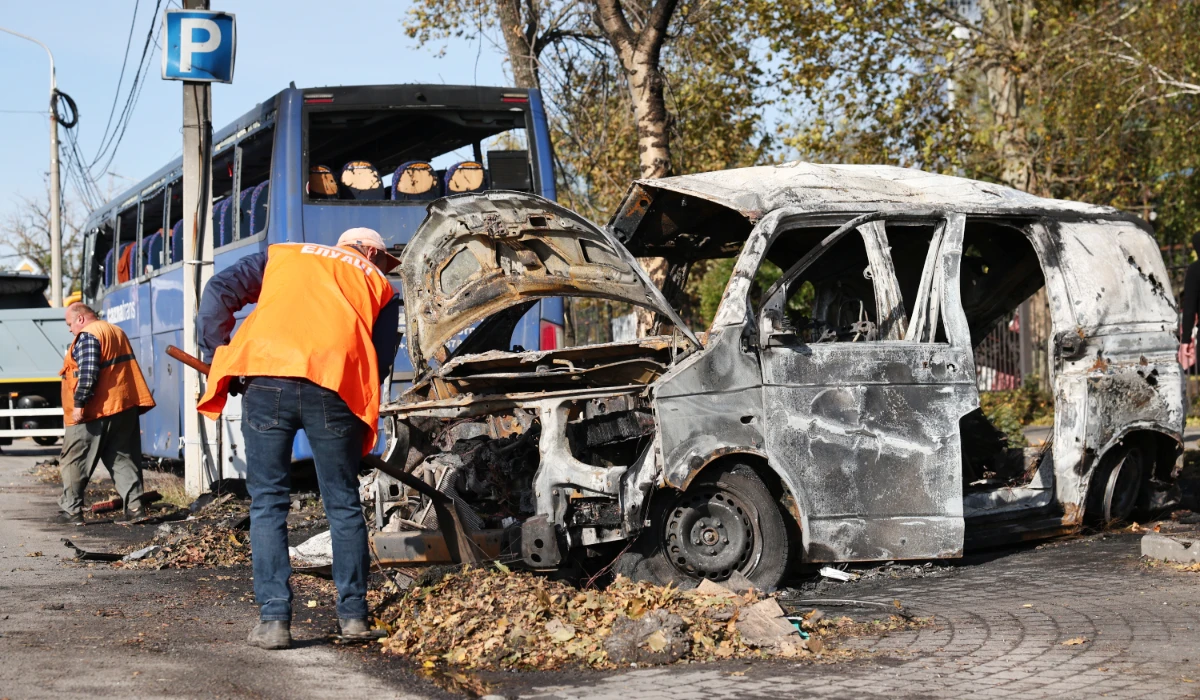
Its forces had pursued their battle to wipe out Hezbollah until the last minute, shelling areas in the war-battered south and unleashing airstrikes on the ancient eastern city of Baalbek, killing five members of the Lebanese Army and security forces and two civilians.
The Israeli Army said four Hezbollah fighters were killed in clashes with its soldiers but that the cease-fire was holding nevertheless.
The cessation of hostilities followed a UN resolution aimed at ending the deadliest cross-border conflict in a quarter century which has claimed the lives of about 1,150 people in Lebanon, most of them civilians, and 158 Israelis.
But with Hezbollah promising to fight until the last Israeli soldier leaves Lebanon and Israel stressing that it will respond to any attack on its troops or rocket fire, it was unclear whether the cease-fire would hold.
The White House, which has staunchly supported Israel throughout the fighting, expressed cautious optimism about the cease-fire and said Hezbollah had been weakened.
“We hope that everybody will stay true to the cease-fire and that the government of Lebanon, again, will be able to have the credibility,” spokesman Tony Snow told reporters.
UN Secretary-General Kofi Annan said he was “relieved” the cessation of hostilities appeared to be holding, and urged UN member states to contribute troops to a UN force there.
Hezbollah itself boasted of victory in the conflict which began on July 12 after its fighters captured two Israeli servicemen in a deadly cross-border raid, just weeks after a similar attack by Palestinian fighters that triggered a massive offensive against the Gaza Strip.
During the monthlong conflict, Hezbollah fighters engaged in fierce ground battles with Israeli soldiers and fired around 4,000 rockets, killing 41 civilians and 117 soldiers.
Israel denied a report in the New Yorker magazine that said it had planned its campaign against Hezbollah long before July 12.
The magazine also reported that the US government was closely involved in pre-planning Israel’s military operations against Hezbollah, viewing it as a prototype for a US pre-emptive attack to destroy Iran’s nuclear installations.
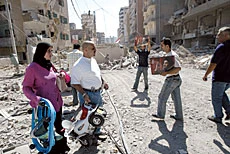
Taking advantage of the relative quiet on the ground, exhausted refugees in Lebanon streamed toward the south and the first UN aid convoys in days arrived in the war-battered southern city of Tyre.