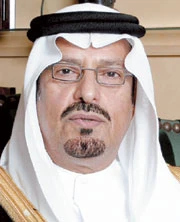
JEDDAH, 27 April 2006 — Hail Gov. Prince Saud ibn Abdul Mohsen has emphasized the importance of the decentralization of authority and transfer of decision-making powers from the ministries to regional governorates to speed up implementation of development projects.
Speaking to Asharq Al-Awsat newspaper, Prince Saud said there was some sort of agreement on providing greater powers to regional governorates and councils to tackle people’s problems and meet their requirements. “I am not saying that powers should be given to regions without any supervision or follow-up by the central government,” he said, adding that decentralization would reduce the burden on the central government.
“It will also increase the responsibility of regional governors as the regional councils will be responsible for spending in accordance with budget allocations, calling tenders, awarding contracts and setting out regulations,” he said. “I look forward to the day when citizens can discuss the budgets of their regions. People should be given a chance to meet with officials to ask them about welfare and development projects in their areas.”
Prince Saud blamed bureaucracy and red tape at ministries in Riyadh for many of the problems facing regional governorates. “We have seen things changing with the change of an official if he deals with people in the right manner,” he said.
He said top officials at government departments should work to facilitate procedures of citizens instead of complicating them. “Attitudes of some people change when they sit in high posts,” he said. “I don’t generalize; about 80 percent of officials are good.”
Prince Saud said he would be responsible for the employees appointed by him and would be ready to resign if they make any mistake. “But now many officials in a region are responsible to their bosses in Riyadh. This is an issue raised by all regional governors,” he added.
Prince Saud expressed his hope that there would be moves to provide local governments with more regional control. “I am not saying that it should happen within a day or two, but there should be a time-bound program with specific standards,” he said.
He said cities like Jeddah and Dammam should be ready by now to accept such governing power because they have offices of ministries and government departments.
Saud said the ruler could appoint a committee to make an assessment of such local governments and could change a governor if he had failed to fulfill 80 percent of projects. “We are not calling for federalism. We want only the shifting of the powers of ministries to governorates within a specific plan. We don’t want any powers if we cannot have the ability to undertake them,” he added.
He said heads of various departments themselves had admitted there were some unnecessary procedures that could be avoided. “They say there are certain rules and regulations which have no meaning and create obstacles for them and us,” he explained.
Highlighting the significant position of Hail as an agricultural region, the governor said it supplies 30 percent of the Kingdom’s grains. The region is also rich with bauxite and aluminum.