
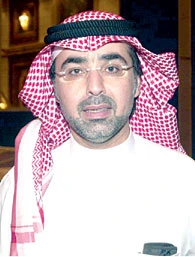
BEIJING, 3 November 2006 — China should invest in Saudi Arabia’s petrochemical sector or risk becoming a victim of the Gulf nation’s bid to use its energy reserves to become an industry leader. “Don’t’ miss the boat,” Amr Al-Dabbagh, governor of the Saudi Arabian General Investment Authority (SAGIA), told Chinese investors at the closing session of the CEO Forum here yesterday.
His speech on “Beyond the intent to performance” was a strong message to over 400 top global CEOs who took part in the event organized by Business Week.
Dabbagh not only outlined the method by which SAGIA would position the Kingdom as one of the top 10 most competitive nations by 2010 (10x10 strategy), but also outlined the strategic possibilities between the Kingdom and one of the strongest economies.
“We’re the most cost-efficient place on earth for the production of finished plastic products and China is one of the largest consumers of plastic in the world. We’re well on our way to becoming one of the top three fertilizer-producing countries in the world and China is the largest consumer and producer of fertilizers in the world,” he added.
“Chinese companies ought to be a part of our growth as we gain a larger market share in these sectors. Our natural resources and strategic profiles are perfectly suited to being developed by China’s capital and expertise, and we would like to see this working to our mutual advantage,” he said.
“The synergy between us is just too strong and we’re keen to forge cooperation and relationship strengthened by the recent visit of Custodian of the Two Holy Mosques King Abdullah to China,” Dabbagh said.
The Kingdom hopes to draw $50 billion of foreign cash into the petrochemical industry over the next 15 to 20 years as part of a campaign to make it one of the top three countries in the sector.
China’s vast market and export-oriented manufacturing industries makes it a perfect partner for Saudi companies with their cheap energy and feedstock. “It makes economic sense for Chinese firms to process petrochemicals in Saudi Arabia instead of shipping energy and raw materials home to do it there,” Dabbagh said.
The Kingdom aims to grab 15 percent of the global market in plastics by 2020 and boost ethylene output to 14 million tons by 2010 from under seven million tons at present. “China is a global player in finished plastic products and the Kingdom has an ongoing expansion program in this sector,” Dabbagh said. “So instead of the Chinese watching their market share globally shrinking, they would be better off being part of the action,” he added.
Dabbagh said the advantages of investment in Saudi Arabia, particularly with its accession to the World Trade Organization, were set to boost its access to markets including the European Union.
Saudi Aramco is negotiating two joint venture refineries in China, although talks are inconclusive.
— Additional input from Reuters