
IN the aftermath of 9/11, Afghanistan was in the limelight but few showed concern for the innocent Afghan victims of war or sympathy for the two million dead and missing Afghans over the past two decades. Nowadays, with the global focus on Iran and Iraq, Afghanistan is once again becoming a no man’s land. It is difficult to know what is really happening there.
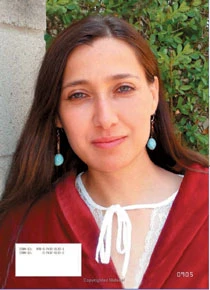
The Afghan journalist and filmmaker, Nelofer Pazira, has written a moving account of her life in war-torn Afghanistan. Entitled “A Bed of Red Roses: In Search of My Afghanistan,” the book reacquaints us with the history of the country.
The author wonders why her native country has become a permanent battleground for proxy wars and political rivalries. Why has it become a place whose only relevance to the rest of the world depends on the value and extent of a Westerner’s life and security?
Nelofer Pazira fled Kabul for Canada in 1989 with her family but her love for Afghanistan never faltered: “I’ve left a part of me behind in Kabul... I’ve left my heart in mud villages where women await the return of their husbands “ she writes to her best friend.
She has returned several times since then to Afghanistan. She describes the capital, invaded by international forces, as the only protected city in the entire country. As for Kandahar she finds it has become “a city on the verge of an explosion. It was once a place of harmony and culture, of wealth and beautiful gardens and music and poetry... Kandahar is now a city of extremes, a place of men and guns, expensive cars and starving children. Even in post-Taleban Kandahar there are few signs of women. Those who venture out are covered from head to toe. The wealthiest and most powerful drive the latest model Japanese cars, watch sixty channels of television on satellite and frequently cross the Afghan-Pakistan border to engage in smuggling... The poor have to survive by begging or through back-breaking labor... If Afghanistan has been liberated by the United States and its allies, Kandahar is a poor advertisement for the West’s concern.”
The poetic title A Bed of Red Flowers sets the tone for this fascinating story. Pazira reminds us of the happier days before the Soviet invasion when Afghans used to gather in the countryside to admire the wild tulips and poppies. Despite harsh living conditions, Afghans retained their sense of poetry and humor while their faith only increased. In a moving manner, she tells us how the city dwellers of Kabul greeted the Soviet Army by chanting all night long Allahu Akbar: “Until dawn we chant, ‘God is Great.’ We are all so caught up in this rotation of rhythm and order that no one complains about the lack of sleep. Three nights of Allahu Akbar is our meek response to the nights of planes moving over the Kabul sky, the aircraft that brought the Soviet Army here at the end of December. This is our welcome, Afghan-style, to the Soviet invasion.”
Many Afghans were not as fortunate as Nelofer Pazira; they never had the opportunity to start a new life abroad. Others, like the poet Qahar Ausi, chose to come back to a land he couldn’t stay away from, only to be killed by a rocket less than a month after his return to Afghanistan in 1994. He had just celebrated his thirty-eighth birthday. A couple of years before his tragic death, Ausi had written to Nelofer Pazira asking her to return as a responsible caretaker of her own culture. She certainly heeded this advice as she is now a successful journalist, filmmaker and teacher based in Toronto. She starred in, co- produced and co-directed the movies “Kandahar” and “Return to Kandahar.” The former was presented at the Cannes Film Festival in 1991. Pazira tells us how a reporter asked her at a press conference why she had made a film about an “unimportant subject” indicating that people already felt then that Afghanistan was a forgotten land. That same year, Qahar Ausi wrote a poem in which he foresaw the difficult times ahead, yet urges the readers not to forget their ancestral land.
Moments holding daggers in hand
Moments announce danger and death
The end of your bitter journey is yet far from sight.
Listen, co-traveler,
In such a passing trip,
Don’t forget your ancestral land.
Praised by Khaled Hosseini, the bestselling author of “The Kite Runner,” this gripping story should be read by anyone trying to understand the tragic reality that is today’s Afghanistan.