
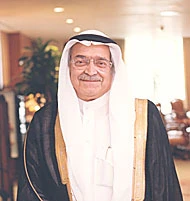
KUALA LUMPUR, 20 May 2006 — Saudi entrepreneur Saleh Kamil, president of the Dallah AlBaraka Group and one of the pioneers of Islamic banking, has called on the industry to go back to its basics and to shift from Shariah-compliant to Shariah-based financial products.
“What worries me in Islamic banking today,” he said, “is that there are not many bankers or academics that understand the spirit and philosophy of fiqh al-muamalat. Our scholars tend to find tools in traditional banking. We think we are excellent. But what we want is to design instruments according to our Shariah and not the other way round.”
Indeed, Kamil is a busy man these days. If he is not busy promoting his idea of a Mega Islamic Bank project, he is traversing the world speaking at this or that conference; or attending board meetings of his Albaraka Banking Group holding entity, which owns eleven Islamic financial institutions (IFIs) worldwide; or participating in this venture or that, usually associated with the Islamic finance sector.
In Malaysia, last year he opted to work with the RHB Group and took a 40 percent stake in RHB Islamic Bank through his local entity Dallah Albaraka Malaysia Holdings. Earlier this year he was appointed by Bank Negara (the Malaysian central bank) on the governing council of its International Center for Education in Islamic Finance (INCEIF), which is based in Kuala Lumpur and which, according to Bank Negara governor, Dr. Zeti Akhtar Aziz, “represents an investment in human capital to support the global development of the Islamic financial services industry. Human intellectual capital plays a pivotal role in driving the performance and market competitiveness of the industry.”
Kamil is ambivalent about the progress of Islamic banking in the last three decades. “As one who started in Islamic banking 35 years ago,” he said, “there have been many good things but also some not so good things. Who would have said that in over three decades there would be over 400 IFIs with over $350 billion under management?”
Quantitatively the progress has been good. But he is not so sure whether Islamic banking has achieved a qualitative breakthrough, especially in explaining the risala and the message of the ethos of Islamic economics and finance. Islamic finance, he stresses, differs in its mechanism and more importantly in its spirit and philosophy from conventional finance. The problem is that the perception is that the two systems are more-or-less the same. “Those who started the Islamic banking movement did not try to train the traditional bankers in the spirit and philosophy of Islamic finance,” he said.
He rues the fact that “one of the most important tools in Islamic banking”, namely the Mudaraba, which is effectively only used as a deposit-taking instrument, is under-utilized. With the result, 95 percent of Islamic finance is dominated by short-term Murabaha (cost-plus-financing), Ijara (leasing) and Musharaka Mutaniqisah (equity participation). This, he stressed was because of the low cost of finance and the “short-termism” of investors in Islamic finance. “In Islam we have all the tools. What we have to do is to convert short-term money into long-term finance and investments,” he said.
The unique Islamic institution of Zakat is an ideal way of mobilizing funds and mitigating this short-term view, for short-term investment carries a higher Zakat rate and vice versa. Real estate investments are an ideal long-term way of harnessing both investments and a fair rate of Zakat. He appealed to Muslim countries to institutionalize Zakat and claimed that Zakat is the most efficient fiscal (tax) system and that a whole economy can be run effectively on the basis of Zakat. He rejects any suggestion that Zakat is merely a payment to the poor and needy, but can be harnessed for adding value in education, training and tourism. “In the West there is respect for the law, but in our countries, you will find Muslims but not Islam,” he said.
Despite these shortcomings, Kamil remains optimistic and says there is a future for Islamic finance. Indeed his own Mega Islamic Bank project, Bank Al-Emaar, he claims, is gaining momentum with the aim of launching before the end of the summer. Investors in Saudi Arabia, Malaysia, Bahrain and Dubai have already expressed support for the Bank, which will be capitalized at $1 billion.
“The $1 billion is easy to cover. What we need is for certain conditions to be met in the Bank’s country of domicile. We have been talking to some regulators including the Dubai International Financial Center (DIFC), and I hope we can resolve this situation and they can accept our conditions,” he said.