
JEDDAH, 5 June 2006 — The Sino-Saudi relationship has acquired a new dynamism following the visit of Custodian of the Two Holy Mosques King Abdullah to China in January and a reciprocal visit by Chinese President Hu Jintao to Saudi Arabia in May. The high-profile visits have opened up many areas for joint ventures and investment between the countries.
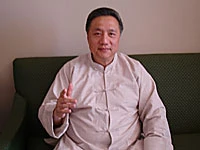
Frank Soong Shen, managing director, China, of SOFTLEAD Inc., a publicly traded American company, and CEO and chairman of Global Synergy Company Ltd., told Arab News that he sees vast opportunities for both countries in trade, transfer of technology, joint ventures and investment.
Shen, who is on a visit to Saudi Arabia, said, “Chinese companies are interested in doing business in Saudi Arabia and Saudi companies are also looking for opportunities in China.” He added that the recent visits of King Abdullah and Hu had opened doors for the countries to come closer and strengthen their ties.
Shen explained, “China has become the factory for the world in the last 10 years. It really went through challenging time for 40 years. China was isolated from the world from 1949 to the early 1990s and foreigners didn’t understand why they isolated themselves.
Throughout history, China s biggest challenge has been its huge population; the people who ruled China had no idea how to feed them. The Communists faced a similar problem when they took over how to feed 1.5 billion people was their biggest challenge. And they had only one thing to go by: Marxist theory. There were no economists, no experts, nothing. So they closed the doors and started to nationalize everything.
An example would be that if you worked for a restaurant, the restaurant was owned by the government. The employees were paid by the government. The government provided housing and health services. That meant everybody worked for the government. Nobody owned anything. That process went on for 40 years. But in those 40 years the government was successful. It fed the people. Nobody was starving to death. Everybody had a place to live. The people were provided with basic amenities. Later the doors were opened and now we are ready to move ahead.”
The growth in the last ten years has been phenomenal, said Shen. “There was a complete transformation; from a third-rate country, China became a first-rate country. China is now the fifth largest economy in the world. The worry now is China is growing too fast and the infrastructure must keep pace with the growth rate.” He emphasized that there was no better place for business opportunities than China. According to Shen, a country should be judged on the basis of, what he calls, hardware, software and peopleware. “If you look at hardware, China is now No. 1. It has the latest industries, steel mills, car manufacturing and some of the tallest buildings. If you look at software, it is No. 2. It is very simple because software requires education and experience. First you need educated workers to achieve good results and then you need experience. China needs time to gain such experience.” As for “peopleware”, Shen says it is even a bigger challenge for the nation. “The biggest problem is how to educate 1.5 billion people. All these things cannot be done in a few years. It is not something you can achieve overnight. For 40 years the doors were closed and now they are opening. Chinese government and the people of China are committed to maximizing education opportunities.”
On the Saudi economy, Shen said, “Saudi Arabia needs to build new factories, hardware and high-tech industries. China will be a perfect partner for that. I am not saying the US is not. Of course, it is but if you compare prices, the US is much more expensive than China.” He also added that Saudi Arabia has to develop its manufacturing base to sustain economic growth and that there was tremendous room for IT expansion.
Arshad Waheed, chairman and CEO of SOFTLEAD Inc. US, who accompanied Shen, said: “Saudi companies and government organizations have given very good responses to our proposals. As a result we have decided to establish a presence in Saudi Arabia by creating a Saudi company. We will utilize American resources for part of the IT projects and for design of delivery of security applications but Chinese resources for the implementation and maintenance process. Many Saudi firms have shown interest in joint ventures with us so we have to carefully assess and evaluate each proposal. Saudi Arabia is going to be a big base for us because it is the largest economy in the Middle East.”
Shen said there were plenty of opportunities for investment in China where investment returns are very high. He added, “China is studying avenues for investing abroad because of a surplus balance of trade. The country is choking on money so it is looking for ways to invest abroad. The Middle East is a natural partner for China because it is a gateway to Europe and Africa.”
Shen said the Middle East had much to offer China. “It has the product the Chinese need most — oil. China is the largest consumer of oil and in return, the Chinese can come back and invest in Saudi Arabia in factories, technology, mining and manpower. It is a natural partnership.”