
JEDDAH, 7 June 2006 — Controversial and not widely understood, stem cells are fast becoming part of contemporary medical practice and promise to be an important tool in the cure of diseases in the future.
A basic and multipurpose cell, the stem cell can be taken from the umbilical cord blood of a newborn child and stored at low temperatures (-190 degrees Celsius) in a bank to help combat disease that may appear later in the child’s life.
Storage of stem cell banking in government run research facilities is not new. However there is a developing market in private stem cell banking and it has arrived in Saudi Arabia.
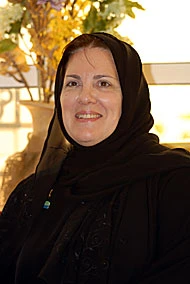
Anne Batterjee is a quietly spoken woman deeply committed to women’s health. Speaking as a mother of five with seven grandchildren she said, “I am extremely excited about the potential. I am only sorry that it was not available to us.”
Her involvement with women’s health affairs stretches back many years. She runs the Al-Bidayah Medical Advice Center, and has taken on the challenge of introducing private stem cell banking and educating potential parents in the advantages of storing their stem cells for their children should they be afflicted with disease.
Batterjee’s mission, she says, is to help people and prevent illness, not just to help people to die and accept what they have but to help them live a quality life. Her drive to educate arose from having had five close friends and family members diagnosed with cancer at the same time. Batterjee’s friends and family gathered together looking for answers but there were no resources and information available.
Since then, she has gathered resources and built up a library and a health care and advice center that caters for many of the health concerns pertaining to women and children, particularly with those issues concerning breast-feeding.
I became aware that with breast-feeding, a woman can reduce her chances of breast, ovarian and cervical cancer. There is a causal connection.
Slowly the advice center grew to become well established. “It’s not about money,” she said, “our concern is for the health and well being of the community.”
When Anne discovered the possibilities of disease control for children and adults that are offered by stem cell banking, including stem cell in the center’s portfolio of health care strategies seemed a natural step forward.
Much of the controversy surrounding stem cells is generated from a basic general misunderstanding.
Government controlled research laboratories only use embryonic cells, undifferentiated stem cells from an embryo. Blood and bone marrow stem cells can and are used by private and commercial concerns.
Stem cells differ from other kinds of cells in the body. All stem cells regardless of their source have three general properties: They are capable of dividing and renewing themselves for long periods; they are unspecialized, and they can give rise to specialized cell types.
These cells have the potential to develop into many different cell types in the body. Serving as a sort of repair system for the body, they can theoretically divide without limit to replenish other cells as long as the person is still alive. When a stem cell divides, each new cell has the potential to either remain a stem cell or become another type of cell with a more specialized function, such as a muscle cell, a red blood cell, or a brain cell.
Embryonic stem cells are used in very few countries and under very strictly controlled conditions for research into their potential to treat human diseases. These include Parkinson’s disease, diabetes, traumatic spinal cord injury, heart disease, and vision and hearing loss. They are not used commercially.
The stem cells that are present in the placenta of a newborn child are the cells used in the case of private stem cell banking. They are taken from the placenta in a simple procedure. Usually they are just discarded after birth. These cells become the legal property of the parent or guardian until the child reaches legal maturity, at which point the ownership is transferred to the original donor to do with as he or she wishes.
Kelli Keast the regional manager for Future Health Technologies, the company behind the scheme, emphasized the importance of the legal protection of the cells. “With private stem cell banking, the cells are the property of the parents and then the donor,” she said. “Future Health is a UK based company and is accredited by the UK Department of Health and regulated by the toughest laws in the world.”
Future Health Technologies is the first and only private family cord blood stem cell bank to have received this accreditation from the UK MHRA (Medicines and Health Care Products Regulatory Agency) as well as been HTA licensed and accredited by the UK Department of Health.
She said that as of April 2006 every tissue bank in Europe had to be accredited by European standards. “All stem cell banking companies were given licenses to operate,” she said, but Future Health is the first and only private family cord blood stem cell bank to have passed the scrutinizing and be fully licensed. Some have already tried and failed.
Fanciful rumors have sprung up concerning the security of stem cells. Fears of their being used to manipulate the gene pools of countries to eliminate populations or create supermen circulate freely.
Keast dismissed the rumors as sheer fantasy. In a few countries, stem cells are collected and deposited in a national stem cell bank. “There the donor has no control at all,” said Keast.
Although governments that have a national bank run it with great rectitude the cells are kept for general use. With private stem cell banking the donor or guardian has total control over the cells, knowing where they are and that they are protected by incredibly tough laws and regularly audited.
Currently, Future Health is collecting cell samples from over 20 countries. Although new to the Kingdom, Saudis are already taking to the system.
Batterjee said: ”There is an awakening. People are becoming aware.”
She said that she had had arguments with medical professionals who claimed that Saudis did not care about the future. “I argue with them a lot,” she said. “I really believe that it is simply a case of not knowing.”
Batterjee’s whole ethos is about sharing knowledge with her clients and her health and advice center has grown on that basis. ”Intellectually, religiously, Islamically any way at all, knowledge is the key. All our services here evolved from that.”