
Aromatherapy is the art and science of using the distilled extracts of aromatic plants for therapeutic reasons. Aromatherapy was the brainchild of Rene Gattefosse, a French chemist who worked in his family’s perfume business in the 1920s. He accidentally burned his hand and plunged it into a bowl of lavender essence. He noticed that the burn healed remarkably fast with practically no scarring. This incident let Gattefosse to study the medicinal use of oils. He published a book on the subject entitled “Aromatherapy” thus coining the word, which has been used ever since.
The ancient Egyptians, however, are generally regarded as the true founders of aromatherapy. Aromatics were used in healing, which included different forms of massage as well as for cosmetics and embalmment. Indeed, the well-preserved mummies of humans and animals on display in many museums bear witness to the remarkable preservative powers of plant essences.
The botanical gardens of Egypt were a wonder to behold. Many rare and beautiful plants were collected from distant lands such as China and India. They were transformed into medicines, perfumes and creams. Physicians from all over the world came to Egypt to study medicine. Most archaeologists believe the ancient Egyptians did not use oils as such but that plants and gums were made into oils and unguents by infusion. The plant material was put into an oil base and left in the sun for a few days. After this time, the base became permeated with the aroma.
Other experts think the Egyptians used a primitive form of distillation to extract the essential oils from plants. Water was poured into large clay pots over the plant material and the pot openings were covered with woolen fibers. The pots were heated and the essential oils rose in the steam and became lodged within the wool. This was then squeezed to obtain the essential oil. Oil of cedar wood was highly prized for its use in embalming, medicine and perfumery. It was also the most expensive and sought — after perfume in the entire ancient world.
The Egyptians also squeezed essential oils from flowers. A bas-relief, now in the Louvre in Paris, shows women gathering lilies in a large cloth bag, while two men hold sticks attached to the sides of the bag. These sticks would have been twisted round until the bag was tightly pressed and the essential oil squeezed out of the petals.
Today, Egypt ranks among the top exporters of aromatic and medical plants such as marjoram, basil, chamomile, caraway, jasmine, hibiscus and others.
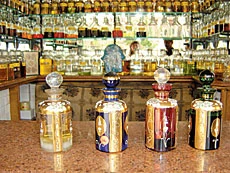
Some of the oldest perfumers — Warda — are found in Khan Al-Khalili. It still displays its essential oils in beautiful hand-colored bottles. Ahmed Warda, the owner, recommends a drop of mint oil on the forehead for a headache. When inhaled, rosemary and basil improve concentration, Melissa helps cure depressive states, especially those due to grief; as for rose, it stimulates the body’s energy centers.
Essential oils can be absorbed through the skin. Their very fine aromatic molecules pass through the epidermis to the dermis. From here the oil molecules pass into capillaries and into the rest of the circulatory system. Once in the bloodstream, the aromatic molecules affect the body in a similar way to herbal medicine.
Essential oils can also enter the body’s circulatory system through inhalation. When inhaled, the aromatic molecules of essential oils reach the lungs, penetrate the surrounding blood capillaries from where they circulate into the main blood vessels. Because olfactory cells are directly linked to the brain, the sense of smell has a powerful and immediate effect. An aroma can stir our emotions and evoke a long-forgotten memory.
Aromatherapy massage is not the solution to all life’s problems. But it can enhance the quality of our life by transforming stress into positive energy, thus hindering the onset of apathy or even depression. The art and science of aromatherapy can help us eliminate minor ills and prevent the first symptoms of chronic illnesses such as heart diseases, high blood pressure, diabetes: The all too common diseases of our modern civilization.