BEIRUT, 8 August 2006 — Prime Minister Fuad Siniora made a tearful plea yesterday for an end to the near four-week-old battering of Lebanon as several dozen civilians were killed in a new blitz of Israeli airstrikes across the country.
Warplanes bombed houses, bridges and roads in southern and eastern Lebanon as Israeli military commanders vowed to expand their massive offensive, with little sign of international agreement at the United Nations on a peace plan. In all 57 civilians were killed.
The deadly raids came as Washington urged the quick passage of a UN resolution calling for a full halt to fighting that has left more than 1,000 people dead.
Top Israeli officials warned they would press on with the offensive to cripple the Hezbollah movement regardless of any cease-fire negotiated at the United Nations.
And in a possible sign of expanding military operations, Israel warned Lebanese who live south of the Litani River not to go outdoors after 10 p.m.
Siniora said he refused to let Lebanon be a “punch bag” for Israel and made an emotional appeal for an end to the killings, as Arab foreign ministers threw their support behind Siniora’s plan for a cease-fire.
In his speech to the Arab ministers meeting in Beirut, Siniora called for help in seeking “an immediate and unconditional cease-fire.” “We do not want the Lebanese state and the Lebanese people to remain the punch bag of Israel or anyone else.” Wiping away tears, he told them: “Your standing with us is a right and a duty. Arab security is interlinked.”
He said Arab ministers had endorsed his seven-point plan to bring a halt to 27 days of warfare as an alternative to a draft resolution before the UN Security Council.
Siniora has asked for major changes to the draft, saying it fails to insist on an immediate withdrawal of Israeli forces from Lebanon, which had pulled out of the country in 2000 after a bloody 22-year occupation.
Addressing the meeting, Foreign Minister Prince Saud Al-Faisal denied that Saudi Arabia was standing in the way of holding an emergency Arab summit to discuss the Lebanese issue. Prince Saud said that Custodian of the Two Holy Mosques King Abdullah is ready not only to attend such a summit but willing to host it in Makkah at any time.
Prince Saud said the Kingdom has not laid down any preconditions for such a summit, but emphasized the need to make good preparations based on a clear Arab strategy to get tangible results, alternatives and options that would fulfill the aspirations of the Arab people.
France yesterday sought changes to the resolution, further delaying a vote by the UN Security Council. With fighting intensifying in Lebanon, the United States appeared less willing to amend, but has agreed to hear Arab foreign ministers who will address a special council meeting today.
US President George W. Bush said the UN resolution was needed “as quickly as possible,” while Secretary of State Condoleezza Rice said it will “take a little time” to ease Israeli and Lebanese concerns about the resolution.
And an Arab League delegation has been dispatched to New York in a bid to modify the text, according to a Lebanese official.
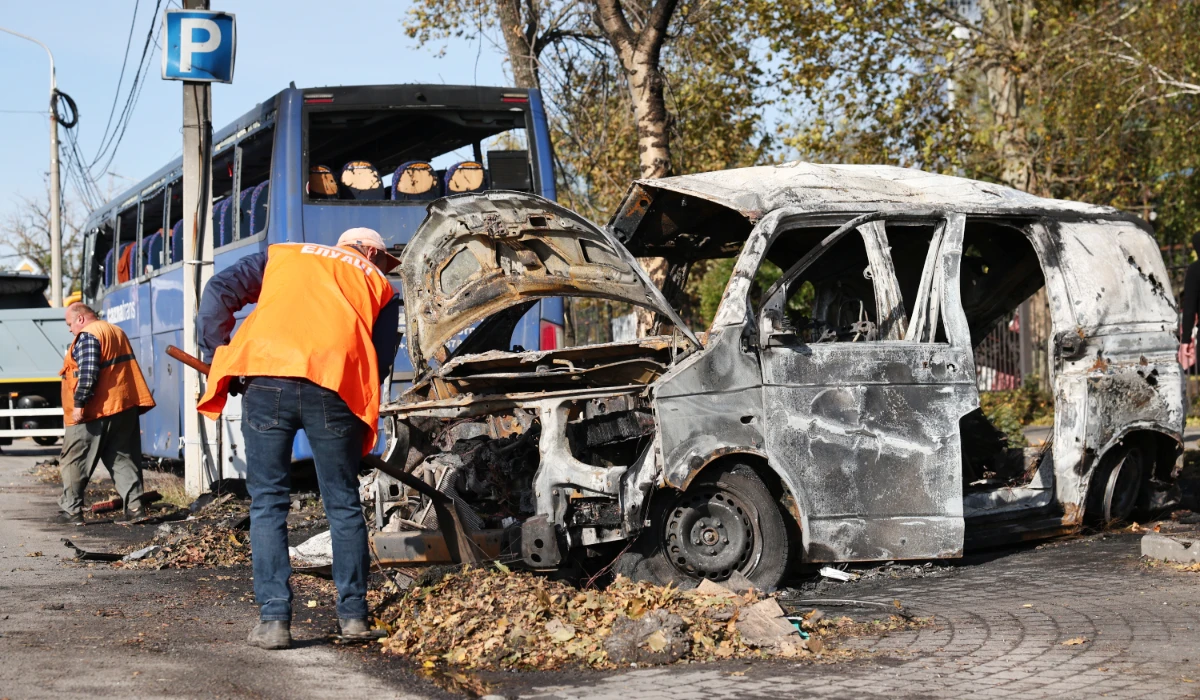
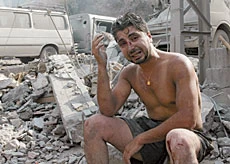
Police said 33 people were killed across the country, many caught in the rubble of trapped buildings. As dawn rose over the capital, Israeli fighter bombers pounded Hezbollah’s stronghold in the southern suburbs with bombs and air-to-ground missiles, sending huge clouds of black smoke into the air over districts that had already been largely reduced to rubble.
Warplanes also struck houses in villages around Sidon, the main city in the south, bombed roads linking the region with Syria, including the highway leading to the main border crossing, and hit targets in the Bekaa Valley.
In one southern village television pictures showed workers hacking with axes through the rubble and twisted metal struts of a house in a bid to find survivors or recover corpses.
The road to Syria, one of the few ways out of Lebanon for people trying to flee, has been knocked out repeatedly as Israel maintains a blockade that has left the country almost completely isolated from the outside world.
The southern port city of Tyre, which like Sidon has been swollen by an influx of people fleeing from outlying villages, was cut off from the rest of the country by Israeli bombardments against roads and a makeshift bridge, witnesses said.
Israeli troops were also engaged in clashes with Hezbollah in a bid to eradicate the Shiite fighters from the border area and halt rocket attacks that killed 15 people on Sunday alone, the deadliest single day for Israel.
The army said one soldier was killed in fighting with Hezbollah around the border town of Bint Jbeil — the scene of the fiercest ground combat of the conflict, bringing to 59 the number of military personnel killed.