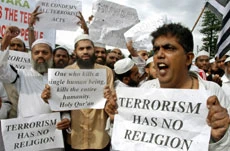
BOMBAY/DELHI, 13 July 2006 — Bombay’s Muslims are to set up a blood donation “camp” in a show of unity with Hindu victims of the city’s train blasts that left 200 people dead, community leaders said.
Muslims queued up to give blood at hospitals and were among the first to help the wounded after the train attacks, officials said. Police have said militant groups intent on worsening relations between India’s different religious communities were likely behind the blasts. Bombay has a history of religious-based clashes but community leaders said fears of a backlash had not materialized.
“We’re talking to the hospitals and we’re asking if... we can have a blood donation camp in the community,” said Dr. Anwar Amir, the secretary of the city’s Aman committee.
“As soon as the Muslim population heard the blasts they came forward and were on the tracks helping to move the dead bodies and rushed them to the hospital.
“Muslims, especially women, made omelet and brought tea and biscuits to help. It’s the resilience of the Bombay people that they all come forward condemning this dastardly act.” The worst serial bombing in the nation’s history left 257 people dead in Bombay in 1993, believed to have been carried out by Muslim underground figures in retaliation for the demolition by Hindu right-wingers of a mosque the previous year. Militants have been blamed since then for a series of attacks in the city.
A senior leader of the former ruling Hindu nationalist party, the BJP, Gopinath Munde, said the blasts had helped to bring out the best in the two communities. “This is the true spirit of Bombay which keeps rising in each calamity.
“Train commuters, both Hindus and Muslims, who travel daily share a common bond and this was seen yesterday.”
In Delhi, residents took the extra-security measures in their stride by preferring additional security checks than risking terrorist attacks. One commuter in Delhi’s metro said, “We would rather go through a number of security checks than face a terrible attack.”
Across the city college students, who are on vacation, postponed plans to go out and stayed at home rather than risking venturing out. With the monsoon raining heavily, commuters had their normal routines thrown out of gear due to traffic jams caused by the rains and additional security checkpoints. One frustrated driver complained, “We have no option at present but to bear it. Due to traffic jams, because of security checks and rains, the routine 10-minute drive is taking more than an hour.”
For working class Delhi, earning bread and butter was more important. And laborers, shop workers, painters and street vendors reported for duty on time unaffected by the rains and Bombay blasts.
It seems the common Indian has accepted that the message of working together to earn a living is more important one than the hate-filled sectarian and bigoted messages that politicians and extremists convey.
These are the very Indians who stand strong as winners to defeat terrorists regardless of whether they come in the form of religious fanatics or political heretics.