
IT is very difficult to write a poem with the ink of tears on the paper of time. But the poets who have picked up the fruits of the past to sow the seeds of the future overcome the deep piercing pain of the earth-like soul and stand firm like a huge, green tree full of fruits under the blinding, hot sun of reality.
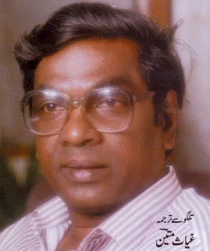
Professor Gopi, dean of Faculty of Arts at Usmaniya University in Hyderabad and one of the best contemporary Telugu poets, is among those artists who arrive at truth through their work.
His 100 selected poems have been translated into Urdu from Telugu, a Dravadian language spoken by the majority of people in Andhra Pradesh, India. The translations, taken from Gopi’s 11 huge volumes, are the commendable work of Dr. Ghayas Matin, the former head of the department of Urdu at Usmaniya University in Hyderabad.
Gopi, a Sahitya Academy Award winner, is never sketchy in his poems. Always elaborate and clear, his poems cover the delicate intricacies of the human experience. His work leaves a deep impact on the mind and heart of the reader. His expression is fresh, his style innovative, ever digging deeper into the different layers of the human soul like continuous rain into the earth.
His striking poems knock on the doors of both the heart and mind. They have a sort of metaphysical quality.
Gopi, with his deep sense of belonging to all life, has entered this metaphysical realm, calling out strongly for the victory of peace over war. He knows that any poem that is coming from the perennial spring of the soul has in itself a drop of soul. He appears to be striving still for a poem to emerge that could contain the whole soul. And it is this tireless effort of expression that his soul bursts forth in his work like tiny, sparkles of light illuminating like fireflies in the darkness of thought and feelings. He says:
Insan Ka Mahakna Hi Zinadagi Hai
Waqt Key Kaghaz Per
Kabhi Na Mitney Wali Roshnai Se Likhte Waqt
Ubherne Wali Tasweer Ka Naam
Insaan Hai
Gopi comes from a rural background, and, like all rural people, the earth itself plays an important role. Throughout his childhood he used to run barefoot on the rocks and through the lush green Indian jungle. And when he sees earth’s jungles swallowed by man’s jungles of concrete and iron, his soul cries in pain. The iron wheels of Industrial Revolution, it seems, is crushing his soul. He says:
Platform Per
Girte Huai
Sookhe Patton Ki
Dil Dahla Dene Wali Charmarahat
Mudi Hui Sersarahat Ki Masoom Ummiden
Chhoote Hi
Choor Choor Ho Jane Ka Khushk Khwab
Hawa Ke Gesuon Tak Ud Ker
Ek Saniya Bhi Na Thaher Sakne Wali
Pairon Ke Niche Kuchli Jane Wali Cheekh
Nowadays we hear much about the so-called “clash of civilizations.” Gopi defines civilization not by its divisive elements, but instead by the elements that bind people of different backgrounds. A few lines from his famous poem “Bombay” say volumes about this melting-pot city:
Asl Mein Jodna Hi Tehzeeb Ka Kaam Hai
Tadakh Paida Kerne Ke Liye To
Dus Minute Hi Kafi Hain
Yehan Sub Imaarten
Asmaan Ki Taraf Dekhti Hain
Mitti Ka Parag Men Badalna Hi Tehzeeb Hai
According to him, changing dirt into sandalwood is civilization. How many people know this? In this day and age, machines churn sandalwood trees into ash and fire, and the message of peace is hidden in the smoke. Gopi is still very relevant.