
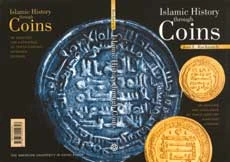
JERE L. Bacharach’s book, “Islamic History Through Coins” is of great value in the field of numismatics. It is an analysis and catalog of 10th century Ikhshidid coinage. It deals with the history of money and the definition of numismatics. It’s difficult to undertake a general survey of coinage so usually numismatists choose a particular period for the study of coins. Bacharach has chosen the Ikhshidid-era coins in this study.
Bacharach is Stanley D. Golub Professor Emeritus of International Studies and Professor Emeritus of Middle East History at the University of Washington, Seattle. He is the editor of “The Restoration and Conservation of Islamic Monuments in Egypt” (AUC Press, 1995) and “Fustat Finds, Beads, Coins, Medical Instruments, Textiles and Artifacts from the Awad Collection” (AUC Press, 2001).
According to him, “(He) was introduced to the coinage of the Ikhshidid rulers who governed Egypt, Palestine and occasionally Greater Syria between A.H. 323-358 (935-969 C.E.).”
In the first chapter of the book, he discusses his approach to organizing and interpreting numismatic data. He shows what is on and what is in the coinage, the details of monetary zones, monetary history and the Second Abbasid Monetary Epoch, a brief history of pre-machine made coins and the definition and duties of a numismatic historian. He stresses the importance of money as legal tender and he highlights that after the invention of coins, rulers and cities always gave it much importance — not only as a means of exchange but also as bearers of their various messages. Bacharach is able to prove his point that every coin embodies intellectual and philosophical ideas of that era. He gives the example of the Greeks who used the symbols and inscriptions on their coins for propaganda. He says, “It was a form of propaganda and the markings on the coinage had meaning to the issuing authorities who wished to be associated with the sign or symbol.”
As history bears testimony, Islamic coins were not originally issued under human authority but under that of God and the community of believers. We find the Shahada inscribed on them. The use of the Hijra calendar and other additions in the field of numismatics are also surveyed in the other chapters. Bacharach writes about overall design, layout, pattern, script, image, or wording on the coins. He says, “Sikka means the right to strike any coinage.” He sheds light on the history of 10th century Abbasid caliphs and their local governors who were responsible for deciding which legends were inscribed on dinars and dirhams. He says, “The caliph and governors were responsible for deciding purity or the degree of finesse of the gold or silver coins.”
After providing a detailed history of Ikhshidid Dynasty, he analyzes Ikhshidid numismatic material and concludes that Muhammad ibn Tughj Al-Ikhshid, the founder of the dynasty, deliberately adopted a policy of debasing dinars. Bacharach provides a big table, which shows the degree of finesse of Ikhshidid coins. He is correct in showing how this debasement affected the value of Ikhshidid dinars. He compares the dinars of different dynasties. He wonders where Muhammad ibn Tughj got enough gold to correct his policy of debasement later. The Ikhshidid dinar, which was minted later, was of high quality. As he mentions, the tax collectors rejected Al-Radi dinars due to debasement. He writes, “There is another fact, which indicates that contemporaries knew that the early pre-Al-Ikhshidid dinars were of poor quality. Until the year 363, after the Fatimids had consolidated their hold on Egypt, a chronicler recorded that Ya’qub ibn Killis and Asluj were placed in charge of the taxes and that they refused to accept any dinars except those of Al-Mu’izz, the Fatimid Imam-Caliph (341-365/953-975). The chronicles then mention the rejection of Al-Radi dinars by name, which they also call ‘white,’ referring to the paleness of their color, reflecting their relatively low percentage of gold.” Once the reputation of dinars was dented, even after reformation, they hardly ever regained the confidence of the public. Within a decade of the end of the Ikhshidid Dynasty, the Ikhshidid dinar lost its value. Bacharach writes that Ikhshidid dinars, which were later as pure as Fatimid dinars, were discounted by the Shi’a Fatimids for their “association with the Sunni Abbasid.”
In fine, Bacharach’s book gives a clear glimpse of the history of numismatics but it also does a comparative study of modern-day currencies, especially the dollar and euro. Bacharach raises the question of whether inscriptions and the textual data on modern-day dollars will help future numismatic historians to understand the values of the society that minted it.
This book is written in a learned but strong style and is worth reading for the laymen as well as experts in the field of numismatics. The American University in Cairo Press, Cairo and New York are the publishers.