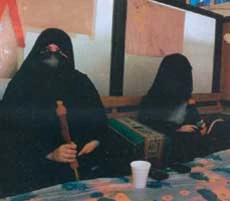
ABHA, 29 September 2006 — Nora and her sister Nujood regularly turn the atmosphere in their home in the evenings in to that of a coffee shop where, along with their children, they enjoy sheesha and other beverages.
“My Indonesian maid is well experienced in preparing sheesha, coffee, tea, and different cold drinks,” said Nujood.
Nora said that there are many women who think like them.
“Our ‘coffee shop’ is private and away from people. However, I wouldn’t mind opening the first female-only Saudi coffee shop,” she said.
Men work in coffee shops in the Kingdom today. However, many social experts say that having waitresses in coffee shops is not something new. Historians make references to women staffing coffee shops and traveler’s inns in Jeddah and the southern areas of the Kingdom.
“It is normal for women to work as waitresses in coffee shops,” said Muhammad Zaid Al-Almai, a Saudi writer. “We find women working as airhostesses and as waitresses in the more prestigious restaurants. In fact, these businesses prefer women to men. In the past, women used to work in coffee shops. They were responsible for welcoming customers and preparing their orders.”
Al-Almai said that on the road between Jeddah and Jizan is a coffee shop that is run by an old woman.
“Many people like going to her because she bakes good bread and cooks wonderful fish,” he said.
Saudi novelist Ibrahim Shahabi said that he used to visit coffee shops and old-fashioned inns run by old women years ago.
“There were old ladies who lived in small towns and used to turn their homes into inns,” he said. “People coming from nearby villages could come and stay for a few days when they had some official business. The women used to do the laundry, prepare food, tea and coffee and also offer rooms for people to sleep in. They were cheap and people would give them money in return.”
Sociologist Abu Bakr Bagader said: “In the past, these coffee shops and inns were available to customers. Later, the overall Saudi economic condition improved and women were stopped from taking up such jobs.”
Although women do not run these kinds of businesses anymore, coffee shops across the Kingdom have a large number of female customers. Women go to these coffee shops to meet each other, to relax, and to enjoy themselves away from people.
According to Bagader, the word “coffee shop” in the Kingdom refers to places where coffee and tea is served as well as sheesha.
“Both men and women find these coffee shops great places to enjoy themselves,” said Bagader, adding that many people go to these coffee shops because they offer different kinds of coffee that cannot be prepared at home because of the equipment needed to prepare them, such as pricey industrial-strength espresso machines.
“These coffee shops neither go against Saudi customs nor preserve them,” said Bagader. “There is nothing about them that contradicts our traditions.”
Although there are many Saudi women who visit coffee shops, there are still many women who lobby against them because of the ubiquitous tobacco smoking — cigarettes and sheesha — that goes with them. Some women claim that such practices go against the morals and ethics of Saudi society.
“Coffee shops are delightful places,” said Wafa Khadir. “They have advantages and disadvantages. Unfortunately, they have replaced the family gatherings. They also encourage young girls between the ages of 17 and 25 to smoke cigarettes and sheeshas. They’ve also turned out to be places where women boast about their behavior and are therefore not upright places.”
Hissa Al-Oun said: “In the past there were coffee shops everywhere that were staffed by women. Saudi citizens appreciated and respected the women that used to work and supervise them. Now, however, people of different nationalities visit coffee shops. They don’t respect women. The environment isn’t right.”