
JEDDAH, 4 October 2006 — Research shows that the quality of a child’s diet is a significant factor in children’s cognitive and physical development. Animal source foods like milk and meat are nutrient-rich foods that contain high quality protein, vitamins and minerals, which should be included in children’s diet.
Studies have shown that children fed with these foods have demonstrated enhanced learning abilities. In contrast, children who consumed the lowest amount of milk and meat performed least well on cognitive tests measuring verbal comprehension and perceptual abilities, and were also least attentive in the classroom.
“The Ministry of Education is very keen to maximize the potential of our young people,” Dr. Saleh Al-Ansari, general director at School Health (Boys) Department, said at a recent event that marked World School Milk Day (WSMD) in Jeddah.
“Health and education of our children are the most important concerns of both parents and the ministry. Milk Day is another step to keep them firmly in the public arena. Countries — whether rich, poor, large or small — celebrating the world school milk day illustrates the universal interest in school milk programs,” he added.
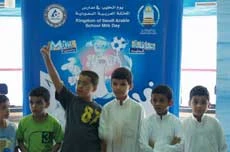
In compliance with the Food and Agricultural Organization of the United Nations (FAO), the ministry celebrated WSMD as an educational ‘Fun day’ at the Jeddah Science and Technology Center, targeted at children between seven and 10 years old.
The campaign, supported by Tetra Pak Saudi Arabia, involved staff, teachers and more than 250 children. The Jeddah event set the ball rolling for a series of larger celebrations organized by the ministry’s school health department for boys and girls at primary schools in Jeddah, Riyadh, and Dammam to be held after Ramadan with the support of the largest dairy companies in the Kingdom.
The aim of the drive is to highlight the health value of milk as part of a healthy food program.
“The benefits of a healthy diet on learning are well established and milk, with its combination of calcium, vitamins, proteins, carbohydrates and others that can play an important role in the development of children,” Al-Ansari said.
The milk event was designed to combine a serious educational element with copious amounts of fun, where it opened with a short play that focused on the nutritional value of milk, how it is produced, packed and kept fresh for long periods without preservatives in Tetra Pak cartons.
The days continued with “hands on” milking sessions involving a dummy cow, emphasizing the natural source of the food, followed by an interactive session tracing the production process from cow to package.
In keeping with Tetra Pak’s commitment to recycling and protection of the environment, competitions reinforced the idea of empty packages recycling to produce various paper products.