
For a parent to choose a child’s reading book is not as easy a task as it used to be. In this high-tech era, children are hardly eager to read novels or bedtime stories.
Most of the time, they are so busy playing games and unfortunately many of these games are destructive with negative effects that instantly appear in their behavior toward their parents. Some of them ignore the calls of their parents or simply do not answer them when they play games and if they answer they are rude and lazy to move.
Whenever I go to malls and supermarkets, I have a habit of first of all going to bookstores and picking up a book in Arabic and English. Last week I decided to buy some books for my children and being a graduate of the Al-Azhar University I fancy stories about the Prophets in English. I have books in Arabic but because my children attend Arabic schools in Riyadh, I feel English language books would benefit them.
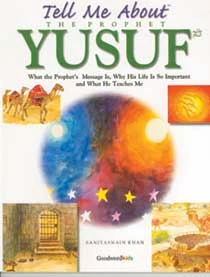
Browsing a bookshop I found a colorful book called “Tell Me About the Prophet Yusuf” written and translated by Saniyasnain Khan for Goodword Books, illustrated by K.M. Ravindran and printed in India in 2003.
“Learning about the Prophet Yusuf has never been so simple,” writes the author in the preface. On its cover the following questions were mentioned, “What the prophet’s message was? Why was his life so important and what did he teach?”
I enjoyed reading the book to my children even though I’ve heard and read it several times. When reading the book I was emotionally moved by the piety of Prophet Yusuf. As I read the book my eyes began to water and my children also began to shed tears.
What made me so fascinated without doubt with this book is the fact that the writer is a Muslim, not a Westerner. The author’s way of transmitting the story was supported by quotations from the Holy Qur’an — similarly to the style of Arabic storybooks together with appropriate commentary.
The language used has been selected in a beautiful and perfect manner. The book could be improved by including glossaries and expressions, both for children and mature readers. The book, which is available in the bookstores in Saudi Arabia at the price SR 25 tells the story of the Prophet Yusuf (or Joseph) and his brothers. It starts in Yusuf’s early childhood when his family used to live in tents in the desert. The story then moves on to the time when he was almost grown up and his brothers threw him into a dry well.
The story began with an unusual dream in which eleven stars and the sun and the moon bowed down to the Prophet Yusuf. His father Yaqub understood right away that a great thing lay in store for his young and best-loved son. He warned Yusuf, “My little son, do not tell your brothers about your dream lest they hatch a plot against you.”
The book describes how the horrific incident comes as a blessing in disguise, for the young Yusuf was taken to Egypt by a caravan and ultimately made a powerful and trusted minister of the Egyptian king. He was also made a prophet by Allah.
The story has a number of moving incidents — which make devoted readers break into tears — underline moral and ethical values. One instance was the courage shown by Yusuf in his youth when he was thrown into the well. Another was his piety and trustworthiness when confronted by the women of the Egyptian nobility.
The book introduces the Prophet Yusuf and helps to understand the meaning of his actions, such as his life from his birth to prophet hood, his amazing miracles and finally his mission.
Many other virtues become apparent as the story unfolds: His truthfulness in interpreting dreams, his wisdom and willingness to work hard while managing the famine in Egypt, his kindness to his brothers when they came to beg for grain during the famine, his capacity to forgive while dealing with his brothers and his caring nature when he invited his parents to Egypt to do honor to them. These are some of the episode in the “most beautiful story” of the Prophet Yusuf from which many excellent lessons may be derived.