JEDDAH, 7 October 2006 — Public health officials are concerned that Jeddah’s water shortage is helping spread water-borne diseases as residents hoard water in unsanitary containers that may become Petri dishes for bacteria.
“Water stored for a long period of time in containers that aren’t washed regularly can become stagnant and rife with bacteria,” said biologist Samir Saeed.
Ironically, drinking infected water can cause dehydration because it can bring about dysentery, which causes diarrhea that expels water from the body faster than it can absorb it. Saeed points out that bad water can also cause liver and kidney problems. Young children are particularly susceptible to dysentery.
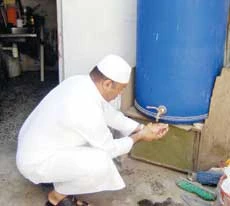
People living in areas that are affected by water shortages tend to create backup systems, usually in the form of commercially available cisterns that have been modified with faucets at their bases. These containers can sit for weeks or months at a time, topped-off each time they run low but never completely emptied or even washed out.
Public health advocates like Saeed are calling for authorities to help raise awareness of the proper way to handle improvised in-house water storage. He advises users to wash the cisterns out thoroughly once a week. The demand for domestic water backups has increased among Jeddah residents in areas that are hit with water cutoffs. Last week the media reported that up to 15 districts in Jeddah, mainly in the low-income southern part of the city, saw their taps run dry.
The city periodically cuts and re-starts water in order to handle shortages. Ramadan has exacerbated the problem as many families tend to stay in and domestic water consumption rises.
In the past month, the price for the cisterns has increased, indicating a sharp rise in demand. The price for the normal water container of 220 liters increased to SR60 from SR45. The plastic water container of 250 liters increased to SR125 from SR105.
The virus that causes dengue, which is spread by mosquitoes that breed in still water, can also be spread by open containers of water, especially outdoors. Talal Al-Nasher, social service supervisor at King Fahd Hospital in Jeddah, said there should be more awareness campaigns in the media about this problem.
Health officials say that people who use in-house cisterns for backup water supplies should periodically rinse them out with a mixture of one drop of bleach to one liter of water, which is enough to kill bacteria that collect in stagnating water.