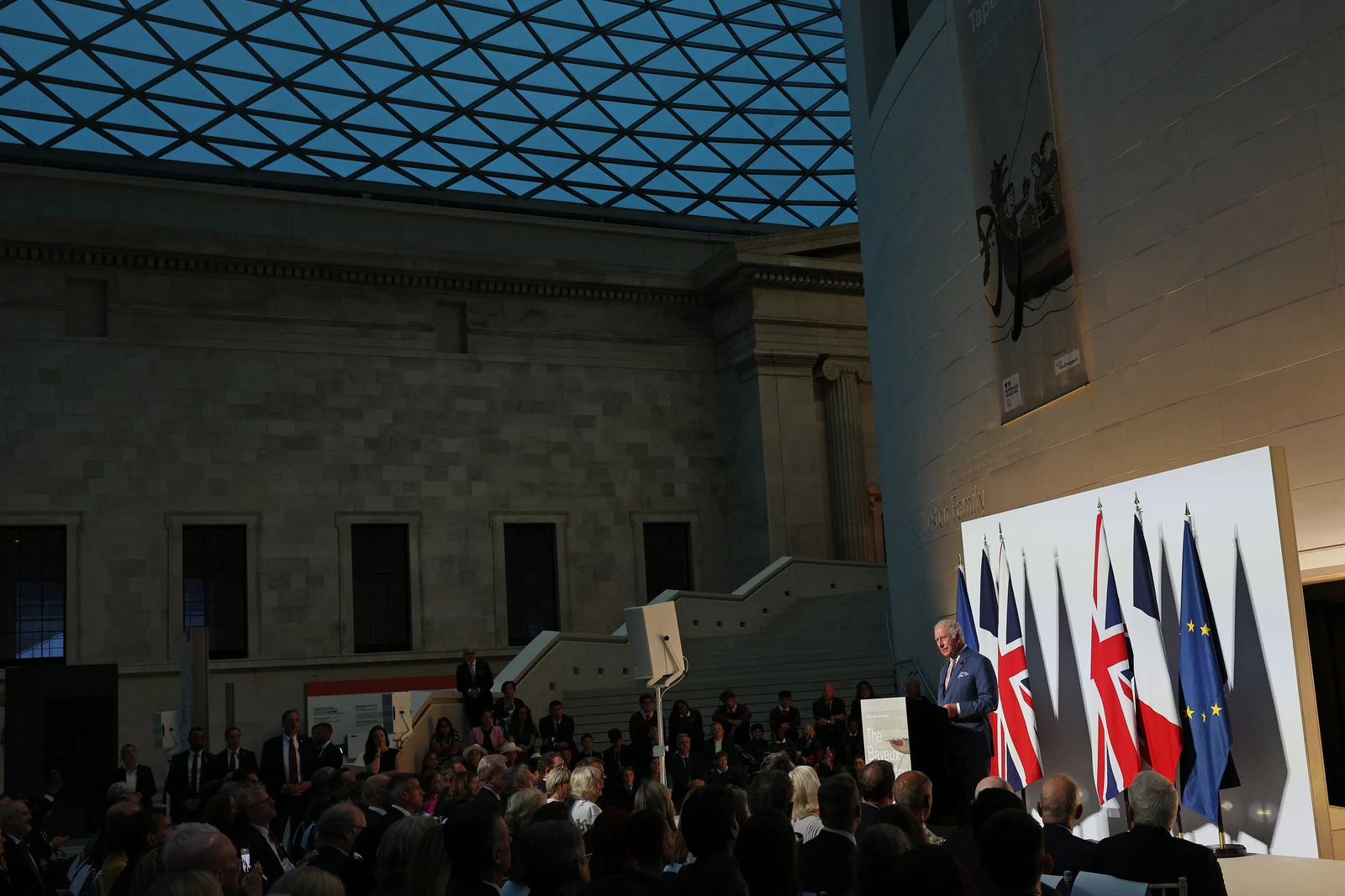
HELSINKI, 14 October 2006 — The European Union and India took the first step yesterday toward an ambitious pact that both sides hope will clear away barriers to growing trade and investment between the two economic blocs.
They called for negotiations to start on a “broad-based bilateral trade and investment agreement” after they met in Helsinki. Both insist that an ambitious trade pact would be an added extra to a deal at the World Trade Organization where talks have stalled over a row on farm subsidies.
Although the deal will cut some tariffs to zero, Indian Prime Minister Manmohan Singh refused to call it a free trade pact.
“We have agreed to commence negotiations on a broad-based bilateral trade and investment agreement between India and the European Union, covering over 90 percent of tariff lines and trade volume,” he said. “This is indeed a very significant step.”
Both must now seek formal approval to start talks — the EU from its 25 nations and India from its Parliament. If negotiations start next year, a deal could be in place by 2009 at the earliest, although it may take much longer.
But observers warn individual free trade deals pursued by the EU and the US could hamper a global agreement intended to help the poorest countries benefit from more free trade.
“The EU is saying they can be pursued in parallel with the multilateral process but many trade economists and analysts see it as a warning signal, since if you pursue one, you can’t pursue the other,” said David Kernohan, of the Brussels-based Center for European Policy Studies.
Apart from India, which is rapidly developing into an important player on the global scene, the EU is seeking free trade deals with South Korea, Russia and nations in South America and the Middle East to keep trade links open even if a WTO deal proves impossible in the short term.
It wants bilateral deals to be more ambitious than the WTO agreement under negotiation and call on governments to open contracts to foreign companies and open up the banking and telecommunications sectors.
India is liberalizing its economy continuously and playing an important role in the WTO negotiations. India is also more and more a destination for outsourced activities, especially in the field of services. The country wants to attract more investment from the EU to develop its economy and officials said Thursday that New Delhi is willing to make changes to encourage more foreign involvement.
It needs an extra $320 billion to improve its infrastructure over the next five years or some $16 billion in foreign capital annually. This year it is set to get just $12 billion.
Last year, EU-India trade grew by 20 percent to about 40 billion euros. The Confederation of Indian Industry expects this to rise to $87.8 billion by 2008. But EU-India trade is hobbled nontariff barriers — from the EU’s high health and safety standards to India’s licensing system that can form an obstacle to importers.