
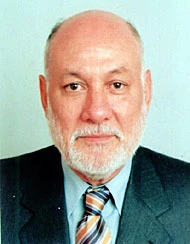
NEW DELHI, 29 November 2006 — Pakistan’s Ambassador to New Delhi Aziz Ahmed Khan has been Islamabad’s only high commissioner to New Delhi in nearly six decades who has not been a witness to any major setback in the relations between the two countries.
In nearly six decades of their checkered relationship, India and Pakistan have seen many ups and downs. The situation has improved now, says Khan. And perhaps one of the most relevant attributes to the gradual warming of relations is the fact that, according to Khan, cricket fans have transcended all those barriers that diplomats haven’t been able to.
“Indo-Pak cricket is no longer a contest. It has assumed the nature of a carnival, a festival time for people of both the countries,” he said in an exclusive interview with Arab News. “Now, good cricket is appreciated by people on both sides of the border, irrespective of the team.”
During his tenure, Khan says, Indo-Pak ties have had no major setbacks.
“Professionally, I was witness to improvement in Indo-Pak relations,” he said. “Though, at times, there has been a pause in this process, it has not backtracked.”
That isn’t to say there haven’t been any “pauses.” Recently, most notably the delay in bilateral talks was caused because Indian officials suspected Pakistan’s Inter-Services Intelligence role in the July 11 train blasts in Mumbai. However, as talks were held in November, Khan pointed to there being a greater momentum in the dialogue process with relations on the up and up.
Now, Khan says the time has come for the two countries to take action toward resolving issues, most notably the Kashmir row.
“There have been improvements in the two countries’ relations during the past three years,” he said. “We have had three rounds of composite dialogue. We have been discussing issues. The time has come to make decisions rather than just keep talking. We have had exhaustive discussions to resolve issues. We need to make decisions now, to make confidence-building measures functional,” he emphasized. There is need to go beyond the dialogue stage, he said.
When asked which issue should be given priority if India and Pakistan decide to move to the action stage, he replied: “Jammu and Kashmir is number one.”
Pointing out that the leadership of the two countries were “committed” to resolving all issues, he asserted: “There is no better time than now to resolve the issues.”
To a question as to what would be the best solution to Kashmir issue, Khan said: “The only viable solution would be the one acceptable to India, Pakistan and the people of Kashmir.”
When asked whether Pakistan had any specific suggestion for the resolution of Kashmir row, he said: “We can start considering various suggestions and views about resolving the issue.”
This apparently implies that discussion on Kashmir issue can move from the present dialogue-level to a higher dialogue-level, one of considering possible solutions.
Khan, a former ambassador to Afghanistan and Malaysia, was earlier here as a deputy high commissioner (1985-1987). When Khan took over as ambassador to India in June 2003, the two countries had just stepped back from the brink of a war.
The Dec. 13, 2001 attack on the Indian Parliament by five terrorists, in which nine policemen and a Parliament employee were killed, had brought the countries to a near-war stage when they had even severed their diplomatic and transport links. India had identified the terrorists as Pakistani nationals. Islamabad denied this.
However, it did not take too long for the two countries to calm down and consider normalizing ties. Thus, when the then Prime Minister Atal Behari Vajpayee, while giving a speech in Srinagar (Jammu & Kashmir) on April 18, 2003, offered a hand of friendship to Pakistan, Islamabad responded positively.
Vajpayee had also announced a plan to restore full diplomatic and transport links. Soon Shiv Shankar Menon assumed charge as Indian high commissioner in Islamabad and Khan moved here as the Pakistani envoy.
Khan arrived here with the hope that the pre-December 13, 2001 position could be restored in one “go.” As one round of composite talks was held in 1998, he was confident that it could be resumed soon.
“The secretary-level talks can kick off the discussions and as progress is achieved one can see whether and when to raise the level of discussions,” Khan had said.
Now, with Indo-Pak relations having seen an upswing at several levels, in Khan’s opinion: “The atmosphere has changed.”
Apart from improvement in relations at the official level, “people-to-people interaction has increased tremendously,” he said, adding, “There should be more of it.” On the economic ties, he said: “There has been improvement in economic relations, but economic opportunities have not yet been fully exploited.”
Taking note of the new importance assumed by media, Khan said: “In today’s world, media has become powerful. The electronic media makes viewers aware about people on the other side of the border. It increases understanding of the people.”
There have also been times when Pakistan has not felt comfortable about the role played by Indian media, but Khan chose not too comment on this. He simply said: “Media can play a still greater role.”
On how was terrorism viewed by Pakistan, Khan replied: “We all condemn terrorism. We have extended cooperation to end this menace which has been appreciated globally.”
At this, Khan pointed out that Pakistan does not like the prevalent tendency in India to blame it for terrorist incidents occurring here. Taking note that India immediately blamed Pakistan for the Mumbai blasts, Khan said: “Within 15 minutes Pakistan was blamed. This finger-pointing should stop.”
Yet, despite this “pause”, Khan is hopeful that the day is not far when India and Pakistan would be still closer working together to iron out their differences.
“Very soon, we should be able to turn around and say that this stage is here,” he said. And to reach this stage, he emphasized it is needed to step beyond the dialogue stage and start taking decisions!