
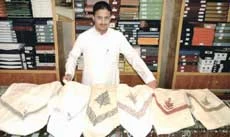
IT is winter which brings thoughts of cold weather and warm clothing; to some people, however, it is a time to be fashionable. For many Saudi men, it is time to try something different, a different-colored headdress other than the usual red and white shumagh and gutra that they wear for most of the year.
Zubd Al-Khal, Al-Shal, Khasmiri, and Al-Shatoosh, are only a few brands of the traditional headdresses that are popular among Saudi men during winter. “The shal is made of wool, and it differs from the shumagh and gutra. It is even longer, being 60 centimeters long and is decorated on the sides. The decorations vary; they may be of different shapes or even of flowers. There is needlework and the colors used are mainly red, blue, green, orange, and brown,” explained Siraj Sanad, a Saudi designer.
He also added that people living in northern and eastern regions prefer darker shals because their weather is much colder. “The warmer regions go for light colors,” he said. What is ironic is that the shal and shumagh which are worn only in the Gulf and a few other Arab countries are made and manufactured outside the Arab world. It has only been recently that factories have appeared in the region that are now making headdresses and competing with foreign makers.
The shal like the shumagh and gutra still survives and has have preserved its unique characteristics. Muhamad Sadat a worker at Desar Trade and Promotion Company which specializes in making shumaghs said; “There has been an increased demand for shals during winter because people need something to keep them warm. Shals are made of thick materials manufactured for this purpose. The process of making a shal begins with taking top quality wool and cotton. After mixing them and spinning the threads comes the most difficult job.”
Though the shal was once worn only by old men, young Saudi men have shown interest in new designs and are keen to get their own shals. “The selling of shals has increased by 40 percent over the previous years,” said Abdulhafiz Abdulwasi, a shal seller. He also added that the prices vary according to quality; they can cost anything from SR50 up to SR12,000.
Al-Shatoosh is the most luxurious shal and is made of the most expensive wool called “Al-Turma” which is recognized as being fine and soft. A shal made of this would cost SR12,000. Kashmiri comes second and could cost anything between SR3000 and SR1500. These shals are limited to a few clients because they are expensive.”
There are fake shals known as ‘one go shal’ which are made of thick cotton threads and manufactured in Asian countries. Their prices range from SR50 and SR80. Many people choose them because they are less expensive and because they only worn for a short time during the year.
Many Gulf designers are keen to use their talents and creativity in designing new kinds of shals. One example is Yahya Al-Bishri who has adopted Omani and Yemeni styles and colors into his shal collection.