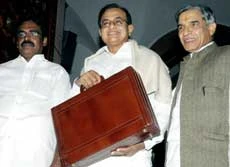
NEW DELHI, 1 March 2007 — India’s ruling Congress party unveiled a budget yesterday to boost stagnant farm output and combat inflation as it strived to make robust economic growth relevant to the nation’s poor. The budget described as people-friendly and growth-oriented by the government drew mixed reaction. Businessmen said their pleas to reduce taxes had been ignored while the opposition said the budget had nothing to mitigate the sufferings of the common man.
“The economy is in a stronger position than ever before,” Finance Minister P. Chidambaram told Parliament as he presented the budget for the fiscal year to March 2008. “I have put these revenues (from growth) to good use to promote inclusive growth, equity and social justice,” said Chidambaram whose government has pledged to put the “common man” at the top of its agenda.
Quoting India’s first Prime Minister Jawaharlal Nehru, he said: “The main challenge is agriculture — everything else can wait.” He outlined plans to hike farm production and rural incomes and said he was confident the government could wrestle down inflation hovering at two-year highs of 6.6 percent.
“The budget is essentially populist, aimed at catching votes,” said Surinder Choudhari, head of auto components maker Krishna Fabrications. “There’s nothing extraordinary in it — and nothing shocking,” he said.
Chidambaram announced more spending on irrigation, fertilizer subsidies, seed development and cheaper farm credit along with duty cuts on a host of goods including edible oils to combat inflation.
“There is no dearth of (agriculture) schemes, no dearth of funds. What needs to be done is achieve the intended outcome,” Chidambaram said.
With over half of the 1.1 billion population dependent on the farm sector, low agriculture output has cast a shadow over the “inclusiveness” of India’s economic growth which Chidambaram said would meet an earlier estimate of 9.2 percent for the full year.
“Faster growth is essential for faster poverty reduction. There is no other trick to it,” Chidambaram said.
Chidambaram hiked education spending by 34 percent, announcing programs to increase school attendance and boost the number of schools and hire 200,000 more teachers.
India would only be able to benefit from “its demographic dividend” of a young population if they are educated, he said.
Chidambaram, a keen liberalizer, steered clear of any contentious “big bang” privatization or labor or other reforms that might alienate voters or the coalition’s communist allies who provide key parliamentary support.
The government boosted defense spending for India’s 1.3 billion armed forces, the fourth largest in the world, by 7.8 percent to 960 billion rupees ($21.3 billion). It also pressed ahead with meeting its goal of cutting the fiscal deficit as a proportion of GDP to three percent by 2009. It set a target of 3.3 percent for the next financial year, down from 3.7 percent in the current year, slightly better that the 3.8 percent forecast.
Describing the budget as anti-inflationary, Prime Minister Manmohan Singh said: “Inflation will not be allowed to get out of hand. Education and health care are primary imperatives as far as this budget is concerned.” In addition to government’s plan to expand National Rural Employment Guarantee scheme, the budget proposes a new life insurance program for landless workers, he said.
Welcoming the increase in defense spending Defense Minister A.K. Antony said: “I am satisfied with the commitment of the government to strengthen defense.”
But the opposition said the budget failed to address the problems of the common man. “I regard this budget as a betrayal of the common man,” senior BJP leader L.K. Advani said. Shiv Sena legislator Anant Gite said: “It is an anti-farmer budget.”
Describing the budget as containing nothing for the common man, National Democratic Alliance leader George Fernandes said: “Everything has been done for the rich and elite.”
Federation of Indian Chambers of Commerce & Industry President Habil Khorakiwala said: “I think the feeling of the chamber is that the finance minister has lost an opportunity to provide relief to the corporate world.”
A few highlights of the budget are: No change in personal, corporate, service tax rates; threshold limit for income tax exemption increased by Rs.10,000 for all assesses, giving a relief of Rs. 1,000; threshold exemption raised for women from Rs. 135,000 to Rs. 145,000; exemption for senior citizens raised from Rs. 185,000 to Rs. 195,000, giving a relief of Rs. 2,000 in income tax; deduction in medical insurance premium under Section 80d raised to Rs. 15,000, for senior citizens Rs. 20,000; surcharge on income tax on all firms and companies with a taxable income of Rs. 10 million or less to be removed.