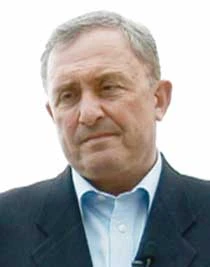
BEIRUT, 2 March 2007 — Brent Sadler is CNN’s Beirut bureau chief, a position he has held since the CNN bureau reopened in 1997. An internationally recognized investigative journalist, Sadler goes to great lengths to get a story, from traveling by mule to Kosovo to cover the refugee crisis, to sneaking into Afghanistan to cover the 1998 US airstrikes. During his career, Sadler has covered a number of prominent news stories from the Middle East, Africa, Europe, Russia and South America.
In 2005, Sadler’s reporting has been at the heart of Lebanon’s Cedar Revolution, following developments since the assassination of former Prime Minister Rafik Hariri in February.
Following the Sept. 11, 2001, terrorist attacks on the World Trade Center in New York and the Pentagon in Washington, Sadler reported from Beirut on the international community’s reaction to the attacks, focusing on the response from the Middle East.
He then traveled to Afghanistan where he covered the search for Osama Bin Laden in the Tora Bora Mountains. Before his appointment as CNN’s Beirut bureau chief, Sadler was CNN’s bureau chief in Rome.
Describing his tenure in Lebanon, Sadler said “Beirut has been my home for ten breathtaking if at times terrifying years. Lebanon has been my story for even longer than that — 25 years in all. It is where I first saw a dead body, that of an unknown man who had been shot during the Civil War in the early 1980s.
“Lebanon is where I was shot and wounded, caught in a burst of heavy machine-gun fire in the village of Damour, south of Beirut in 1983. It is a country where I have faced at least a dozen life-threatening experiences that leave me fortunate to be alive.
“Lebanon was once known as the terror capital of the world and Beirut was a divided city, Muslims on one side, Christians on the other. I was sure the country would never be able to recover fully from the vicious self-inflicted wounds and rebuild, let alone turn into a country I could one day call home,” Sadler said.
“So when CNN agreed to reopen the Beirut Bureau back in 1997 some six years after the civil war ended I was thrilled. I unpacked my bags in what was still called Muslim West Beirut as the capital started to rise from the proverbial ashes. I began to both live and work alongside the Lebanese — the Sunni Muslims, the Shia Muslims, the Druze, as well as the Christians.
“The old green demarcation line that divided Muslim West Beirut from the Christian East came down. With snipers gone, long disused roads soon reopened. Underpasses that once hid heavy weaponry were cleared and traffic flowed through them. It seemed that the ghosts of the past were being laid to rest,” Sadler said.
Sadler further said that “the real estate market boomed, and tourists rediscovered Lebanon under the unwavering stewardship of Hariri, a Sunni Muslim. Lebanon enjoyed a surge of self-confidence. A newly constructed downtown Beirut sparkled with gleaming boutiques selling high-end ladies fashion like Chanel, Dior and Versace. Expensive restaurants rubbed shoulders with the hubbly-bubbly crowd drawing clouds of apple-scented smoke from banks of water pipes at places like Grand Café.”
Hariri often walked around the area late at night like a proud father watching the growth of a newborn child, Sadler said and added, the new commercial center was the jewel in his reconstruction crown and it was where he sipped his last espresso coffee on Valentine’s Day two years ago, minutes before his armored motorcade was blown up in a massive bomb attack. Many blamed Syria for having at least a hand in the crime but nothing has been proved beyond reasonable doubt in any court of law.
“After Hariri’s death Syria was forced to withdraw its troops from Lebanon and pro-Syrian Lebanese politicians were swept away by the so-called Cedar Revolution. A string of unsolved murders of anti-Syrian politicians and journalists followed. I saw at first hand how many of them were killed or maimed, the victims of bombs planted under their cars or cold-blooded killing by silenced pistols in broad daylight. Smiling faces of the dead stared out from giant billboards along main roads. I knew many of them personally in the same way that I have also got to know most of Lebanon’s leaders of political groups and religious sects over the years.”
“But now, for the first time since the end of Lebanon’s civil war some sixteen years ago, the specter of a renewed conflict has reared an ugly head. The area around my sixth floor office in downtown Beirut has turned into a front line of sorts. Heavily armed Lebanese troops with armored personnel carriers are entrenched in the streets below. It is hard to imagine that just a few months ago Lamborghinis, Porsches and Ferraris of the region’s rich and famous queued up for valet parking to enter the Buddha Bar.”
On one side of Beirut stands the Western-backed government of Fouad Siniora who filled the huge political vacuum left by his friend and mentor, Hariri. On the other side of the great divide sits a well-organized opposition group that has occupied downtown Beirut since last December using hundreds of tents. It is led by Hezbollah and is predominantly Shia in nature but also has the support of Christians and some Druze as well.