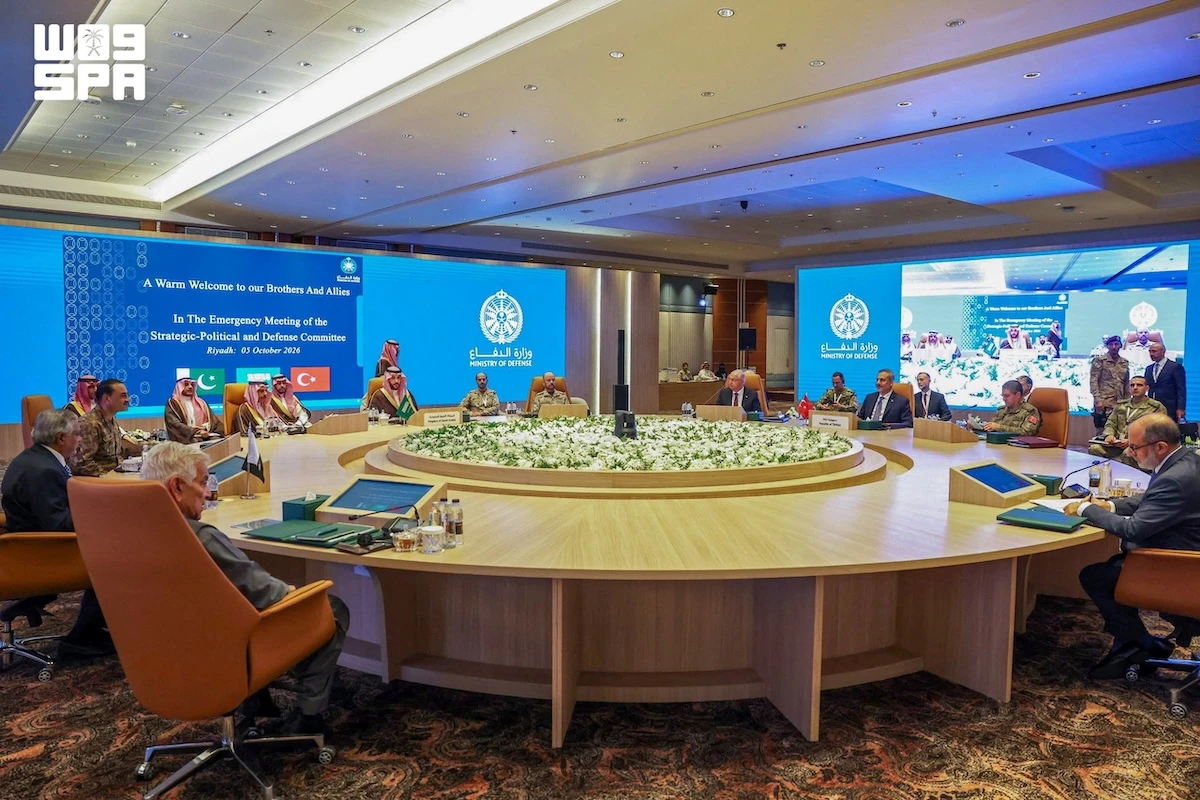
RIYADH, 28 March 2007 — Several hundred journalists, including women, from some 20 Arab and Western countries have arrived for media coverage of the 19th Arab summit, which begins here today.
A visit to the media center at the Riyadh Marriott revealed feverish activity. Hundreds of laptops and international phone lines have been set up at the center, which is also equipped with recording and production facilities for radio and satellite channels. All Gulf news agencies have established their own networks while TV channels have begun airing interviews and programs related to the summit.
The Ministry of Culture and Information has brought out a series of lavishly illustrated books and brochures on various aspects of the Kingdom’s history, arts and crafts, economic development, and oil production. It is also arranging sightseeing trips for media representatives covering the summit. Yesterday, a visit was organized to King Abdul Aziz Historical Center (KAHC) and Al-Azireyah Village, where a dinner was held followed by a folk show.
The ministry is publishing a daily bulletin in Arabic and English, entitled “Riyadh Arab Summit,” for the benefit of the media. Talaat Wafa, supervisor of the bulletin, told Arab News that foreign journalists have expressed appreciation for the news transmission and Internet facilities made available to them. They can file their reports directly from the center.
Today’s itinerary again includes a trip to KAHC, a shopping tour as well as visits to the Kingdom and Al Faisaliah towers. The program for tomorrow includes sightseeing at Al-Musmak Palace, shopping and a visit to the Equestrian Club.
Speaking at the media center, Afshin Molavi, fellow, New America Foundation, said the Saudi Embassy in Washington had streamlined visa issuance.
He said the summit reflected Custodian of the Two Holy Mosques King Abdullah’s vision in unifying the ranks of the Muslim Ummah for overcoming the challenges. “This summit makes it clear that the Arab world would like to solve its own problems, since it has found the US ineffective in this regard.”
According to Molavi, the main difference in approach between King Abdullah and US President George W. Bush is that King Abdullah seeks to bring on board all parties to the dispute, including those holding different points of view. “We saw this in the past when the king hosted representatives of Hezbollah, Hamas, Fatah and Iranian President Mahmoud Ahmedinejad. He is open to all shades of opinion. By contrast, the US president is unwilling to talk to anyone except his allies. Thus, the US is no longer seen as even-handed.”
By shifting diplomatic efforts into overdrive, Molavi said, Riyadh had surpassed Cairo as the diplomatic capital “that truly matters. I see the summit as the culmination of Saudi Arabia’s efforts in asserting itself as a geopolitical heavyweight.”