
IN spite of the importance of breastfeeding and how studies have shown that the practice helps babies develop an immune system that prevents them from suffering various illnesses in the future, only two hospitals in the Kingdom are baby-friendly and encourage breastfeeding, said a leading Saudi breastfeeding consultant.
“We only have the Al-Shumaisi Hospital in the Eastern Province and the King Faisal Specialist Hospital and Research Center in Riyadh that encourage breastfeeding,” said Breastfeeding Consultant Anne Batterjee, 56.
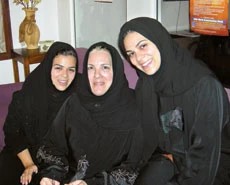
Anne is co-founder of the Al-Bidayah Center, which was established to spread awareness about breastfeeding. She has been running the center since November 2005 with the help of her two daughters Huda Batterjee, 25, and Modia Batterjee, 34.
“Al-Bidaya means the beginning. We want it to resemble that in all possible ways to help women come and spend some good, useful time,” said Huda.
Anne believes that many people complain and are terrified of the possibility of suffering from illnesses. Unknown to them they have the cure but “unfortunately” do not take advantage of it. Anne is concerned that with hospitals being commercialized, formula feeding has been preferred over breastfeeding.
Nevertheless, the World Health Organization recommends mothers exclusively breastfeed at least for the first six months of a baby’s life. At six months, complementary nutritious foods should be introduced and breastfeeding should preferably also be continued for two years and beyond.
According to the La Leche League International, an international authority on breastfeeding, breastfeeding has been shown to be a source of protection against many illnesses, including ear infections, upper and lower respiratory ailments, allergies, intestinal disorders, colds, viruses, staph, strep, e-coli infections, diabetes, juvenile rheumatoid arthritis, many childhood cancers, meningitis, pneumonia, urinary tract infections, salmonella, Sudden Infant Death Syndrome (SIDS) as well as lifetime protection from Crohn’s disease, ulcerative colitis, some lymphomas, insulin dependent diabetes, and for girls, breast and ovarian cancer.
Anne said she has delivered lectures on breastfeeding. Speaking about participants, she said, “They all get their certificates and then leave. I’ve never seen anyone, who has made good use or spread what she has learned.”
However, Anne said she takes comfort from the fact that the Makkah Ministry of Social Affairs is now working on spreading awareness about breastfeeding, and encouraging mothers to donate their milk and breastfeed babies at orphanages. “It is a brilliant idea. It’s not the baby’s fault that he or she was abandoned. Babies at orphanages deserve to be breastfed like any other baby,” she said.
“Around seven mothers got emotional, attached and adopted the babies and took them back home,” she added.
One of the organizations that Anne is a member of is the International Baby Food Action Network (IBFAN) Arab World, which was established in 2002. Eleven countries are members of IBFAN, which include Bahrain, Egypt, Jordan, Kuwait, Lebanon, Oman, Palestine, Saudi Arabia, Sudan, UAE and Yemen.
Oman has already managed to make all of its hospitals baby-friendly by encouraging breastfeeding, said Anne, who wants the Kingdom to follow suit.
Anne also spoke about the World Alliance for Breastfeeding Action, which on the first week of August last year celebrated World Breastfeeding Week and 25 years of protecting breastfeeding. She added that The World Alliance for Breastfeeding Action says that breastfeeding in the first hour of birth saves the lives of a million babies.
Huda added that in order to spread awareness, the Batterjee family has developed new ideas and aim to encourage women to adopt healthy lifestyles by providing them with evidence-based information in a supportive and positive environment. The Al-Bidayah Center offers courses on CPR (cardiopulmonary resuscitation), heart saving, first aid, peer counseling, breastfeeding and the basics of nutrition. They also offer a range of classes on the basics of breastfeeding, pregnancy, childbirth and yoga.
The center also works as a link to companies that provide private cord blood banking in the UK and that are also accredited by health bodies there. Blood from the umbilical cord and the placenta, which are rich in hematopoietic stem cells, is stored by private cord blood banks for the use of a donor or donor’s relatives to help cure genetic diseases.
“It costs around SR10,500 to store stem cells from an umbilical cord for up to twenty years,” said Huda.
Al-Bidayah also offers advice to people seeking second opinions to pursue medical treatment in Switzerland. “After September 11, people started going to Switzerland to get medical help rather than the US. Switzerland does not advertise itself much but provides fine medical services,” said Anne.
“It is a nonprofit organization. All the money goes to the campaign to support breastfeeding. Even the proceeds from the used book sale that was held recently was used to support breastfeeding. We sold books that have been here for a year for people who are interested. We sold them for SR10 only. It is amazing that people have even started to contact us to donate their books also,” she said.
Anne, Huda and Modia continue with their efforts to one day see breastfeeding become evermore popular.