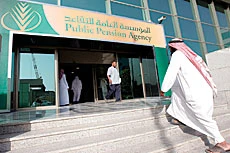
RIYADH, 25 July 2007 — Scores of Saudis, who had hoped to receive funding for their dream homes in a government lease program, have expressed disappointment after realizing that the stringent conditions to qualify for the program are far from what they had expected.
The Saudis, many of them above the age of 60, were among the large number that had approached the Public Pension Agency (PPA) in cities across the Kingdom to partake in the “Masakin” program that was announced several weeks ago.
The PPA has signed a deal with Riyad Bank to offer government employees funds to buy homes on lease. Only people who are aged between 25 and 55 and have an income of over SR5,000 a month, have no financial obligations toward a bank in the form of a loan being deducted from their salaries, and are able to make a down payment of 10 percent on their dream home are eligible to partake in the program.
The scheme covers all homes and apartments costing between SR150,000 and SR1 million over a lease period of between 15 and 25 years. A five percent interest charge per year is applied to the amount financed.
Yahya Majrashi, a retired government employee, said he was surprised to learn that the conditions set by the government agency were only applicable to some retired government employees and not everyone. “I came to the PPA office here hoping that I would receive finance for my future home but was later told that it only applies to government employees, whose income is above SR5,000... My pension isn’t above SR2,000,” he said.
Another government employee who arrived at the PPA office in Riyadh was disappointed to learn that applicants were to ensure they have no bank loans in their names.
“The conditions are not practical at all. They only apply to a very limited number of government employees,” said Saad Al-Dosari, another government employee. “Who doesn’t have a loan from a bank nowadays, especially after the Saudi stock market crisis and the losses everybody was inflicted with?” he said.
Muhammad Al-Harthi, another government employee, called on the PPA to reconsider its conditions. He added that the rise in inflation in the Kingdom over the years had severely affected locals, particularly those who are retired and do not receive increases in their pensions.
Dr. Fahd Al-Hussayen, manager of a real estate marketing department at the PPA, said the scheme did not cover houses worth over SR1 million only to ensure that applicants do not fall short in paying their financial obligations in the specified period. He added that the lease program has specified that only people between 25 and 55 years of age are eligible to partake to ensure that people are not above 70 years of age when making their final payment.
“Financial obligations are dropped when a person dies. Therefore, we prefer that the final age of an applicant when completing the scheme is not above 70,” he explained, adding that the lease program was also easily accessible to college graduates who have a minimum of two years’ experience in working in a government department.
Asked why the PPA lease program did not finance houses older than 10 years, the official said that was to ensure that the house is in good condition once the final lease is paid. “If a 10-year-old house is financed at the beginning of the scheme, it means that it will be over 25 years old when the final payment is made. The house will no longer be in a good living condition if it is older than that,” he said.
Similar to bank lease programs that finance the purchase of houses, the title deed of homes purchased in PPA schemes are written in the PPA’s name until all payments are made.
The PPA office in Riyadh was almost empty yesterday compared to the hundreds of people who had thronged its offices in the first few days after the lease scheme was announced.