- Three years of conflict have left thousands of children orphaned, injured or displaced, with psychological scars that may last a lifetime
- As Gaza struggles to recover from widespread destruction, children are growing up amid grief, displacement and continuing humanitarian hardship
DUBAI: War strips away childhood long before it claims young lives. In Gaza, the small, quiet rhythms of growing up have been replaced by the relentless mechanics of survival — hungry bellies, grief for lost parents and bodies missing limbs struggling to endure.
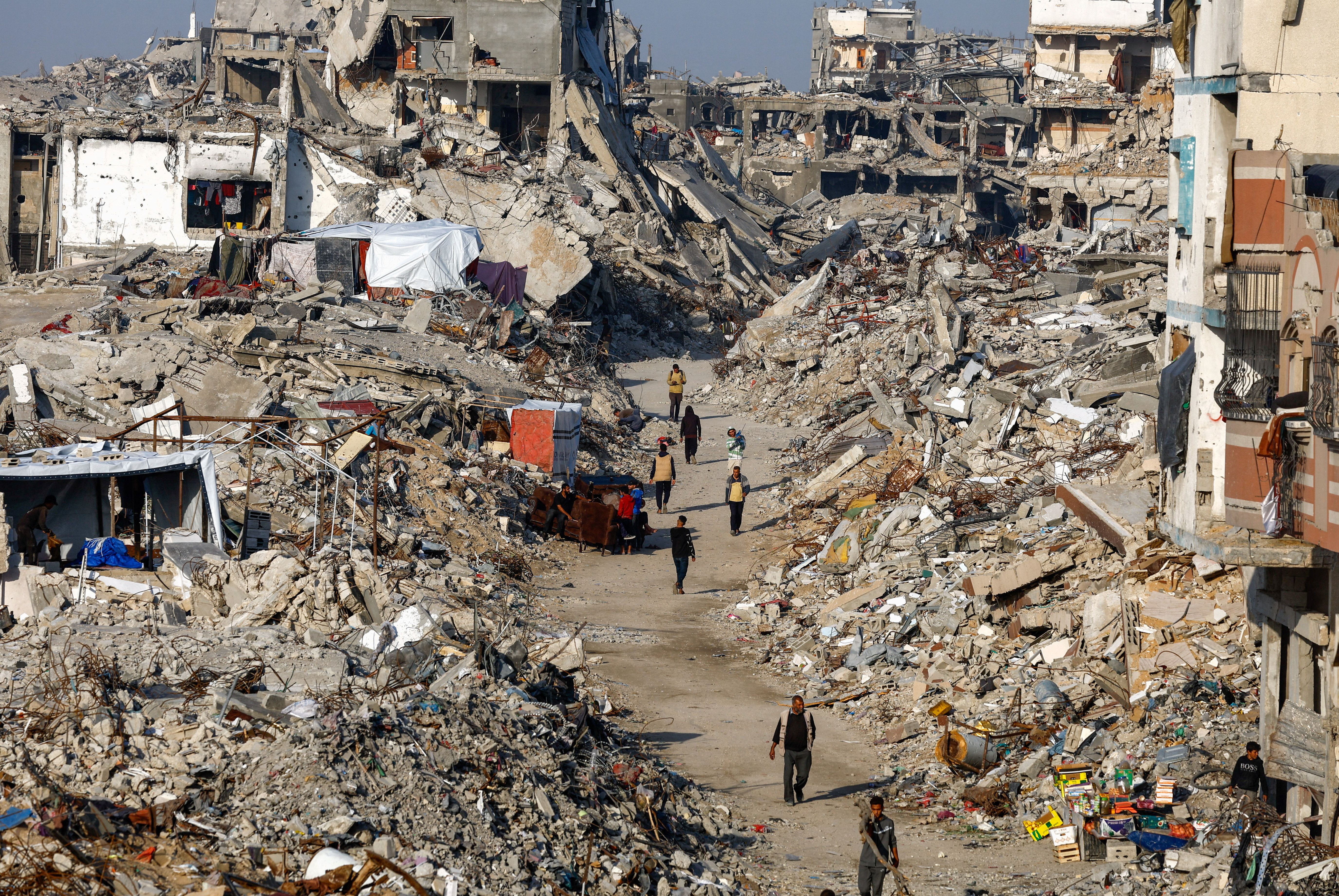
Three years after Oct. 7, 2023, and the beginning of Israel’s military assault on Gaza, some 1.9 million people have been displaced, many repeatedly, and more than 1.2 million have been left homeless, according to a 2026 UN, EU and World Bank assessment.
For children, the destruction has meant growing up amid displacement, damaged schools, disrupted health services and the loss of parents, relatives and familiar places.
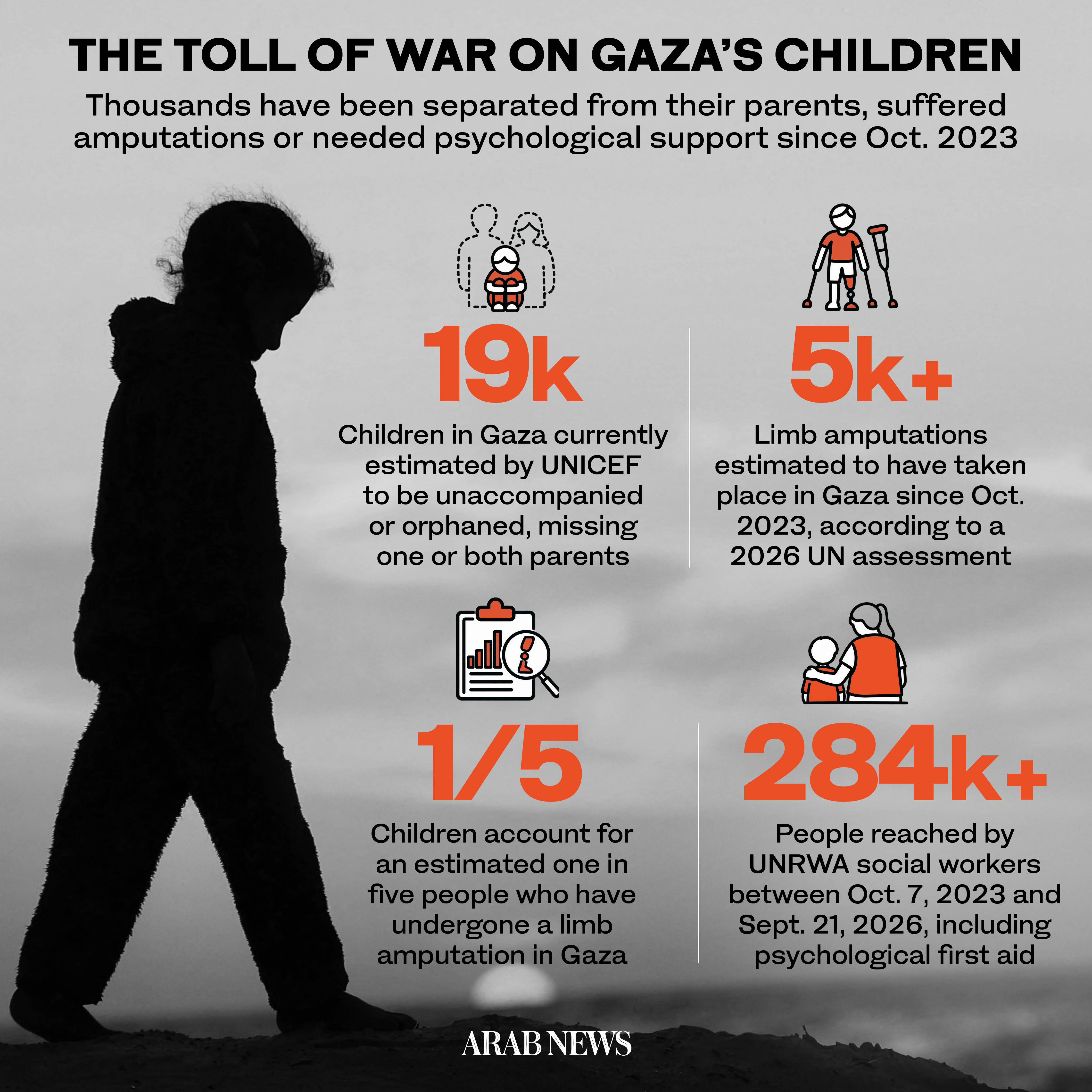
UNICEF reported that 19,000 children in Gaza are estimated to be unaccompanied or orphaned, missing one or both parents.
In November 2023, aid workers associated with Medecins Sans Frontieres coined the acronym WCNSF — wounded child, no surviving family — due to the number of children arriving alone at medical facilities seeking help.
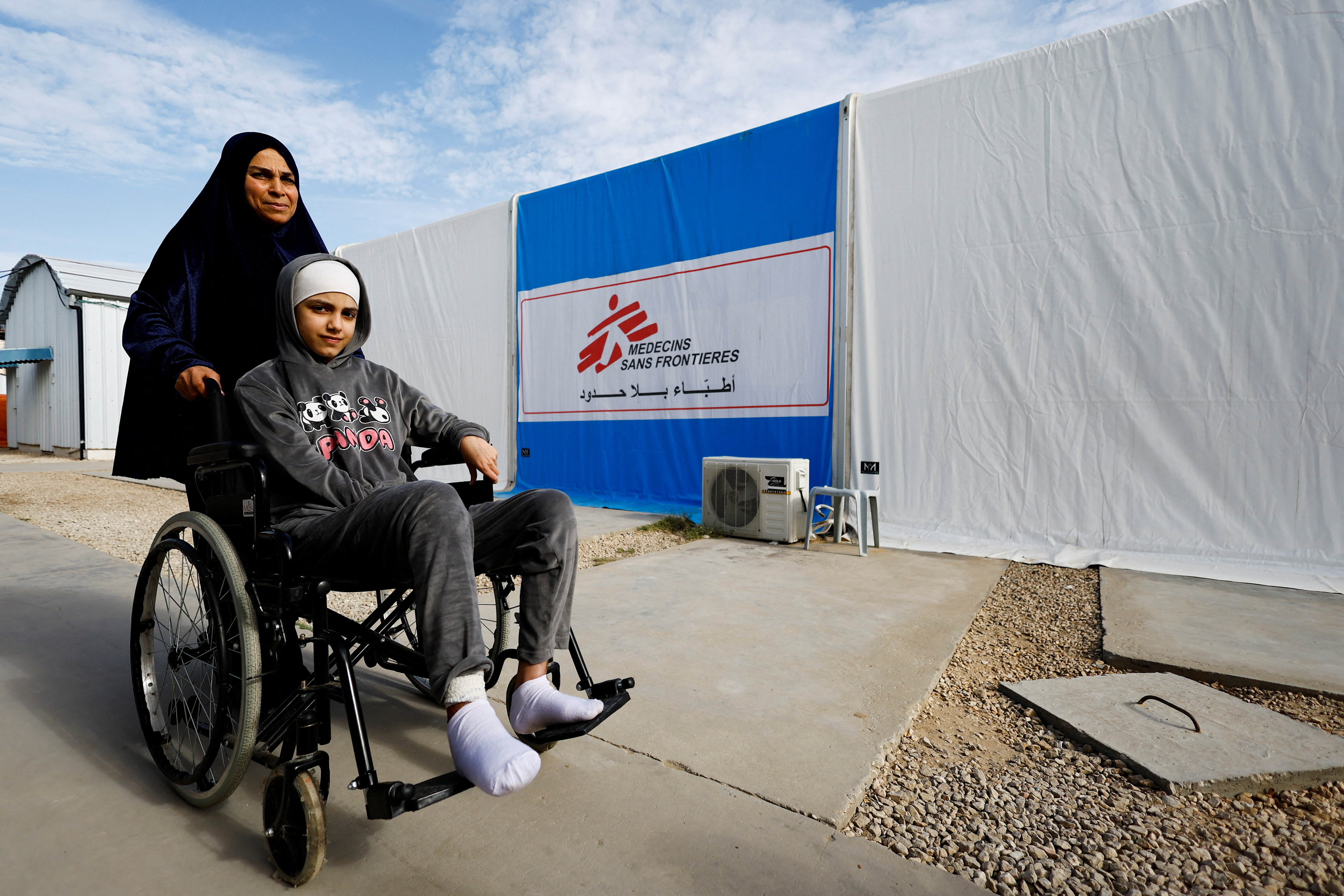
MSF reported treating children with catastrophic injuries, including amputations, crushed limbs and severe burns, requiring prolonged rehabilitation and specialist care.
For children who have lost their families as well as suffered life-changing injuries, the consequences extend far beyond the initial emergency treatment.
A 2026 UN assessment estimates that more than 5,000 limb amputations have taken place in Gaza since October 2023, with one in five amputees being a child. It also estimates that up to 56,000 injuries require extended rehabilitation.
“Many of those who survive these injuries face lifelong physical consequences. The World Health Organization estimates that more than 43,000 people in Gaza have sustained potentially life-changing injuries,” an MSF spokesperson told Arab News.
“These injuries have not stopped. In July 2026 alone, MSF teams treated 567 people with injuries from violent trauma, including blast injuries, burns, gunshot wounds and physical assault injuries,” they added.
With Gaza’s health care system severely damaged by the war, providing basic treatment has become increasingly difficult.
More than half of the territory’s hospitals were nonfunctional at the time of the 2026 UN, EU and World Bank assessment, while shortages of medical supplies continue to hamper humanitarian operations.
Yet for many children, surviving a physical injury is only the beginning of a much longer struggle, as the psychological effects of violence and loss can persist long after the wounds have healed.
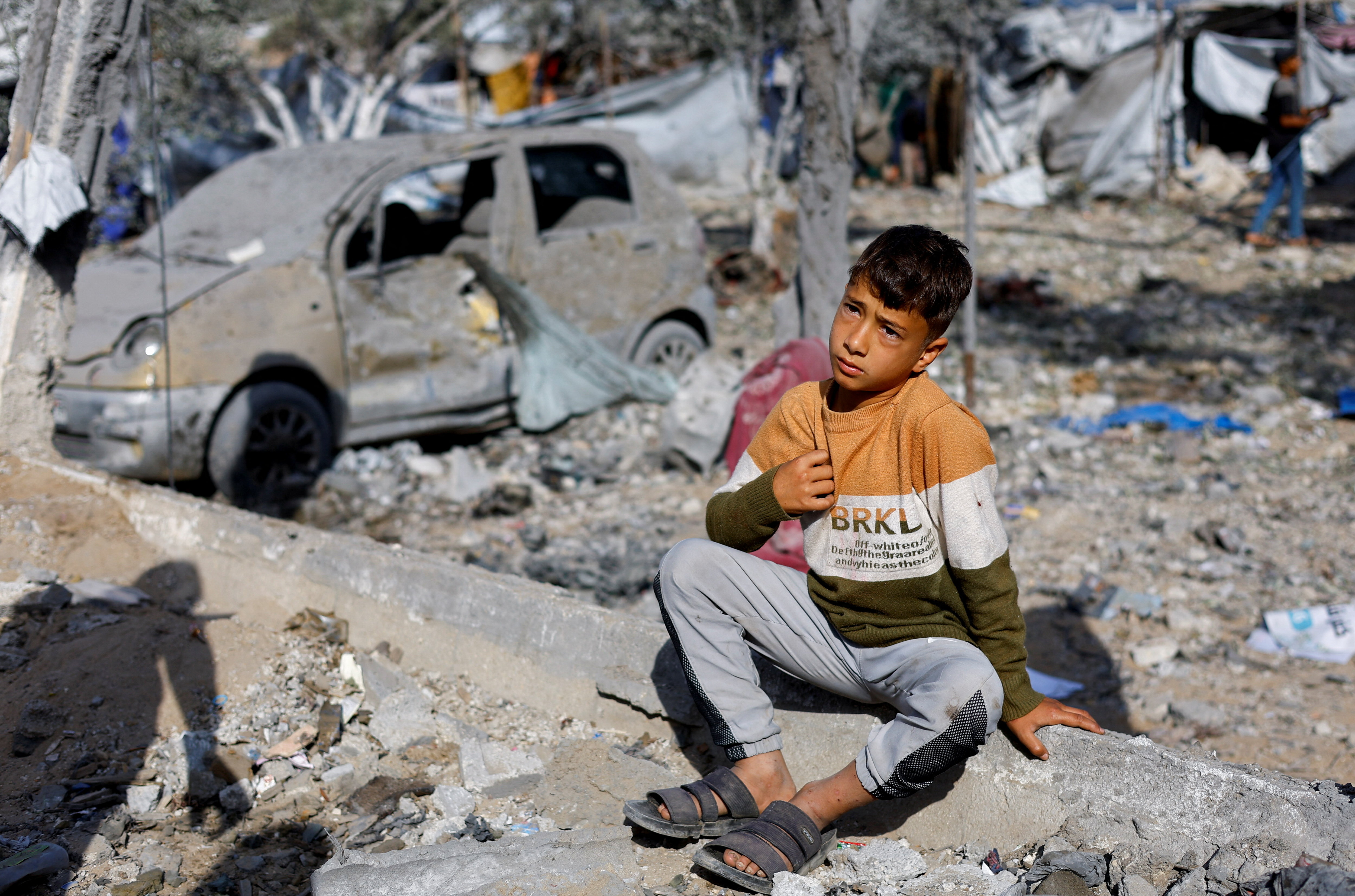
For Gaza’s children, the psychological consequences of war are becoming increasingly difficult to separate from everyday childhood. Violence, displacement and loss have altered the way many children experience even ordinary moments.
The humanitarian crisis has continued despite the ceasefire announced in October 2025. Most people in Gaza remain displaced, while overcrowding, damaged infrastructure and limited access to water, sanitation, shelter and health care continue to shape daily life.
In September 2026, 91 percent of assessed households were experiencing moderate to high water insecurity, according to the UN Office for the Coordination of Humanitarian Affairs.
Save the Children has documented a severe deterioration in children’s mental well-being since the war began. Its assessments found that many children struggle to imagine a future beyond the conflict.
The organization has warned that repeated displacement and loss are deepening psychological distress, leaving children with little opportunity to regain stability.
In April 2026, the NGO reported that children were turning hide-and-seek into a game of “war,” pretending to shoot one another, throw missiles and play dead, while others were holding funerals for dolls.
War Child has reported similar concerns about children who have been injured, separated from relatives or left without adequate care. Its 2024 assessment, based on 504 families, found profound psychological distress among these particularly vulnerable children.
Caregivers described children who were struggling to accept what was happening around them and living with a persistent expectation of death. The report shows how trauma can emerge through behavior when children lack the words to explain it.
For Salma, a 14-year-old who managed to escape to Egypt with her surviving relatives through the Rafah crossing, the trauma has followed her out of Gaza. She says sudden sounds still startle her.
“Any loud noise makes my heart beat very fast, I sometimes find myself having trouble breathing and my hands become sweaty. I don’t remember not feeling this way, I don’t remember what it feels like to be calm,” she told Arab News.
Salma says she feels different from her classmates at her school in Egypt, noting that a lot of things she once found funny no longer muster a smile. She worries that her classmates find her dreary.
“I try to fit in, I want to be happy, but there’s a sense of heaviness I cannot shake off, I worry I will remain like this forever. My life before the war feels like a distant dream.”
The family’s mental health has been “obliterated,” Salma’s father says.
“I try to make her happy, but what can replace the loss of her mother and her siblings? The sight of their bodies? She’s seen too much, she knows too much, the harsh reality should have been unfathomable for someone her age,” he told Arab News.
“Every day is a struggle, I feel we all died the day the building crashed and killed the rest of us. It’s like we’re buried but not yet dead.”
The UN Relief and Works Agency, or UNRWA, remains one of the largest providers of emergency learning and psychosocial support services across the Gaza Strip.
Between Oct. 7, 2023, and Sept. 21, 2026, UNRWA’s social work teams reported providing services to 284,998 displaced people, including psychological first aid.
UNRWA health teams, including psychiatrists, psychosocial counselors and supervisors, continue to provide psychosocial services in Gaza City and the Khan Younis area, assisting special cases referred from UNRWA health centers and collective emergency shelters.
James Gordon, an American psychiatrist who has worked with traumatized children and adults in Gaza through the Center for Mind-Body Medicine for more than two decades, says that even people living through severe trauma can regain a sense of agency and connection when they are given practical tools and supportive communities.
That approach is particularly relevant in Gaza, where trauma has not been confined to a single event. Children have repeatedly faced bombardment, displacement and the loss of people and places that made them feel secure.
The challenge is not helping children forget what happened. It is helping them feel safe enough to live beyond it. Gordon’s work offers some cause for hope — psychological wounds can heal, but recovery needs conditions in which healing is possible.
For Gaza’s children, that means more than access to counseling. It means having somewhere stable to sleep, adults who can offer reassurance, schools where routines can return and enough safety for play.
After so much of childhood has been shaped by survival, the first step toward recovery may be giving children the chance to imagine an ordinary future — and believe that it could actually belong to them.