
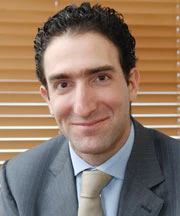
JEDDAH, 20 August 2007 — It was axiomatic that getting a Swiss banker to talk to anyone not a client is a fiscal oxymoron. However, attitudes have changed and surprisingly to many have been moving toward if not revelation then at least explanation since the mid 1990’s. Such candidness was the case with Pasha Bakhtiar of the seventh generation family-owned Lombard Odier Darier Hentsch (LODH) private bank who was keen in an interview on Aug.15 to communicate the current reality while strictly preserving the absolute client confidentiality.
Traditional public concerns about the secrecy of the dealings of Swiss banks with bemedaled dictators stacking away large sums of cash garnered illegally are, said Bakhtiar, certainly unfounded today and probably were never really justified.
“There are lots of people with large amounts of wealth in the world — but it is practically impossible for these people to do business with Swiss banks, our levels of due diligence are so strict,” said Managing Director Bakhtiar of the LODH regional office this week in Dubai. He noted that the trend was going that way before 9/11 as Switzerland did not want to be branded as a facilitator of such deals. “They are making great efforts to show the international community that due diligence requirements are as strict if not stricter than anywhere else in the world. That’s the reality today.”
He recalled that what had been happening since 9/11 and since well before was that the jobs of bankers and relationship managers had become increasingly difficult due to the numerous criteria — background checking for example — that were a necessary precursor to opening a private Swiss bank account.
“Statistically there is a much higher probability that we will refuse to do business with someone who is clean than accepting business from someone who is not,” he said as a measure of how far this process had come. That he said was what usually tended to happen and it was quite frustrating for a large number of bankers and clients who worked in this region. The stereotypes accorded to certain people and common family names frequently came up red-flagged during the vetting procedure. “It has made it very difficult. If you open an account with a Swiss bank today and can truly say ‘I am working with a Swiss bank of reputation,’ then you have been screened so thoroughly that there is only a very, very slim probability that there is something shady.”
LODH has been dealing with clients in the area for about 50 years and used its existing client base to establish new introductions when it opened its new office in Dubai in February 2007.
Far from being in a monopoly banks have been establishing their presences here in large numbers. “We are in a market where the ocean is red,” said Bakhtiar. “Every bank though has a different niche.”
Given that, and the fact that Saudi Arabia has the biggest economy and the greatest numbers of potential wealthy clients, it is significant that Dubai was the location of choice for Lombard and other banks.
“The majority of our clients from the GCC do hail from Saudi Arabia, the demographics drive that. They were under way before UAE and Qatar, for example, began their rapid development,” said Bakhtiar.
There were several options that made Dubai the attractive choice for establishing the bank’s presence: the regulatory environment; ease of finding bankers and staff willing to relocate to Dubai; and the development of Dubai airport as a regional hub. “We can go to practically any country in the GCC in the morning and be home in the evening — so all these considerations were taken into account,” Bakhtiar said.
“Additionally, Dubai has increasingly become a place of transit so everyone in the region tends to come through here several times a year for business or pleasure, so it is easy to conveniently meet clients and keep up the contact. He did not exclude the possibility of opening other offices in the GCC, that just depended on the regulatory environment and the ease of establishing a presence and access.
Bakhtiar thought that the key to establishing private banks anywhere in the GCC was that central banks needed to be open to issuing licenses to foreign banks, which was not the case for every country in the GCC. Some are now considering structures and it was becoming easier for foreign institutions to come here.
“We are at the beginning of the process — we shall have to see how it develops,” he said.
Concerning tax evasion and avoidance, Bakhtiar said that the whole fiscal question did not apply here in the GCC. “No one here is concerned with income, wealth or corporate tax, other than zakhat. The argument ‘Switzerland is a fiscal haven does not apply here.” The emphasis in private banking lay more on the level of service, underlying performance and management of assets to justify doing business with LODH as opposed to any other argument.
The key to the whole private banking business was face-to-face contact and flexibility as a banker to meet clients or potential clients anywhere in the Gulf at any time. “It’s really taking this level of service to the extreme and that is something that has been lacking here.”
The business of LODH is split into two-thirds private wealth, one third institutional wealth. The GCC was, noted Pasha, interesting because the line between the owner of the family business and the private individual is very tenuous. Very often it is the same person.
“As a multi-generational family firm we understand that. When our partners and owners of the bank come to the region six or seven times a year and sit head-to-head with owners of family businesses regionally, it makes us very different from our competitors. Who has the opportunity to see the CEO of UBS or Citibank on a regular basis?”
The critical element of private banking, thought Bakhtiar, was being able to perform up to or exceeding expectations on a regular basis. Just comparing performance of bank products was not enough. Many banks had lost focus and concentrated on products. “We have every product and service large banks have, but what’s most important is the physical contact. There has to be chemistry between me as a banker, us as an institution and the client — because what we want is to develop a relationship over the long term, perhaps even with his children.”
“The central pillars to our private banking are absolute trust, the personal relationship with the client, tailoring our services to their exact requirements coupled with absolute privacy and secrecy within the limits of the law,” Bakhtiar concluded.