RIYADH, 22 January 2008 — Saudi Arabia yesterday denounced the Israeli atrocities against the Palestinians in Gaza and West Bank and urged the Quartet to shoulder its responsibility toward protecting the human rights of Palestinians.
The so-called Quartet is made up of the four main sponsors of the Middle East peace process — the European Union, Russia, the United Nations and the United States.
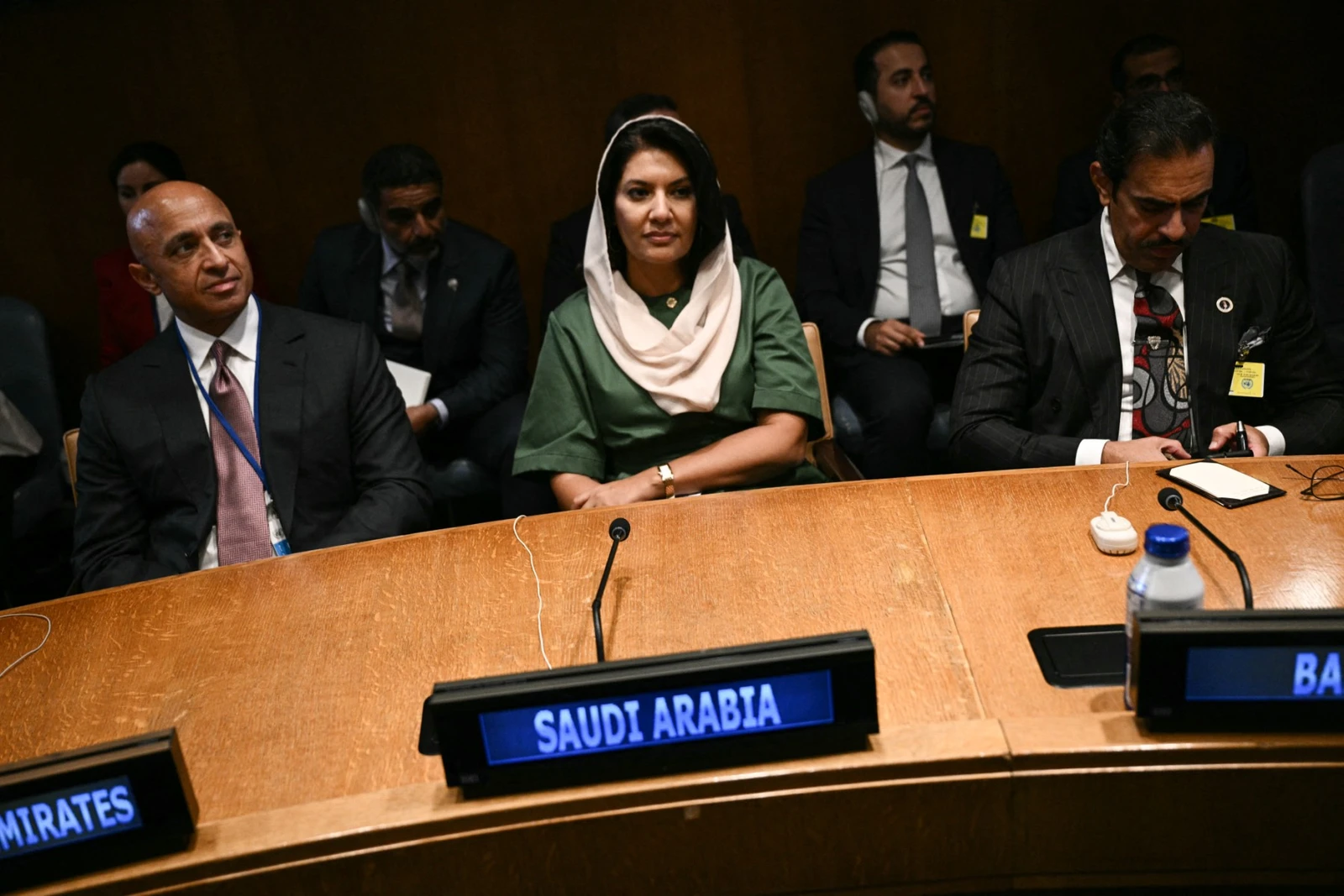
In a statement after the weekly Cabinet meeting, chaired by Custodian of the Two Holy Mosques King Abdullah, the Kingdom said it would intensify humanitarian aid for the Palestinians in order to meet their requirements.
“The Council of Ministers has been following with deep concern Israeli violations and its policy of imposing the worst forms of collective punishment in Gaza and West Bank,” Culture and Information Minister Iyad Madani told the Saudi Press Agency.
“The Kingdom will immediately contact Tony Blair, representative of the Quartet, and its members to shoulder its responsibility and commitments toward protecting the human rights of the Palestinian people,” the Cabinet statement said.
The Cabinet meeting warned that continuing Israeli excesses against the Palestinian people would make all peace initiatives meaningless. It was apparently referring to the recent peace conference in Annapolis, Maryland, organized by US President George W. Bush.
In Brussels, European Union External Relations Commissioner Benita Ferrero Waldner blasted Israel, calling its blockade of Gaza Strip as “the worst form of collective punishment.”
“I am against this collective punishment of the people of Gaza. I urge the Israeli authorities to restart fuel supplies and open the crossings for the passage of humanitarian and commercial supplies,” she said in a statement.
Gaza’s sole power plant shut down overnight for want of fuel as a punishing four-day Israeli blockade of Gaza City threatened to spark a humanitarian crisis.
EU foreign policy chief Javier Solana also called for an end to the blockade saying: “We cannot agree with the situation in Gaza today. It’s time to change the position and really allow humanitarian aid to get to Gaza, people are suffering.”
Ferrero-Waldner said the decision to close all border crossings into Gaza as well as to stop the provision of fuel will exacerbate an already dire humanitarian situation in the Gaza Strip. “Closing the crossings will also result in shortages of food, medical and relief items,” she added.
She insisted that neither the blockade nor recent military strikes on the Palestinian territory would prevent rocket strikes being launched into Israel. “Only a credible political agreement this year ... can turn Palestinians away from violence,” she said.
The EU’s executive body, through a special international mechanism, has been supplying fuel to run the Gaza plant. Even fuel used to fire the many generators in use in the occupied territory was in danger of running out.
In Jeddah, the 57-member Organization of the Islamic Conference urged the UN Security Council to immediately convene an emergency meeting.
OIC Secretary-General Ekmeleddin Ihsanoglu urged “the international community, the Quartet and the (UN) Human Rights Council... to act rapidly to put an end to the Israeli aggression and lift the blockade imposed on Gaza.”
Back in Gaza City, life came to a standstill yesterday, with traffic dying down on the normally bustling streets and bread lines forming outside the few bakeries that had not closed for lack of fuel.
“We have enough bread to last one more hour,” said Khamis Akia, the owner of one of the last functioning falafel stands in the city. “There is no electricity, no running water, and no bread,” he added.
Around the corner a long line of dozens of people filled the sidewalk outside one of the last functioning bakeries in the city. “I have 12 kids and there is no bread in the house. My daughter’s family had some, but she’ll run out soon too,” said one woman, who had been standing outside in the early morning cold for nearly three hours.
“There is no electricity, just candles. The children were scared of the dark. They don’t know what is happening.”
Public transportation has also nearly come to a halt, with the minibuses and taxis on which most Gazans depend grounded for lack of fuel.
The supply of candles is running low as well. “I have not had any candles for three days,” Musab Al-Yazori, a Gaza City supermarket owner said, sitting behind the cash register in his dreary, unlit shop.