JEDDAH, 26 January 2008 — Philippine officials in the Kingdom have warned Filipino workers seeking to be sent home not to fall for offers of a “backdoor exit” in Jeddah, saying they could only end up poorer and imprisoned.
Consul General Ezzedin Tago, the head of post in Jeddah, issued the warning as the number of so-called taong tulay (bridge people), mostly runaway Filipino workers and other expatriates, continue to increase.
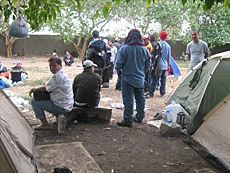
They are called “bridge people” because they are often dumped by “fixers” underneath overpasses in hopes that they would be eventually picked up by the Saudi authorities and deported.
A favorite dumping place for expats — including Filipinos, Bengalis, Indians, Indonesians, Sri Lankans and Pakistanis — seeking repatriation is the Kandara overpass. Another site is the Sharafiya near Mahmoud Saeed Mall along Siteen Road.
As of yesterday, the number of Filipinos at the two sites was estimated to have swollen to 80, mostly workers who have quit their jobs in Riyadh or in the Eastern Province. One of those at the Kandara overpass, a 50-year-old trailer driver who gave his name only as Ka Nanding, said he decided to take the Jeddah route because his employer in the eastern city of Dammam refused to send him home even though he had long resigned from work.
A maid from the southern Philippine region of Davao said she ran away from her employer in Riyadh to avoid getting raped.
Exploited
Consul General Tago lamented that unscrupulous Filipino “fixers” were exploiting the misfortune of their compatriots by offering a “backdoor exit” that does not exist.
“It has come to the attention of the Philippine Consulate General in Jeddah that some individuals have claimed to be authorized by the consulate or pose as agents of the consulate, offering arrangements for exit from the Kingdom through the deportation facility which is euphemistically called ‘the back door channel’ for a fee usually ranging from SR500 to SR2500 and even more in some instances,” he said in a press statement.
“The consulate is in no way connected to any of these individuals and/or ‘fixers.’ The Philippine Consulate General stresses that it has not authorized anyone to offer any such arrangements and more so collect such fees,” he added.
Tago said runaway workers should seek assistance from the Philippine Overseas Labor Office (POLO) for the settlement of their cases and eventual repatriation after resolution of their cases as provided for under Saudi Laws and Regulations.
He said the deportation facility in Jeddah is reserved only for expatriate workers who have been released from detention and for Muslims who have overstayed their Umrah and Haj visas.
“Workers who have absconded from their employers are risking arrest, investigation, and jail detention by posing as pilgrims,” he said, adding that Filipino pilgrims who have proof of their identity and Haj status should seek assistance directly from the consulate.
“The Philippine Consulate General is releasing this information to Filipino nationals so that they are able to avoid unnecessary risks and avoid falling victims to anyone offering such arrangements,” ther statement said.
As part of measures to protect the public from “fixers,” Tago has instructed all personnel of the post, including the labor and welfare offices, to wear consulate IDs inside at all times and for the public not to transact with anyone not wearing a consulate ID.
Help From Riyadh
In Riyadh, Ambassador Antonio Villamor urged those planning to also use “backdoor” route to think twice for their own good.
“We will help our compatriots who have problems only in a legal way. We will oppose anything that is illegal. There are legal ways to solve problems,” he said in a phone interview.
“We don’t want to use solutions that are illegal because that would ruin our good relations with the Kingdom of Saudi Arabia. We cannot correct a wrong with another wrong,” Villamor said in Tagalog.
Some of the “bridge people” who escaped from Riyadh said they took the Jeddah route because embassy offficials insisted that they return to their employers.
“I left my employer precisely because I could no longer take the abuses, but those people at the POLO wanted me to return. They haven’t even considered the possibility that I could be abused further if I did that,” said one worker, who asked not to be named.
Urgent Action Needed
Other consulate personnel feared a “repeat” of what happened last year, when 96 stranded workers, frustrated at being turned away by immigration police, flocked to the consulate to seek help.
With the consent of the Department of Foreign Affairs in Manila, then Consul General Pendosina N. Lomondot allowed the workers to stay inside the consulate compound while he made representations with concerned Saudi offices.
When the consulate opened its gates, hundreds of Umrah and Haj overstayers joined the runaway workers.
Using personal diplomacy, Lomondot managed to get not just the original 96 but a total of 922 Filipino runaways and overstayers amnestied and repatriated in six weeks’ time.