
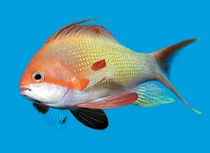
A quarter of a century ago, the undersea environment near Jeddah and of the Red Sea was, said Hans Sjoeholm, very different. “Divers who experience for the first time what is here now are impressed,” he said. “However, it is very different from the environment twenty, ten or even five years ago.” Visibility, density of marine life, the absence of large pelagic species from commercial over fishing and the build up of discards from coastal development has all taken their toll on the reefs.
“When new people dive here, they say it is fantastic, beautiful,” Sjoeholm reflected. “When I go down, I cry.”
Sjoeholm should know. A self-confessed photo-addict, he has taken tens of thousands of photos of the reefs and coast near Jeddah over the last 26 years. About 170 of them now constitute a remarkable public exhibition in Jeddah. They are also an invaluable body of knowledge, a record of environmental decline and are a treasure house of images that reveal the beauty of the marine ecosystem that in many cases is just a coke can’s throw from the shore.
“When they see the photos, people are amazed that this kind of beauty is so close to shore,” he mused. A quiet-spoken and modest Swede, Sjoeholm underplays his considerable talent but was eventually moved after repeated promptings to assemble the current photo exhibition in Jeddah. He was moved partly because of the changes in the undersea environment and what he saw as the vital need to present the natural treasure house of the Red Sea reefs to the young.
“I want to inform people about what is going on. They think the ocean is full of fish, that it is limitless. It is not — and I want people to appreciate that.” He noted that divers only rarely see large fish or sharks. Certainly the practice of fishing for sharks, cutting their dorsal fins off for export to the Far East has reached the Red Sea. Local knowledge informs us that 400 sharks were caught and de-finned and the bodies thrown back off the coast near Yanbu only a few months ago.
He is convinced that the process of raising awareness has to start with children.
“It is absolutely vital to introduce young minds to the wonders of the reefs,” he said. “It is not just the reefs’ beauty that is important; it’s far more than that. Reefs are essential to the existence of life in the sea and as part of the whole earth’s ecosystem and human life.” And they are under considerable threat from development, especially coastal development, and the indiscriminate dumping of human waste into the sea.
Just back from a dive trip to the Great Barrier Reef, Sjoeholm’s observation as to the lesson to be learned was that “It is not so great any more.” The damage to the reef from a number of influences — not least coral bleaching from rising water temperatures — have caused irreparable damage to swathes of this vast ecosystem.
The exhibition, which took a year in the planning, is timely; 2008 is the International Year of the Reef (IYOR). International Coral Reef Initiative (ICRI), the ICRI 2008 campaign, is a worldwide campaign to raise awareness about the value and importance of coral reefs and threats to their sustainability, and to motivate people to take action to protect them. Individuals, corporations, schools, governments, and organizations - all are welcome and actively encouraged by the ICRI to participate. Hearteningly, every weekday morning session of the Jeddah exhibition has been overwhelmed by crowds of elementary school children on organized visits, keenly excited by the photographs and a video presentation by Sjoeholm.
As with many worthy but expensive projects, it took equally dedicated colleagues to turn a vision into reality. “The sponsors were as keen as I was to get the message of “Preserve it now before it is too late” across,” said Sjoeholm. “Without people such as Ayed Samman of Priority Options to pull this all together and the very enthusiastic backing and help from the Arab League, our own Supreme Commission for Tourism and the Arab Tourism Organization this, and all the good I hope it is doing, could not have happened.” He said that the common thread in the sponsors thinking was that we all occupy this very small planet and it does not devolve on one man or woman to preserve it. “We should all be involved.”
The majority of the photos in the exhibition were taken on reefs, although some of the most haunting images are of a spiral of free-swimming dolphins rising from the depths, and breaking surface, near Abu Madafi some 50 km from Jeddah. Sjoeholm said that the opportunity to capture those particular images was largely chance. “Dolphins have to come to you,” he said. “On this occasion, I was able to get into the water as I spotted them and they stayed around long enough to get some shots off.”
Most of the exhibition shows the individual species that inhabit the reefs. Many are extremely close-up shots of small but incredibly intricately formed fish, crustaceans and corals. What they bring out is the dazzling complexity and fragility of marine animals that, in large numbers, contribute to the chain of eco-sustainability that includes humans. Many of the creatures are smaller than a little finger. It is their huge number and close interaction with each other that provide the reef with its vital functions. Their fragility and delicacy of form is both the source of their beauty and vulnerability to human influence through pollution.
Only recently adopting digital media, Sjoeholm’s exhibition was shot almost entirely on slide film and on what many modern photographers would consider outdated amateur equipment. Rarely has there been a better example of the truth of the saw that output is the result of equipping the man, not manning the equipment. Learning his craft the hard way, trial and error in the darkroom often resulted in his having to re-shoot scenes - not always easy as some unique shots were of necessity lost.
However, given the combination of patience, passion and persistence coupled with Nikonos 2 through 5 underwater cameras with a special wide-angle lens, the results are quite simply overwhelming. Later in his photographic career Sjoeholm invested in professional underwater housings and has only recently moved in part to digital media.
While passionate about the conservation of the reef and marine environment simply for itself, Sjoeholm is also eminently practical. “Keeping the environment in good shape benefits everybody,” he said in reference to considerate reef usage from eco-tourism through sustainable fishing to the macro considerations of reefs as a source of pharmaceuticals.
“It’s a matter of understanding the importance of reefs in the interconnectedness of the whole environment.”
This exhibition, if not actually pedagogic in tone is attractive, informative and above all places with simple understatement the wonder of creation in all its forms right in front of the visitor. One cannot but marvel at it. So go and see it at once before it ends on Friday Feb 15. It is at the Serafi Mega Mall on Tahlia Street, Jeddah and admission is free. “These,” he confided finally, “are only a random pick from my files; they are not my best pictures.”
If that is so, there are treasures indeed in store for the next exhibition.