
JEDDAH, 29 March 2008 — Cancer is one of the fast spreading diseases in the south Indian state of Kerala with about 30,000 people detected with the disease every year. Most of these cancer patients die without receiving proper treatment, as they are too poor to meet the huge medical expenses.
To change this pathetic situation, a group of philanthropists have embarked on a major project: The Malabar Cancer Institute and Research Center (MCIRC). The aim is to have a well-equipped cancer hospital providing free medical treatment to poor patients.
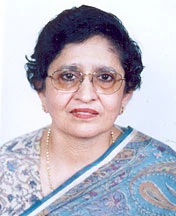
“In a country like India, home to a billion people, the government cannot be expected to shoulder the full burden of financing and maintaining front-line medical centers,” said Dr. Hafsath Kaderkutty, the main architect of this non-profitable venture, emphasizing the role of philanthropists in providing health care services.
The new cancer hospital is coming up in Kanniparamba of Mavoor Panchayat in Calicut, the heart of Malabar, which accounts for about half of cancer patients in the state. “Diagnosis and treatment of cancer need special facilities and specially-skilled medical and paramedical personnel, which will not be available in ordinary nursing homes and general hospitals,” said Dr. Hafsath.
Initiatives from NGOs and individuals play an important role in providing a network of quality cancer care centers throughout India. There are a number of such cancer treatment centers in Kerala. But the Malabar area, which has an adult population of 10 million, lacks one. Hafsath and her team hope that MCIRC would fill that gap.
The MCIRC Trust was formally formed and registered on April 10, 1996. Since then it has received wide support. Muslim League leader Sayed Mohammed Ali Shihab Thangal, Calicut Bishop Dr. Joseph Kalathiparambil, State Minister for External Affairs E. Ahamed and former Supreme Court judge V.R. Krishna Iyer have joined the venture as patrons and former Education Minister E.T. Muhammed Basheer as a trustee.
The project, which is estimated to cost Rs.500 million, will be completed in stages. Justice Fatima Beevi, former governor of Tamil Nadu, laid the foundation stone for the first MCIRC building (Outpatient Block and Pain & Palliative ward) in October 1997 while Justice Sukhdev Singh Kang, former Kerala governor, inaugurated the Pain and Palliative Care ward in August, 2001.
“Ever since the opening of this facility we have provided treatment to a large number of patients. They were given inpatient care round the clock including food and medicine free of charge,” said Dr. Hafsath, who is also the managing trustee. All the expenses including salaries of staff are met through monthly donations from trustees and other philanthropists, she adds.
“In October 2003, we started our own early detection clinic on a small scale. We have been promised some help in this regard by IARC of the World Health Organization,” she said. Treatment facilities for detected cases are very inadequate in this region. It is well known that Calicut Medical College has a waiting time of up to six months. Those who can afford, take their patients to distant places like Regional Cancer Center in Thiruvanandapuram and Adayar Cancer Center in Madras for treatment.
“The main task in front of us right now is to set up a radiotherapy unit. Without radiotherapy neither palliative nor curative treatment can be offered to patients,” Dr. Hafsath said. “We have already received the necessary approval from the Atomic Energy Research Center in Bombay to construct the unit,” she added.
MCIRC also intends to establish a leukemia center for children along with a full-fledged laboratory, radio-diagnostic facilities and a blood bank. “All these facilities require funds and we expect every possible support from philanthropists and businessmen and women,” Hafsath said and hoped that non-resident Indians (NRIs) in Saudi Arabia and other Gulf countries would back the project.
The MCIRC offers an attractive scheme for prospective donors. Those who donate Rs.10,000 can avail of a cancer detection test for 60 percent of actual cost and a 20 percent reduction in treatment charges. By giving Rs.20,000 a donor can avail of the same facility for his spouse. A donation of Rs.50,000 will entitle two children and parents to receive the service. A person can sponsor a room by donating Rs.200,000 and a six-bed ward for Rs.6,00,000. Donors are eligible for tax exemption.
“We welcome donations from Saudi businessmen and philanthropists in terms of cash or kind. They can donate equipment such as linear accelerator, ultrasound, CT Scan and MRI systems, external beam therapy system, mammogram, X-ray unit and chemotherapeutic devices,” K.P. Mansur, a MCIRC trustee and business executive in Jeddah, told Arab News. “They can also sponsor treatment of their countrymen at MCIRC,” he added. Mansur can be contacted on 0505596708.