
BARCELONA, 30 March 2008 — In order to meet rapidly changing business needs, one of the world’s leading IT giants, Hewlett-Packard (HP), has launched a set of products and services designed to help customers transform their data centers from a stand alone collection of physical assets into a virtual and adaptive infrastructure.
The announcement was made on the sidelines of a conference, entitled Techonology@Work2008, in Barcelona on March 17-19.
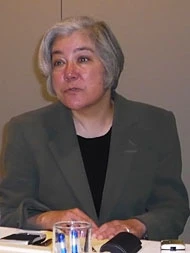
Ann Livermore, executive vice president of HP’s Technology Solutions Group, said that new research shows that more than one-third of chief information officers believe that within the next five years their data centers will be unable to meet fast growing demands for business services and applications.
“To meet this demand,” she said, “HP is providing businesses with technology tools and strategies needed to address top data center initiatives: Energy efficiency, automation, virtualization, consolidation and business continuity.”
Livermore leads HP’s Technology Solutions Group, a $37-billion-plus business that encompasses storage and servers, and software and services, serving HP’s business customers in more than 170 countries.
As a well accomplished IT expert, Livermore has been involved with HP’s customers for more than 20 years. She joined HP in 1982 and has held a variety of management positions in marketing, sales, research and development, and business management before being elected a corporate vice president in 1995.
In an interview with Arab News in Barcelona, Livermore talked about HP’s activities, data center transformation, future objectives, software development and market, and how HP is different from IT companies.
She said that being the biggest IT company of the world, HP aims to be number one or number two in every market it participates in. “It is more about leadership in the segments we participate in. We want to be not just the biggest, but the best — best in customer loyalty, best in customer satisfaction and to attract the best talent,” Livermore said. She added that more and more companies were facing the challenge of transforming their technology infrastructure environments into agile, energy-efficient and cost-effective assets to drive business growth.
“Many companies don’t want to take the time or effort to build a next-generation data center for themselves, so they want to essentially plug into a wall. They want to use the application in such a way that they don’t have to make a capital investment - so for those who want to use specific applications, it is a great option. We see that there’s interest in this for specific locations and business units,” she said.
She further said that some companies were looking to move specific applications out of data centers to make it easier. So it could be a cost reduction benefit. Many do not want to go through the effort of building a data center. The idea of paying based on usage is very attractive.
Speaking about chances of series of applications coming up, Livermore said, “That’s our intention. Part of making this work is the willingness of users to have a standard application package. We know that the two we’re starting with have a lot of interest.” When asked about HP’s strategy to promote data centers in the Middle East? Livermore said that the whole region is important to the company and that the Kingdom holds a special place.
“We are eager to be a company that assists in original build outs and transformations of existing data centers. We continue to add resources. You may have seen acquisition of Atos Middle East. One of the big reasons to rapidly grow services is to transform data centers and build our build data center expertise. We will have some events in Saudi Arabia soon,” she added.
About HP’s performance in the Middle East, she said for management and automation, the market looks at categories in around five different units. “Globally we are number one or number two in every category,” she added. Livermore emphasized that the software market was huge and growing rapidly, and that it was one of HP’s core revenue-earners. “For HP’s fiscal year 2007, our software revenue doubled over the prior-year period to $698 million, led by strong growth from the businesses acquired in HP’s purchase of Mercury Interactive,” she said.
“On a year-over-year basis, HP OpenView grew 24 percent excluding Mercury. Operating profit was $177 million, or 25.4 percent of revenue, up from $60 million, or 17.2 percent of revenue, in the prior-year period,” she added.
Speaking about creating products that are environmentally friendly, she said, “We very much see that businesses need to have a cost justification for everything they do. The best outcome is when it saves money and is also good for the environment. We have invested a lot in power and cooling. Being able to reduce energy use saves customers money and is good for environment.”
She added, “Dynamic Smart Cooling can reduce power and cooling by 40 percent. We’ve implanted it ourselves and will save about 60 percent of the amount of energy used, which is a huge impact — that’s one of the examples that has a cost as well as an environmental benefit. You’ll see us continue to focus on this.”
Livermore said that virtualization was the key word these days and there was an opportunity for customers. “A lot of people associate virtualization with the server but customers really need to virtualize the entire data center environment — servers, storage and applications.
“The first problem they run into is how to manage it. They have mixed environments, then it’s like, ‘What do I do?’ There aren’t that many people who have tools to manage this and HP’s focus is on exactly that. The software HP provides to manage virtual and physical servers from a single pane of glass. One of biggest impediments is, ‘How do I mange this thing?’” she said.
Speaking about virtualization she said that the world has entered into desktop virtualization. “For security reasons, cost reasons, management -- any one of those reasons could be a good reason to do that. It could be PC blades as an implementation of that. HP acquired Neoware about a year ago to have virtualized client environment. So between that and blades, we feel good about it - half of all virtualized environments are blades. As people are thinking about virtualization, about blades, will be thinking about virtualizing the desktop,” she added. Speaking about fast emerging trend of outsourcing, she said HP has a strong IT outsourcing business. “We have many customers around the world. Proctor & Gamble has outsourced their entire global operation. We have deals with BT, Pfizer and Nokia. We have smaller customers where we just do smaller pieces of it. So we have some very big ones and some smaller ones,” she said.