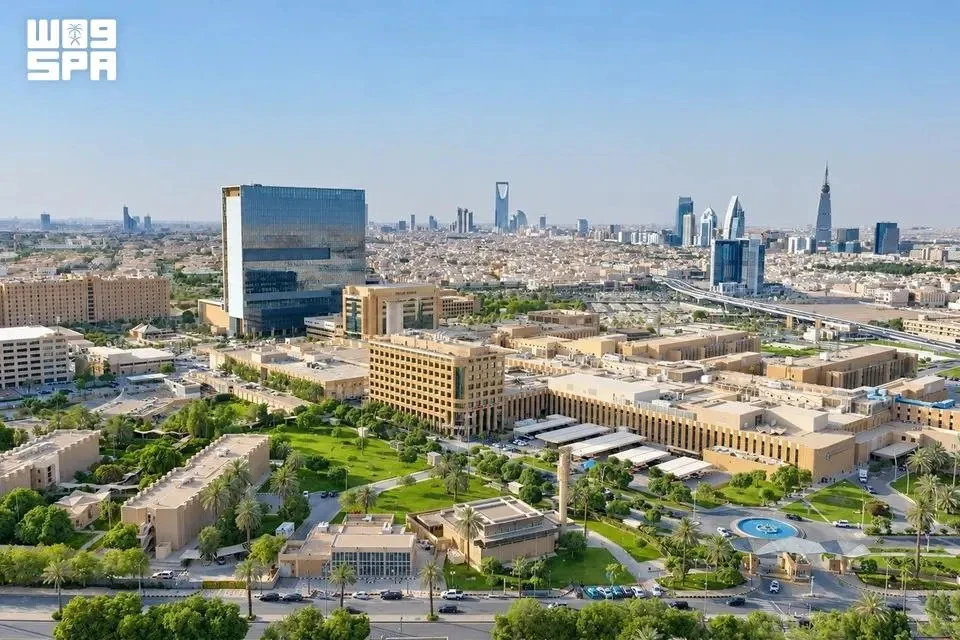
JEDDAH, 1 April 2008 — Higher education in the Kingdom is set to gain a major facelift with the opening of 12 new universities, the introduction of a 25-year development strategy and the signing of cooperation agreements with leading universities in the US, Europe and Asia.
Dr. Ali Sulaiman Al-Attiyah, adviser at the Ministry of Higher Education, said higher education in Saudi Arabia has received a shot in the arm in the last four years with the number of Saudi universities rising from eight to 20.
Custodian of the Two Holy Mosques King Abdullah has prioritized education and training, and one third of the country’s general budget is being directed toward education. The king has allocated SR8 billion from budget surpluses for higher education projects and the total cost for completing the first phase of the new universities is estimated at more than SR5 billion.
Saudi Arabia recently signed a series of agreements with France to promote cooperation in higher education. France has also agreed to increase the number of Saudi students at its universities from 600 to 2,000 over the next two years.
Higher Education Minister Dr. Khaled Al-Anqari, who attended the signing, said the agreements would lead to strengthening the Kingdom’s higher education system. The agreements include student and teacher exchanges, and cooperation with leading French institutes.
Al-Anqari said his ministry was putting final touches to the 25-year higher education development strategy, which will soon be presented to higher authorities for approval. There are about 40,000 Saudi students pursuing higher studies in universities and institutes in Europe, America, China, Japan, Singapore and South Korea, the minister added.
According to a report published by the Economist magazine, Saudi Arabia has grabbed seventh position — beating France, Spain, Russia, Japan, Egypt, Italy, Poland and Malaysia — in terms of the number of universities it has and per capita spending on students.
The Saudi delegation, which recently visited France, included presidents of King Abdulaziz University, King Saud University, Hail University, Baha University, Tabuk University and Najran University.
Dr. Hussein Al-Hussein of King Saud University said Saudi universities require French expertise to excel in many areas, adding that the Kingdom would sign similar accords with other European and Asian countries.
Dr. Saad Al-Kilabi, principal of the College of Business Administration at King Saud University, said the agreements with France included supervision of higher education courses, such as master’s.
He added that the joint programs, with the cooperation of other countries, would improve the standard of higher education in the Kingdom with Saudi students benefiting from the strengths of other countries.
Dr. Saeed Al-Saeed, principal of the College of Tourism and Heritage, said that his college had signed four agreements with reputable French universities to promote cooperation in the tourism, hotel and antiquities industries.
According to informed sources, the two countries are expected to sign 50 agreements with France in various fields including nanotechnology, medicine, biology, micro science, physics, chemistry, languages, humanities, business administration and international relations. Thirty-five accords were signed last week.
The educational agreements with France resulted from a recent visit to the Kingdom by President Nicolas Sarkozy. They augur well with the King Abdullah Project for Higher Education, which aims to increase higher education facilities all over the country, expanding Saudi universities’ role in research, and sending more Saudi students abroad for higher studies.
A Saudi-French Council has also been set up to supervise cooperation in scientific research. The French side promised that they would facilitate the arrival of Saudi students to join French universities by speeding up visa procedures.
Saudi academics and officials were involved in preparing the 25-year strategy to develop the higher education system in tune with the country’s development and job market requirements. “We have completed studies on seven major aspects of higher education with the support of research groups from different Saudi universities,” said Muhammad Al-Ouhali, director of the project.
There has been tremendous improvement in higher studies for major streams in recent years. The number of colleges in engineering and computer science rose from 16 to 57, medicine from 18 to 50, university hospitals from three to 12 and community colleges from four to 30. At present, higher studies are available in 59 cities and towns in the country.