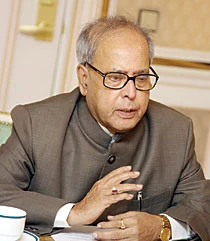
RIYADH, 22 April 2008 — “Saudi Arabia and India have set out a new vision of partnership in which greater strategic and political content will be added to an expanded economic relationship,” said Pranab Mukherjee, India’s Foreign Affairs Minister after talks in Riyadh with Prince Saud Al-Faisal, Saudi foreign minister.
“As part of the new vision, the two countries ratified a major investment protection treaty here yesterday which will be operational 30 days from the date of ratification,” Mukherjee said. The Indian minister had talks with Prince Saud and Riyadh Gov. Prince Salman during his two-day visit to Riyadh. The ratification of the investment promotion and protection agreement by Riyadh and New Delhi will further boost trade and investment links.
Concerning Iraq, Mukherjee said: “Both countries are of the opinion that stability, territorial integrity and independence for Iraq is a must for regional security and peace. India wishes to see the Iraqi people freely determine their political future and exercise control over their natural resources.”
Addressing the Indian community on Saturday night, he noted: “The reputation of expatriate Indians as honest and disciplined workers has contributed significantly to the growing ties between India and Saudi Arabia.”
On the Iran nuclear issue, he said: “India holds the view that the solution to the Iranian nuclear issue should be reached diplomatically and not through force.” Mukherjee said that the same opinion was expressed by Custodian of the Two Holy Mosques King Abdullah during his recent meetings with President Bush and Vice President Dick Cheney
Asked about Indo-Saudi ties, Mukherjee said India and Saudi Arabia were bound together by a close and multifaceted relationship which went back in history and got sustenance from the two countries’ shared heritage and feelings of respect. “We have common positions on many issues such as terrorism and the situations in Iraq and Palestine.”
Referring to widening relations between Riyadh and New Delhi especially in the field of training, Mukherjee noted: “The New Delhi-based Foreign Service Institute of the Indian Ministry of External Affairs signed an MoU in June 2005 with the Riyadh-based Institute of Diplomatic Studies in order to forge closer cooperation in the training of diplomats. In fact, this includes cooperation in joint research, training, exchange of students, arranging symposia and seminars and the exchange of books, periodicals and papers.”
On the question of India’s nuclear deal with the United States, which is facing stiff opposition, Mukherjee said: “The Indian government is committed to the Indo-US civil nuclear cooperation agreement. We are in the process of seeking broad political consensus on the issue with various political parties who are supporters of our coalition government in India. Discussions are still going on.”
Mukherjee, spoke of India’s role in reducing tension in the Middle East. He said: “West Asia is a part of India’s extended neighborhood and we have interacted closely with the area for thousands of years. Consequently, we have a deep interest in peace and stability in the region and closely monitor all regional developments. We believe that there is no military solution to the Israeli-Palestinian problem and we have also been calling for all parties in West Asia to fully cooperate with efforts by the international community. We support the revival of direct negotiations between the leaders of Israel and Palestine, the momentum for which was generated at the Annapolis Conference.” At the conference, India expressed its readiness to play its role in the collective endeavor to strengthen the forces of peace and stability in the region, he said.
Mukherjee pointed out that India and China had signed a shared vision document for the 21st century that reflected congruence of interest on regional and international issues. The document expressed “our mutual desire to work together on multilateral issues for common benefit,” he said.
Asked about the prospects of India becoming a permanent member of the UN Security Council, he said: “There is unanimity among member states that the United Nations is in need of urgent and comprehensive reform so that it can deal with the challenges of today’s world more effectively. The international body should function in a more transparent, efficient and effective manner and the composition of its central organs must reflect contemporary realities,” he said.