
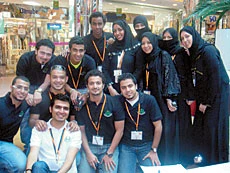
In an attempt to change the negative stereotypes — being lazy and irresponsible — that have long been associated with Saudi youth, Youth Generation Committee held a three-day bazaar to demonstrate the talent of young Saudi men and women. The “Made In Jeddah” bazaar took place from April 15-17 at Jeddah’s Serafi Mega mall.
The bazaar’s name “Made in Jeddah” acted as a stamp of authenticity that all of the products on display were made and designed in the Kingdom by Saudis. Clothes, abayas, ornaments, homemade sweets, accessories and many other products were among the hundreds of items on display at the bazaar.
Youth Generation Committee is a group formed by young men and women between the ages of 18 and 29. The committee’s main purpose is to address the problems of society and help the younger generation be more productive. The committee organizes workshops, events, lectures and courses with Ammar Al-Sayrafi being the president of the committee.
“The idea behind the bazaar was to help the young generation in starting their own small enterprises,” said Moudi Al-Ghshian, one of the female members of the committee.
“We have researched and found that our youth have tremendous potential and the will to excel if given the proper opportunities,” said Alaa Bagadir, another female member of Race Youth.
“We want to help the young generation spend their time doing something productive and meaningful,” she added. Bagadir said the bazaar gave Saudi youth an opportunity not only to show off their talents and earn money but to establish business contacts.
Suzan Al-Sourani, a participant in the bazaar, started a small business of decorating and wrapping chocolate gifts at home. She believes that the bazaar was a great idea and an even greater opportunity for her.
“There were many visitors on the first day but they didn’t buy as much as stuff as I was hoping,” said Al-Sourani.
Al-Sourani buys ready-made chocolate in different shapes and flavors. “I decorate and wrap the chocolates in colorful pots and jars at the request of the customer,” she said.
Al-Sourani said prices for her products range between SR20-100.
Al-Sourani, who hopes to one day have her own chocolate store, said the bazaar enhanced her and other participants’ self esteem. “I hope they continue to have this bazaar every year,” she added.
Mervat Al-Samman, another partcipant, started a small business, along with her sisters, of printing on mugs and decorating T-shirts and sweaters with colored crystals. “We received an invitation to participate in this bazaar. It was a chance for us to let people know about our small business,” said Mervat.
“We have different designs and pictures for printing on mugs. We made a deal with one factory to do the printing and the gluing for us,” she said.
“We received offers to cooperate with some companies and even received a few orders,” Mervat told Arab News.
The committee invited several companies that finance small businesses to the bazaar. “Unfortunately, none of the companies came to the bazaar. I believe that voluntary committees find no trust or support,” said Ammar Al-Sayrafi, the president of the Committee.
“One company saw one of the displayed items in the bazaar and expressed their admiration for the work and requested large quantities. This was the only support we received from a company and it was not an adoption for an idea or financing,” said Ammar.
Participants rented the tables for SR200 each.
“We didn’t want it to be difficult for the young participants; we know they are still young and incapable of paying a lot of money,” Bagadir added.
“Our young generation is talented and can do many things but we have to believe in them and give them a chance,” she added.