JEDDAH, 18 May 2008 — Waris Hussain, 70, has not been paid his wages for five years. He is ill, in debt, does not have money to return home to Pakistan, has had his iqama confiscated and is residing in the Kingdom on a temporary permit.
A father of five daughters and one son, Hussain came to the Kingdom from Karachi 25 years ago. Speaking about the conundrum he is currently in, he said: “My daughter dropped out of college because I have no money to send to my family in Pakistan... I have a cousin in the US who is supporting me... I have accumulated debts to the tune of over SR14,000.”
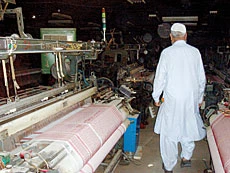
Hussain is not alone; four of his Pakistani coworkers, all mechanics — Abdul Aziz Shakir, Khaled Parwez, Muhammad Aslam and Abdul Hamid — are in a similar situation. With no money, they all live in the textile mill — located in south Jeddah’s Gholail district — for which they used to work in the past.
Last week, when Arab News visited the factory, the electricity had been cut off due to unpaid bills. “At sunset, we light this,” pointed one of the men to a worn-out lantern sitting at the corner of the neglected factory. “My children left school, they can’t afford to eat and they are working now to send me money to survive,” said Shakir. “I want to go home. I want my money so I can leave.”
Their problem started when the factory’s original owner died around 11 years ago and the ownership was handed to his son. “The factory is in heavy debt. I couldn’t send these workers back home because I haven’t got the money. The Saudi Industrial Development Fund is going to auction the factory within the next 60 days,” said the owner, who lives in the Eastern Province and who asked his name and the name of his factory not be published.
A document signed by the owner states that the factory is in debt of SR19,883,336. “My sister and I are trying to take a part of our salary to pay these workers... Since the debt is huge, it scares those who are interested in buying the factory,” he said.
In order to better her father’s plight, Hussain’s daughter, Ayesha, has called on the National Society for Human Rights (NSHR) to take action. “My father is the sole breadwinner. You can’t imagine our suffering because of this,” wrote Karachi-based Ayesha on the NSHR’s webpage.
“How many months do we as a family have to wait? I want justice for my father,” she said, adding that she has called the NSHR office five times, but, since everything is in Arabic, she cannot communicate.
Ayesha told Arab News that a NSHR worker called Shahnaz has contacted her twice. When contacted by Arab News, the NSHR said the case is still under investigation.
Nearly three years ago, on Shawal 19, 1426AH, the five men filed a complaint against the company with the Labor Office in Jeddah.
“For the past five years, we haven’t received our money. We’re old people and we can no longer support our families in Pakistan. There’s great tension and worry. Our children were kicked out of school. Our daughters can’t get married because they need money. We just want you to do your best to give us our financial rights so we can go back home,” wrote the men in the letter to the Labor Office.
The company owes the workers five years of wages, end of service benefits, tickets to Pakistan and finances for medical treatment.
On Dhul Qadah 22, 1427AH, the Preliminary Commission for Settlement of Labor Disputes in the Makkah Region issued a decision in favor of the employees. However, until today the workers have not received anything, as the owner does not have the money to pay.
“I have seven daughters and no sons. I have no land and no source of income. My family is facing many problems,” said Aslam.
“The owner of the company has been kind and generous to us. But he doesn’t have any solution. We’ve told him many times, if the company is in trouble and you don’t have any money, send us back home. Yet he keeps telling us that the factory will soon be sold,” he added.
Ahmed Zaki Yamani Law Firm has volunteered to represent the workers and collect their money. Majdi Al-Khair, a legal consultant at the firm, met Aslam and Hussain yesterday and asked for copies of their temporary permits to issue a power of attorney.
“We need a power of attorney to collect your money from the owner and inform the authorities about the case to take necessary action,” Al-Khair told the men. “Faisal Yamani, general manager of the firm, is supportive of your case and has given his full approval to take it forward.”
Aslam has medical records of his physical condition and has been sick for five years. Three of his spinal discs are in bad shape and he is constantly taking painkillers. He also has a debt of SR10,000, as the company’s owner will not meet his medical bills.
“How do we survive?” asked Aslam with tears rolling down his cheek.